Author: Swati

  • A Retrieved Reformation by O Henry: Summary and Analysis

    A Retrieved Reformation by O Henry: Summary and Analysis

    Originally called Retrieved Reform, this short story was first published more than a century ago in Cosmopolitan magazine. 

    A Retrieved Reformation: Summary and Plot Analysis

    The story opens in prison, where an inmate, Jimmy Valentine, is diligently working in the prison shoe shop. The man is serving a four-year sentence but is freed much earlier, apparently owing to his outside connections. 

    Knowing Jimmy to be a good man, the warden advises him against cracking any more safes and living a decent life. 

    He denies all wrongdoing and, although a bit tired, is happy to be 9762, the free man.

    On his way to meet a man named Mike Dolan, Jimmy stops at a restaurant to enjoy a meal and a smoke as a free man. 

    In a later conversation between Dolan and Jimmy, Dolan apologizes for the delay in securing Jimmy’s release from prison. Jimmy retires to his room and finds it in precisely the same condition it was left in. 

    He quickly checks and locates his high-quality, safe cracking equipment. He soon leaves the apartment in his elegant clothes and a briefcase. Upon being asked, he responds that he was now a Salesman for a famous NY bread and cake company.

    A week after Jimmy’s release, a series of robberies surface. Neat, professionally done, with increasingly more significant amounts being stolen. 

    This soon catches the attention of Ben Price, a policeman, who notices the distinct nature of these robberies. 

    They had Jimmy written all over them.

    However, that knowledge was insufficient, given Jimmy worked alone and had great connections.

    Not much later, Jimmy finds himself in Elmore, where he is at a bank, when he sees a beautiful young woman named Annabel Adams. Adams happens to be the banker’s daughter. Jimmy is smitten. He is later seen enquiring about the woman as well as any openings for the shoe business. 

    He is a changed man, literally. He takes up the identity of one Ralph Spencer, opens a town shoe business, and flourishes. 

    Jimmy and Annabel are engaged to be married soon.

    Jimmy, set on a fresh new start, sends a letter for an old trusted friend to come to visit him so that he can hand over his tools. 

    Unknown to him, Ben Price soon comes to the town, spots Jimmy, and discovers that he is soon to marry the banker’s daughter. Price plans to visit the bank soon while Jimmy is thinking of getting himself a wedding suit and a gift for Annabel. 

    Before leaving, he stops by his father-in-law’s bank to see the newly-installed safe. One of Annabel’s sister’s kids gets trapped in the safe. 

    Panic ensues, and with little time to act, Jimmy calls for his suitcase and, within minutes, expertly cracks the safe and saves the child.

    The public display of these safe-cracking skills made him feel exposed. He no longer feels fit to live in Elmore or marry Annabel.

    As he leaves the bank, he notices Ben Price and offers to come along. To his surprise, Price acts as if he doesn’t know who Jimmy is, responding with, “Guess you are mistaken, Mr. Spencer. Don’t believe I recognize you.”

    The story leaves a great aftertaste. After all, who doesn’t like a fresh start?

  • The Ransom of the Red Chief by O Henry: Summary and Review

    The Ransom of the Red Chief by O Henry: Summary and Review

    In 10 minutes, I shall cross the central, southern, and middle western states and be legging it trippingly for the Canadian border.

    What comes to mind when you read this? Hot air balloons? Spaceships? Science fiction?

    The answer will come to you in the form of Ransom of the Red Chief, a short story by celebrated American author William Sidney Porter, commonly known as O.Henry. 

    First published in Saturday Evening Post in 1907, this story captures, in its very essence, a kidnapping gone awry.

    Ransom of the Red Chief: Summary and Plot Analysis

    The story opens with a scheme. A scheme, in the making, by two small-time criminals – Sam, the mastermind, also the narrator of the story, and Bill, his accomplice.

    Their scheme to make a quick buck is simple – kidnapping a wealthy man’s kid and demanding ransom for his release.

    The boy’s father is Ebenezer Dorset, a respectable mortgage fancier and forecloser.

    The execution of the scheme is even simpler than the kidnapping plan – Bill and Sam, in their buggy, entice the boy with a promise of a bag of candies and a nice ride.

    The plan is executed successfully.

    Kidnappers and the boy reach their hideout soon after, and that’s when the early signs of the plan’s unraveling are seen. Instead of being scared, the boy enjoys the company of his kidnappers. It does not take long for the boy’s role-playing and demands to surface.

    The first role he plays is of the Red Chief, the terror of the plains, unleashing the terror, true to its name.

    When not terrorizing Bill and Sam, he frustrates them with his constant chatter and relentless and mostly unreasonable demands and pranks – a couple of which are to ride on Bill as if he was a horse, for 90 miles no less and scalping Bill for real, pulling his hair out with all his might.

    The role playing, fun for the boy, is a disaster for the kidnappers.

    The kidnappers, eager to rid themselves of this liability/threat to their life, soon plan to reach out to Mr. Dorset, letting him know that he was being held for ransom and that no harm would befall the kid if the father provided them with 1500 dollars peacefully.

    Little did they know the response to their letter would be an extension of their nightmare.

    Fully aware of the boy’s intolerable, patience-thinning talents, the father, instead of sending the required sum, offers to take the child off the kidnapper’s hands – if they paid him $250.

    The harrowed kidnappers, eager to rid themselves of this living nightmare, jump on the offer, and proceed for a swift handover – of the money and the boy.

    The boy, funnily enough, tries to cling to the kidnappers instead of his own father.

    The Ransom of the Red Chief: Review and My Thoughts

    This brought back memories of one of my Christmas favorite movies, Home Alone #3. I always marvel at how talented the kid was at protecting himself- his insane knowledge of physics behind all the levers and pulleys used for trapping his victims would put my whole eighth-grade physics class to shame. 

    But O.Henry’s Red chief was a class apart. He made me believe you don’t need intelligence to drive someone insane. Non-stop blabbering and treating adults as enslaved people is good enough.

    I just loved the boy’s character. He knew no fear. Instead of being scared for his life and crying his eyes out, he had a lot of fun in addition to showing his kidnappers some great time. He made the most of his ‘trip,’ doing nothing else but being himself. 

    Talk about seeing the glass half full!

    There is a very famous quote by Dickens “Child is the father of the man.”

    I can’t say about anyone else, but this Red Chief definitely is.

  • Would You Keep Your Promise to Meet Someone Years Later?

    Would You Keep Your Promise to Meet Someone Years Later?

    Every now and then, I feel drawn to a particular genre of movies. Movies, where the lead characters of the same or the opposite sex make a pact to meet at a mutually agreed location sometime in the future. Sometimes in a month, some years, and sometimes in a decade or more. 

    The most recent movie from that genre that I ended up watching was a movie called ‘Before Sunset.’ 

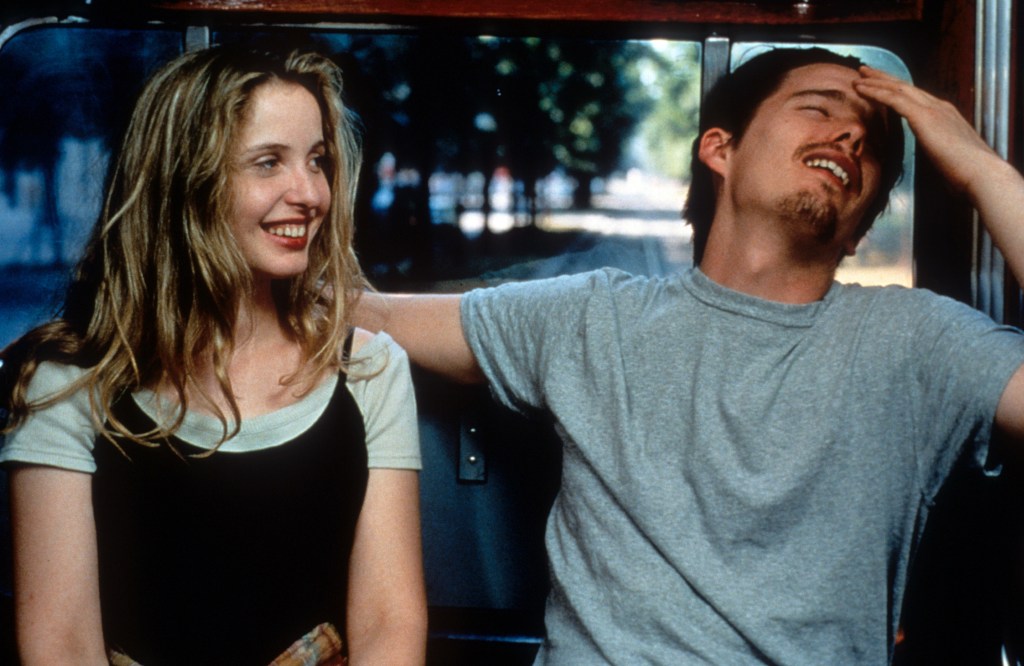
    The movie stars Ethan Hawke and Julie Delpy – the film is simple but endearing.

    a scene from the movie before sunrise
    Julie Delpy and Ethan Hawke enjoying each others company in a scene from the film ‘Before Sunrise’, 1995. (Photo by Castle Rock Entertainment/Getty Images)

    Two strangers meet on a Eurail train, strike a conversation, and end up disembarking in Vienna and spending a night together. 

    Through their free-flowing conversation, roaming the streets of Vienna, they develop an attachment to each other, but instead of acting on it, they decide to meet six months later at the same spot where they parted ways. 

    They only know each other’s first names, nothing more, and agree on having no correspondence in the following six months. 

    I must have seen the movie ten times. But it never grows old.

    Like any other well-meaning fan, I thought their idea of no communication was stupid; I wanted them to make that meeting happen while secretly hoping for a happily ever after. So why the rant?

    I recently read short stories by O.Henry and came across one called After Twenty Years. Yes, you guessed it right! 

    It’s on the same theme, about two friends deciding on a rendezvous two decades later. 

    Jimmy and Bob, two very close friends, were kids when they parted ways, agreeing on a pact to see each other at the restaurant they were together at last. 

    Billy has become a very successful criminal, while Jimmy has taken up a job at the city department.

    While Billy is waiting for his friend at the designated meeting spot, a patrolman walks around and strikes a conversation. Billy is confident that his friend will show up. 

    The patrolman soon takes his leave, and soon after Jimmy shows up. It doesn’t take long for Billy to realize that the man is not Jimmy. 

    The guy mentions that he is a policeman sent by the patrolman, the real Jimmy Wells, to arrest him because his old friend didn’t have the heart to do so himself.

    Of course, I wanted the criminal to be caught but seeing a friend betraying another was still painful. For them to keep a promise made as a child, two decades later, the friendship meant something to both of them. The criminal was entirely in the wrong here, and his friend was duty bound to have him arrested; the moment of betrayal still stings, though.

    I can’t help but wonder if things would have been better if the boys had kept in touch all those years. Was there a possibility of Billy turning Jimmy into a criminal and Jimmy turning him into a police officer? 

    Maybe they would have drifted apart, knowing how different from each other they were, and gone down their separate paths. 

    That’s life as we know it. We grow (and sometimes apart). 

    That possibility, in my mind, still seems a little less painful.

    Was Billy too careless or too gullible to think nothing would change between the friends after two decades of separation? Was he wrong to be fully convinced that the loyalties of ‘yore would still stand? Or was he a little too human? A little too eager to show his accomplishments to his friends and make him proud?

    All I know is that in addition to following the 

    “Location. Location. Location.” mantra all those years, it wouldn’t have hurt him to try:

    Communication. Communication. Communication.

  • Where Would You Hang This Picture in Your Apartment?

    Where Would You Hang This Picture in Your Apartment?

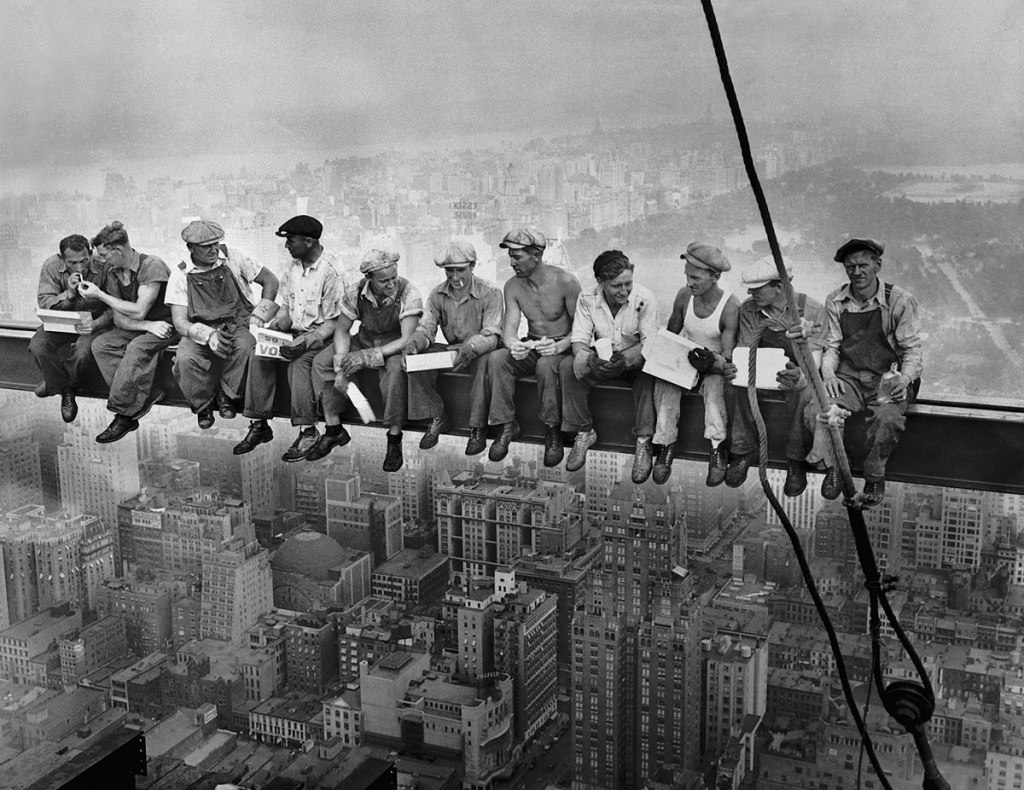
    If you are a creature known to browse the internet in your spare time, identifying (web)surfing as a hobby, there is a good chance that you have come across this picture- ”Lunch atop a skyscraper.” 

    For those who haven’t, fret not; I used to be the same as you until a year ago. Why that does/doesn’t matter will soon be revealed.

    Familiarity breeds contempt, they say. What they don’t say is how fast it does that. 

    Unfortunately for me, this has meant moving from one apartment to another n times in as many years – approximately for six months every year, you will find me looking for apartments. I try to limit this exploration to a 6-block radius of my current dwelling. 

    During one such apartment viewing, I saw the picture for the first time. Fortunately for me, the landlord and his tenants were very kind and patient. They showed me around the apartment. The tour was pretty uneventful (which is precisely how you want an apartment viewing to go) until I saw the painting in the bedroom.

    The picture is unforgettable- and for the calmer, mellow ones out there – a head-turner. 

    a group of construction men having lunch atop a skycraper crane
    The picture in question

    There is something dangerously exciting about it. It makes me dizzy just to look at it, and I am not even acrophobic. A bunch of guys having lunch legs dangling – only on a beam 260 meters above the ground. 

    All of them seem pretty chill, some even laughing and smoking- seemingly with no awareness of the risk they are taking. It won’t come as a surprise then that Time magazine featured this image as  one of the top 100 most influential pictures of all time.

    All of them seem pretty chill, some even laughing and smoking- seemingly unaware of their risk. It won’t come as a surprise then that Time magazine featured this image as one of the top 100 most influential pictures of all time.

    I must have started at the picture of what feels like an eternity in hindsight until the muffled conversations of my imagination turned out to be my host saying – “…this concludes the tour. Do you have any questions?” 

    I had many- but none of them related to the apartment, so I reined in my ego and superego, avoided any foot-in-mouth conversations, and politely took my leave.

    The painting consumed me, but more so the location of it. For the ten minutes, it took me to walk back to my apartment, I was wondering where I would put this picture in my apartment.

    Kitchen? 

    That would kinda mean I celebrate risk-taking when it comes to food. But that would be a lie. I like my staples and don’t meddle with them much. I certainly don’t want to give anybody the impression that I know what I do in the kitchen- which usually means burning something or the other.

    Living room? 

    Maybe, if one day I can make space for it there OR have the courage to throw away one of the 200 to-do calendars I like to hang on the walls. And a big blank white chart with all the Netflix recommendations from friends, family, or anyone really that cared to share, lest I run out of shows to watch.

    So I find the only available space in my tiny apartment – the screensaver on my work laptop. 

    It seems like the perfect spot, doesn’t it? Hidden from the world, yet in plain sight. I feel proud that I have found the ideal solution for my world

    • Prompting myself to take more risks at work, to keep turning into a zombie on remote
    • Avoiding having to explain to a lunatic/dazed future tenant gawping at the picture hanging on my bedroom wall

    Adrenaline or not, this picture saves lives.

  • The Dead by James Joyce: Review and Analysis

    The Dead by James Joyce: Review and Analysis

    The Dead is a part of James Joyce’s short story collection called The Dubliners, first published in 1914. The Dead is one of the most celebrated short stories of James Joyce, frequently adapted into plays and movies. It had a broad appeal – in and outside Ireland.

    The Dead by James Joyce: Summary and Plot Analysis

    The story opens in the setting of Misses Morkan’s annual dance. Sisters Kate and Julia Morkan, along with their niece Mary Jane Morkan and their housemaid Lily are hosting friends and family at the Morkan residence. 

    Kate and Julia are eager to welcome Gabriel Conroy, a professor, and a writer, along with his wife, Gretta. 

    A very awkward conversation with Lily about her love life makes Gabriel a tad uncomfortable, but he quickly regains composure once in the company of his aunts. 

    Guests keep pouring in, including Freddy Malins – the drunk, and Mr. Browne – the flirt.

    Mary Jane entertains the audience with a piano performance, and guests dance. Gabriel ends up getting paired with Miss Ivors, a fellow university professor fervently supportive of Irish culture. 

    She puts Gabriel ill at ease, labeling him West Briton on account of his literary reviews written for a conservative newspaper. Gabriel fights the allegations and politely declines her offer to visit the predominantly Irish Aran Isles citing his planned European cycling trip.

    Miss Ivors takes that to be his lack of interest in his own country and pokes him for that – Gabriel, cornered, blurts out his dislike for the country.

    He moves on from that conversation and talks to other people, but the bitter aftertaste lingers in his mind.

    Miss Ivors leaves soon after, to the surprise of the Morkans and the relief of Gabriel. Dinner soon follows, with Gabriel at the head of the table, carving out the goose.

    Everyone eats, and Gabriel delivers his speech, expressing his appreciation for his aunts, cousin Mary Jane, and their warm hospitality. His speech is met with loud applause, and everyone toasts their three hostesses.

    Guests slowly begin to leave, and while Gabriel is getting ready to do so, he notices his wife transfixed by a song Mr. Bartell D’Arcy sang in the drawing room.

    As guests continue to leave, she remains lost in thought, completely detached from her surroundings. Gabriel feels drawn to his wife; the aura of mystery around her evokes strong memories of their courtship and young love.

    They leave and head to the hotel for the night’s stay. Gretta continues to be detached and thoughtful, oblivious to her husband’s romantic plans for the night.

    After further prodding by Gabriel, she reveals the cause of her sudden emotional outburst. A song from earlier that evening reminded her of her youth, and in it, a young man called Michael Furey, who was a devoted lover. Michael used to sing the song for her back in Galway.

    He died soon after she left Galway for Dublin, meeting his tragic end after contracting a cold, waiting for her in the cold, outside her residence.

    The Dead: Review and My Thoughts

    What started as a very regular family party – with its drama and chaos, quickly turned into something else – a story of frustrating personal and professional expectations, love, loss, passion, and disillusionment. 

    Gabriel looks like a regular guy – eager to impress people, loves the smell of new books (who doesn’t, right?), and is nervous about public speaking, awkward at small talk (who asks a housemaid about their love life to boot?) but as the story evolves you get to know more about him – his discomfort on being branded a West Briton, his irritation at the paltry review cheques, his frustration at the spousal love lost and the cognitive dissonance resulting from the requirement of letting go of the past, vis-à-vis his inability to do so.

    His wife’s revelation of the death of a young lover makes him uncomfortable, long for the life of passion he never had, and makes him ruminate on the hold the dead have on the living. 

    Escaping the past was a theme in Gabriel’s speech; the speech was so well-liked at the party, but can he practice what he preaches?

    At one point in the story, while Gretta is sleeping and Gabriel is deep in thought, you can’t help but wonder if his wife having a deeply dedicated lover makes him grow even more morose, thinking to himself : 

    Better pass boldly into that other world, in the full glory of some passion than fade and wither dismally with age.

    James Joyce’s The Dead shines brighter as the years pass by.