Author: Swati

  • Are You a Beach-Person or a Mountain-Person?

    Are You a Beach-Person or a Mountain-Person?

    I have learned to understand that clickbaits are all around us. My daily visits to streaming platforms have taught me more than what I need to know to steer clear of those. Or that’s what I would like to think.

    But I fall for them at least a couple of times a week. After all, who am I to look the other way from the temptation of clicking on a link to reveal the secret of losing tons of weight overnight by just adding one simple ingredient to my water!

    There are a ton of quizzes out there that can tell you what kind of personality you are, what animal you are, what color you are, and so forth.

    While some of these tests are rooted in proper logic, most are not.

    One that I find pretty regularly is judging what kind of person you are based on your answer to a question.

    “What do you like better – beaches or mountains?”

    Now, if someone were to ask me this question (it seems like a good icebreaker) a couple of months back, I would say beaches by reflex. Something about just lying there, doing nothing, is irresistibly attractive. To me.

    A drink in hand, a book in the other, resting on a lounge chair under an umbrella. Waves crashing musically on the shore. Oh, heaven!

    And it is for this reason that almost all the getaways I manage to scrape through involve beaches. Beaches do justice to the concept of idle resting like none other.

    One of my friends, who is a health nut, happened to suggest going for a short hike in a nearby park a few months ago. The park is massive – replete with forests and lakes and streams.

    Although allergic to any sentence with the word ‘hike’ in it, I found the novelty of exploring the park too hard to resist. I had been playing forest soundtracks for my relaxation exercises for too long. It would be fun actually to experience it in nature.

    My darling friend knew my fitness level and did me a favor by choosing a relatively easy hike.

    I was especially intrigued because this outing had no relation to the beach of any kind. I was looking forward to understanding what people like about forests and mountains. To me, both can be pretty scary and more so, when the hills are especially lush AND welcoming to dangerous creatures – other than human beings – read wolves and bears.

    The good thing for me was that my friend had done that hike multiple times and knew the route like the back of her hand. I found the hike exhilarating, to say the least. 

    It was as if I could smell the lush green forests. The birds chirping, small streams flowing. A random squirrel making its way across the dried leaves did scare me from time to time, and so did the doting mosquitoes, but the experience of being so close to nature, breathing the ultra-fresh air, having nature play the great forest soundtrack and a friend that knew what navigation meant and how to do it. 

    And the view from the top was just marvellous!

    I came back with a new understanding of happiness outside of beaches. I dare say I found myself softening to the idea of taking a mountain trip someday. It’s fascinating to see how things work out sometimes.

    A couple of weeks back, I concluded my first trip to the mountains. I get goosebumps thinking about them. The mountains! Those beautifully breathtaking, magnificent creations! Being on them was a weird feeling – like hugging nature in a warm embrace.

    They taught me perspective, how small I was, or my problems in the grand scheme of things. They taught me to live in the moment as no self-help book could. They are therapy for the mind and soul.

    If someone were to ask me to choose between mountains or beaches today – I don’t think I can give them an answer.


  • Thank God It’s Friday!

    Thank God It’s Friday!

    Friday is the second-best day of the week. The feeling as the day comes to a close is a euphoric boost that I think I live for. Not to say that I don’t like what I do on weekdays; I very much do, but not as much as I love the weekends.

    And I pride on not being alone in this preference. I have a long list of peers that report the same sentiment, and not all of them are as dull-witted as I am.

    The funny thing, however, is not that I do something very interesting with my life on weekends either, other than sleeping in for at least 12 hours per day, and the other twelve hours mostly on cooking, eating, transforming my flat from a pig sty to a human habitat, random reading and/or binging on movies or TV series.

    Pretty mundane.

    Or so I used to think.

    Until one fine day, I learned that I might be fit to enter the Guinness book of world records- at least based on the reaction I was getting from my similar peers.

    Unoriginally, let’s call them A, B, and C.

    A: How was your weekend?
    B: Not so bad; I Went hiking with my boyfriend. How about yours?
    A: Drove to the animal park with the family, spent the whole day there, Lots of fun!
    C (looking for a chance to jump in): Oh yeah? That’s so cool! I went shopping with girlfriends in the morning and spent the day at the mall; it was so much fun, but God, am I so broke now!
    A: How about you?
    Me (oh my God! What am I going to say, what am I going to say): Nothing much actually; I stayed in, slept 12 hours though!
    A, B, C (in unison): 12 hours in a day, wow, so lucky! We haven’t had that much sleep in a day for decades; this must be a world record or something!

    So, as euphoric as I feel as the workday comes to a close, on Fridays, I feel the exact opposite on Sunday afternoons.

    The weekend flew extra fast, being one reason and the impending work week grind, another.

    But that isn’t all.

    It’s also about my summary of what I did and didn’t do over the weekend compared to the high-performing weekend-ers that I am pitted against. I tried those weekend outings, but they made my weekend circadian rhythms out of whack. So much to process coming straight out of the weekend!

    Talk about Monday blues!

  • I already know where you are going, my dear!

    I already know where you are going, my dear!

    There is a look about tourists, is there not? There is something in their manner that gives them away.

    It also helps that they are usually found in ‘the spots’ of the city; which makes the art of spotting them seem effortless.

    All that to say, I got a good taste of being spotted as a tourist multiple times during my three-day stay in a different city. I wondered what would have given me away.

    I wasn’t carrying a map or constantly looking at my phone for directions. I spoke their language, so I assumed that language couldn’t have given me away, especially with my concerted efforts to keep my sentences short.

    Here I am, casually strolling through the city, and a very well-meaning elderly lady walks up to me and goes, “ Hello there, Are you lost? I am happy to help you!”

    After the euphoria of being treated so nicely settled down, I politely thanked her for the offer, said I wasn’t lost, and moved on.

    I won’t be honest if I say I didn’t doubt her for a second because I did. For a split second, I was convinced she would spike me coffee at the nearby cafe and rob me or something – a result of watching too much crime drama.

    I thought this incident to be a one-off and moved on, but not long after, the same day, I had another gentle reminder.

    I was at the bus stop. The bus was a few minutes late, which gave me some serious time to doubt my navigation skills and my memory again. The bus arrived, and when I entered through the front door, the polite driver lady said,”‘I know where you are going dear, five bucks please.’

    I must admit her politeness disarmed me. But that was not all. It’s not every day that I meet a mind-reading bus driver. I was so convinced she knew where I was going that I didn’t even mind confirming with her. She knew what she was doing.

    I sat down and quickly googled to confirm that the bus stop was not an express bus. It had many stops en route. She definitely took me as a tourist, didn’t she?

    On the one hand, I was highly impressed by a trip made so easy for me, but on the other, I was not super happy about exposing my ‘tourist’ identity. I had failed my one fun assignment for the day: to fake being a local, faking till I made it.

    But I got ‘made’.

    That superficial sulking didn’t last long. There are advantages to forgetting quickly.

    I’d rather have a mind-reading bus driver every single day. If that comes at the cost of being the ‘eternal tourist,’ so be it.

  • A Painful Case by James Joyce: Summary and Review

    A Painful Case by James Joyce: Summary and Review

    Friendship between man and woman is impossible because there must be sexual intercourse.

    If you thought this was straight from the Meg Ryan-movie When Harry met Sally, you are as wrong as I was. This is a quote from a short story A Painful Case by famed Irish author James Joyce. 

    This was featured in his short story collection called Dubliners, first published in 1914.

    A Painful Case: Summary and Plot Analysis

    The story revolves around a middle-aged man, Mr.Duffy, who lives a basic but organized life in Chapelizod. He is a man who worships routine – goes to the same restaurants, does the same daily commute, and occasional visits to opera or concerts.

    He doesn’t have friends and only visits relatives occasionally, mainly at Christmas or funerals.

    On one of his visits to the opera, he strikes up a conversation with a Mrs. Sinico, another audience member, whom her daughter accompanied.

    After several such engagements, Mr. Duffy sets a time and place to meet Mrs. Sinico.

    It turns out Mrs. Sinico’s husband is a Merchant navy captain and is away from home for long periods. Her being married makes Mr. Duffy uncomfortable carrying on their engagements, but he does so regardless, at her home.

    Mr. Sinico assumes his visits to be merely an attempt to court their daughter and doesn’t have the slightest clue that it’s his wife who is of interest to Mr.Duffy.

    Mr Duffy and Mrs Sinico continue to meet until one day, when Mrs. Sinico betrays her emotions by holding his hand to her cheek. Mr Duffy,not used to display of affection such as this, retracts, feeling that Mrs. SInico misinterpreted their companionship. He cuts off the relationship, by stopping his visits, and meeting Mrs. Sinico one final time – in a neutral territory, a cake shop. He breaks it off and Mrs Sinico’s emotional response to such a news makes him uncomfortable and he leaves quickly.

    Mr. Duffy and Mrs. Sinico continue to meet until one day when Mrs. Sinico betrays her emotions by holding his hand to her cheek. 

    Mr. Duffy, not used to the display of affection such as this, retracts, feeling that Mrs. Sinico misinterpreted their companionship. 

    He cuts off the relationship by stopping his visits and meeting Mrs. Sinico one final time – in neutral territory, a cake shop. He breaks it off, and Mrs. Sinico’s emotional response to such news makes him uncomfortable. He leaves quickly.

    He goes back to living his organized, monotonous life. 

    Four years later, one evening, while having dinner, he reads a newspaper article. Surprised, he stops eating and hurries home. 

    The article mentions a painful case. The case of a woman, a Mrs. Sinico, who was hit by a train at a Dublin railway station. 

    The coroner’s investigation and witness accounts corroborate that her death would have been more because of mental pains than physical. 

    Over the last two years, she had grown increasingly distant from her husband and turned to alcohol. 

    Noone was deemed responsible for her death.

    A Painful Case: Review, Quotes and My Thoughts

    My knee-jerk reaction to reading this was to brand Mr. Duffy – a lunatic, if not an as**ole.

    Why would you let go of something so special to you? 

    Why would you deny yourself shade in the desert? 

    And why would you shy away from the company that makes you feel alive and engaged?

    At first glance, he did seem like someone with a severe commitment phobia. But not surprisingly, the guy has a layered personality. How could he be cozy with someone else if he looks at himself from a distance?

    He lived at a little distance from his body, regarding his own acts, with doubtful side glances.

    He had an odd autobiographical habit which led him to compose in his mind from time to time, a short sentence about himself containing a subject in the third person and a predicate in the past tense.

    The more I re-read, the more I felt sorry for him.

    He had neither companions nor friends, church nor creed. He lived his spiritual life without communion with others, visiting his relatives at Christmas and escorting them to the cemetery when they died.

    Now, I tried to seek solace in that he liked to do that; he liked to be alone. Human company to him was like the plague. He would rather be by himself and live an adventureless, strictly by the book life. 

    But there are clues throughout the story that it wasn’t the case.

    While they talked, he tried to fix her permanently into his memory.

    Little by little he entangled his thoughts with hers. He lent her books, provided her with ideas, and shared his intellectual life with her.

    Would you do or think all that if you were trying to avoid someone? 

    He seemed shaken reading about her death in the papers. A painful case, they call it.

    Mrs. Sinico’s pain ended at the train station. 

    As for Mr. Duffy, I would never know.

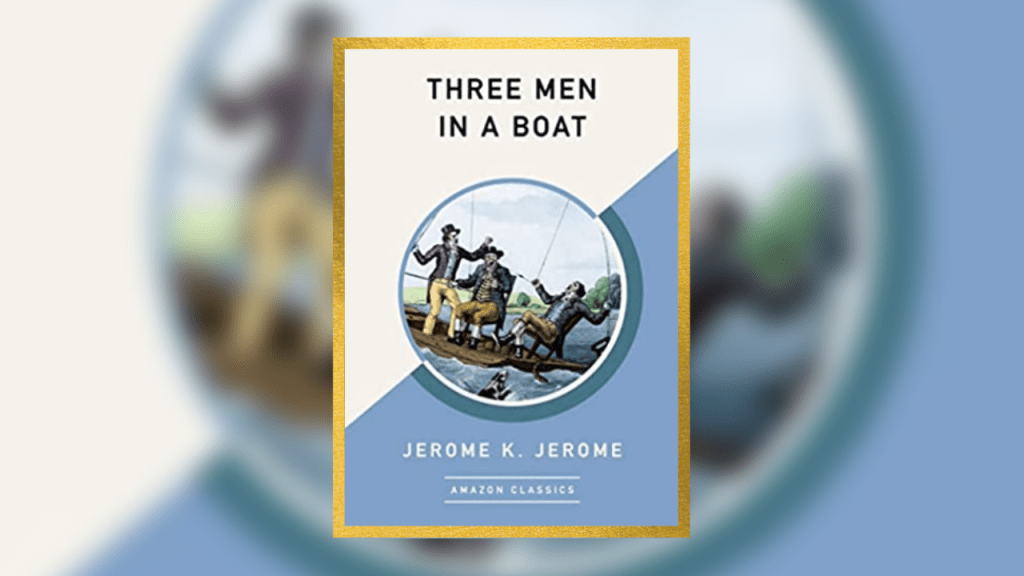
  • Three Men in a Boat by Jerome K Jerome: Summary and Review

    Three Men in a Boat by Jerome K Jerome: Summary and Review

    Three Men in a Boat (To Say Nothing of the Dog) is a humorous account by the renowned British author Jerome K Jerome, detailing a boating holiday spanning a couple of weeks. 

    Funnily enough, the book was initially meant to be written as a serious travel guide, but the comic element in the presentation ended up overpowering everything else. The book was first published in 1889, had widespread success, and never went out of print since its first publication.

    Three Men in a Boat: Summary

    The story begins with an account of three friends- George, Harris, and Jerome (always called J) and J’s dog called Montmorency. The friends happen to be discussing the variety of ailments that plague them and unanimously come to the same conclusion – overwork was to blame. 

    Naturally, the best antidote in that situation turns out to be a holiday, an impromptu one. Options for a holiday are floated around, and the decision of a boating trip on the Thames is finalized.

    They set off the following weekend, reaching the starting point of their journey – George got there first while J and Harris came later after a series of haphazard incidents also involving their bribing a train driver. 

    The rest of the story describes their journey, peppered with a description of the landmarks they passed along the way, ruminating over the historical association of these places. Most of the time, it slips into a series of humorous anecdotes- on a wide variety of topics – weather, the (un)reliability of thermometers, towlines, boats, artificial trout, Irish stew – you name it. 

    Their journey ends the same way it started- eventful.

    Three Men in a Boat: Review and Quotes

    Back to my rant on Three Men in a Boat. 

    I wish I could rave more about it than I do. The story has always had a significant influence on me. There are too many things I relate with J on. Just too many. 

    I am a fan of his stupefying laziness and hilarious condensation of life’s profound philosophical truths. Oh no, never, I don’t think I can ever bring myself to review this – because I relate to the book personally, on so many levels. 

    There is neither a start nor an end to the love that I have for this sacred piece of writing.

    There is much to feel lighthearted about.

    Beware of J’s uncle Podger for example:

    Oh, you leave that to me. Don’t you, any of you, worry yourselves about that. I’ll do all of that.

    Because he’s gonna follow up with this not long after :

    Oh, you can give it up! I have found that myself now. Might just as well ask the cat to find anything, as expect you people to find it

    I’d be surprised if you don’t know at least one such character from your own life. I have more than I need of this Podger supply.

    Their familial woes are not even the tip of the iceberg; their culinary skills are simply out of the world. 

    Consider their community-based preparation of the Irish stew. Even Montmorency was fully invested in the preparation of this exotic meal:

    I forget the other ingredients, but I know nothing was wasted; and I remember that, towards the end, Montmorency, who had evinced great interest in the proceedings throughout, strolled away with an earnest and thoughtful air, reappearing, a few minutes afterwards, with a dead water-rat in his mouth, which he evidently wished to present as his contribution to the dinner; whether in a sarcastic spirit, or with a genuine desire to assist, I cannot say.

    If you thought that was enough, the gentlemen even deliberated putting the rat into the stew.

    Wait till you hear his rant about weather predictions; it’s funny that this is as relevant now as it was a century and a half ago:

    I do think that of all the silly, irritating tomfoolishness that we are plagued with, this weather forecast is about the most aggravating. It forecasts precisely what happened yesterday, or the day before, and precisely the opposite of what is going to happen today.

    And then there are priceless hacks on tenets on preservation:

    I take a great pride in my work, I take it down now and then and dust it. No man keeps his work in a better state of preservation than I do.

    The book was first published in the late nineteenth century and never went out of print. Fans of the book recreate the trip to this day, replete with visits to some of the joints mentioned in the book that survives to this day. 

    One of Mr.Jerome’s publishers famously mentioned this to a friend:

     “I pay Jerome so much in royalties”, “I cannot imagine what becomes of all the copies of that book I issue. I often think the public must eat them.”

    That says something, doesn’t it?

    The book has much to offer if you are looking for a light-hearted read. At the very least, it offers a respite from the mad rush of life-jumping from one goalpost to another. Running from one mindfulness lesson to another implementing none. 

    If nothing else, the bare minimum takeaway from this book is a mantra as simple as this: 

    Sit back. Relax.

    If the three men with extraordinary intelligence could survive a Thames trip, it would be a miracle if you don’t.