
Author: Swati

  • How Often Should You Play the “I’m New Here” Card to get Out of Tough Situations

    How Often Should You Play the “I’m New Here” Card to get Out of Tough Situations

    I have heard and read that our body regenerates almost completely every ten years while vital body organs regenerate faster. Thanks to the influence Three Men in a Boat has on me, I never had enough initiative to research it to vet the accuracy of this statement. 

    Like a fool, who errs in favor of more speaking than less, and less work than more, I just blurted it once or twice in sporadic conversations with friends and colleagues.

    Now, we all know the feeling of being new at our jobs. Those initial jittery days, when we can’t tell a head from a tail. 

    I know I do. I remember mine pretty clearly, mostly because I think I messed up everything I laid my hands on that fine summer day. And instead of making my ignorance obvious, I choose to act like a better fool. 

    An oblivious fool – I promise you they are the best entertainment because I have been told I was a splendid entertainer in the first six months at my new job. 

    Then a miracle landed right on my lap. I thought I had landed a jackpot with “I am new” – the king of all cop-outs. 

    What was there to lose? One ‘I am new‘, and my angry client would instantly drop a shade of anger. After all, new people are allowed to make mistakes.

    Thankfully, years passed, and I had the company of some great (cool) colleagues, who were patient with me, teaching me the tricks of the trade while keeping from guffawing at my foolishness. I made mistakes, but less dreadful and less frequently than before. 

    But that also meant I didn’t have the cop-out of ‘I am sorry, I didn’t know that, I am new.’ 

    Being new and wrong is passably tolerable at worst; being experienced and wrong will get you at least two to three verbal and/or non-verbal “Lord o Lords!”

    All that to say that my years as a newbie have taught me a few things. Patience and understanding. If I was lucky enough to have that, it’s only fair that I pay it forward. 

    But it turns out I am not as patient as I thought.

    Fast forward, there is a cell phone store close to where I live, and I usually go there for my cell phone purchase/fix/repair needs. 

    The store has been there for, I am told, a decade now. It’s pretty decent. Excellent display, clean, spacious, and organized.

    I only have one complaint. 

    One of their guys handling customer service requests likes saying ‘I am new’ a lot. With the number of people that get to the store every day, I guess it will be difficult for them to remember who they serve. 

    Luckily for me, I don’t have that volume problem. That’s the only store I go to, and it usually has the same 3-4 people that serve customers. The guy obviously doesn’t remember that I have been on the receiving end of his ‘I am new’ for the past four years. 

    I found it funny the first few times and brushed it off. New people can afford not knowing. 

    But then it started getting to me. How did I grow four years older with 40 times more grey hair on my head, and the guy continues to be new for that entire period? 

    My imagination started getting more and more interesting, given all the superhero content I have been consuming in recent years, more so to cope with the lockdown.

    If you are a superhero nerd and have watched Will Smith As Hancock, you would probably remember the scene where he chases his Alien superheroine, Charlize Theron (Mary), across Los Angeles in a violent fight. All because he responded to her cold-blooded “Call me cuckoo one more time!” with exactly that.

    Cuckoo!

    I reign in my imagination and then start thinking. What if there was a corporate guideline on the usage of the statement ‘I am new’ that you will not be allowed to say after you’ve been doing the job for a certain amount of time?

    Should ‘I am new’  be banned and replaced with ‘I do not know’? 

    Will using the latter prod us into taking a more active role in our learning/development journey?

    Of course, cognitive expenses become overwhelming at this point, and my little brain gives up. All I have decided at this point is if the guy tells me he is new one more time…

    …I do not know what I am going to do.
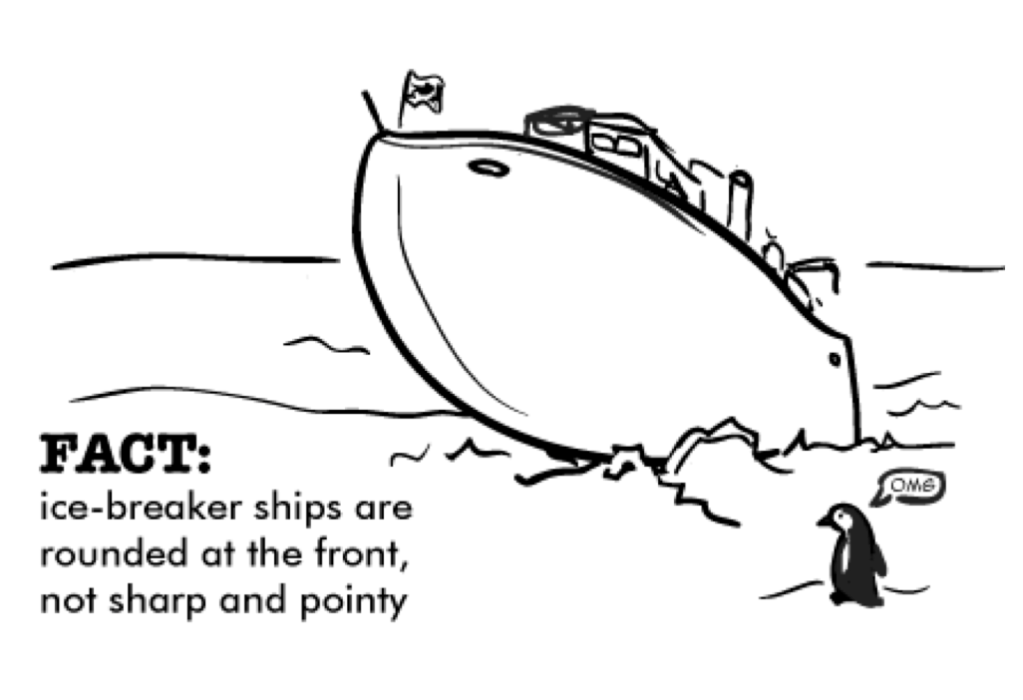
  • Why the Hell am I So Bad at Ice Breakers?

    Why the Hell am I So Bad at Ice Breakers?

    “Ice-breaker”

    I don’t know why, but when I think of this term, the first image that comes to my mind is a completely flushed face, extremely cold hands, and a racing heart—all mine.

    For those of you who aren’t aware of what these are, I envy you and then offer you a little bit of Wikipedia wisdom:

    “An ice-breaker is a facilitation exercise intended to help members of a group begin the process of forming themselves into a team. Ice-breakers are commonly presented as a game to “warm up” the group by helping the members to get to know each other. They often focus on sharing personal information such as names, hobbies, etc. Ice-breakers are also used at social gatherings such as parties to introduce guests to one another in situations where they may not know one another.”

    Sounds pretty harmless, doesn’t it? 

    A bunch of strangers, going around and telling everyone a little tidbit about themselves. This doesn’t even have to be personal information, which is just the icing on the cake I need. 

    Yeah, okay. I am good. Bring it on.

    And out comes the ball exercise variation of the ice breaker, which is just the same as above, but with participants passing a ball around to catch, after sharing their tidbit. You would probably say, what’s the big deal?

    And here is the explanation:

    This object is the stuff of my nightmares. Nightmare exacerbated by plenty of childhood memories with laughing kids surrounding me (or at least that’s how I imagined it). 

    All because of my stellar hand-to-eye coordination playing catch. Always. 

    The curious thing about this particular deficit is that I never improved. My skills playing catch are at the same level as when I was four, maybe. If anything, they have worsened, thanks to my questionable physical agility and lack of attachment to any outdoor sports. The scores from the most recent frisbee game I played are a testament to that. 

    Unsurprisingly, I had the rock bottom scores – even when the co-players were aiming for the frisbee to land right into my hands. For my self-esteem, I suppose.

    So back to the ice breakers.

    Here’s how a typical one goes:

    A: Hi, My name’s A. I love playing soccer.

    Me (thinking): Oh God, he’s gonna throw the ball to me.

    A throws to B

    Me (thinking): Thank goodness! Please throw to someone else now, Not me , not me , Please!

    B: B here, I love philately

    Me (thinking): What a show-off, Philately! Not me, Not me, Please not me!

    B throws to me.

    Me (thinking): I am not gonna catch it, I am not gonna catch it, I am gonna make a fool of myself, everyone is gonna laugh, why the hell do they have to use balls in ice breakers? I will quit this today. No one will talk to me after today’s debacle anyway.

    Sure enough, the ball grazes my nails and heads for the sky. I am no Usain Bolt. I run for the first two minutes and then walk to get it back (all the while telepathically begging it to stop and help me out).

    After a walk of shame, I return to my spot in the circle.

    Me: I am me. I do not fetch right.

  • Better to Trip With the Feet Than With the Tongue – Zeno

    Better to Trip With the Feet Than With the Tongue – Zeno

    Tripping.

    If only they handed out degrees for that thing, I am sure I would now be prefixing my name with a Dr. 

    I tried to take the easy way out and pin it to a genetic fault – one that made me prone to tripping, but after weeks of ogling away at my parents’ movements, I was at a loss. Alas! I was a self-made tripping queen. 

    Tripping over electric wires, hanging loosely from the socket.

    Tripping over a door mat (for real, no kidding).

    Tripping over an Ottoman.

    Tripping over a can of coke.

    Tripping over a classmate’s foot (I am sure he held it out deliberately) on my way, running behind Miss Madan (one of my favorite teachers) on her way to the staff room.

    I didn’t seem to learn much from them, given that my graph plot of average trips per year continues to defy all expectations from a person of normal hand-to-eye coordination.

    Not contrary to what you’d expect from such an individual, I have a gamut of cuts, scratches, and embarrassing memories to show for it. I have made peace with it over the years. Or at least I think I have. 

    And this talent of mine isn’t restricted to physical comedies (comedies to you, of course, to me, they were anything but, at that time). I used to be quite the expert in a slip of tongues as well. I will spare you the details. 

    Suffice it to say that the most awkward mistakes I have made were a trip of the tongue, or putting a foot in it, if you will. That is why it made so much sense when I read this quote by Zeno. 

    Better to trip with the foot than the tongue.

    Even the slightest slip of the tongue can potentially ruin relationships, your reputation, or some. 

    Reputation, I didn’t care about much, mostly because I hardly have any. 

    Relationships, yes, they hurt, they hurt badly and still do. 

    What I thought was a light-jested remark to a friend of five years didn’t go down so well with them. I can only assume because I haven’t spoken to them for years. I do feel like Adele’s Hello character, trying to get through to this friend.

    All that to say, if my years have taught me anything, the tongue’s a titan. Heed you must, its powers.

    Thee doth not has’t to hark to me. 

    Hark to Zeno.

  • A Dollar’s Worth by O.Henry: Summary and Analysis

    A Dollar’s Worth by O.Henry: Summary and Analysis

    This short story by O.Henry, published in the early 1900s, explores the theme of justice, compassion, and love.

    A Dollar’s Worth: Summary and Plot Analysis

    The story opens with a letter. The letter is a threat from one of the convicts to the judge Mr. Derwent, who had presided over the case leading to his conviction. 

    The judge, used to such threats in his line of work over the years, brushes it aside, although he does make a note of the threat against the district attorney.

    The district attorney, Mr. Littlefield, is engaged to be married to Nancy Derwent, the judge’s daughter.

    The judge informs Littlefield of such a threat, who smiles with contempt, but is curious to know the writer, who, he soon learns, is a man nicknamed Mexico Sam.

    The distraction didn’t last long, as the district attorney was soon called upon to judge the case of counterfeiting by Rafael Ortiz.

    There were witnesses to him passing on the counterfeit coin to purchase a medicine bottle. According to the deputy that brought him in, this was the first time he was caught.

    A woman named Joya Trevinas soon visits them and claims to be the one that made the counterfeit money and got Rafael to pass it along. It was her fault that he was in prison, and she would happily swap places with him.

    Littlefield, having seen such occurrences commonly, denied offering to make any such accommodation. He would prosecute based on evidence and nothing else. Rafael would have to make his case in court.

    Littlefield and Miss Derwent went off for plover shooting later that day. While busy enjoying the shooting and each other’s company, they soon see a man attempting to attack them. Littlefield tries to keep Miss Derwent out of harm’s way while struggling to defend himself against the attacker.

    Littlefield gets minor injuries in a crossfire that ensues, while Mexico Sam, their attacker, dies.

    The following day in the court, Littlefield requests the court to strike off the case and requests a pardon for Rafael Ortiz.

    It is later revealed in the conversation between Littlefield and Kilpatrick that the fake lead counterfeit coin ended up saving their life. He also asked for the address of Ortiz’s girlfriend, Nancy Derwent, who had been meaning to meet her.

    Who doesn’t like happy endings?

    A Dollar’s Worth: Review and My Thoughts

    The story brought back memories of a movie I watched years ago. A movie called The Judge starring Robert Duvall and Robert Downey Jr.

    The story, like the movie, explores the themes of justice, compassion, revenge, love, and gratitude. 

    A disgruntled convict, a fair judge, a clever deputy, and two young men, willing to do whatever it takes to shield their love from harm. The thing about the story is that it is authentic and believable. The evolution of the district attorney’s perspective is very organic and, as a result, heartwarming.

    I can do nothing. The case comes up in the morning, and he will have to make his fight before the court.

    Pity hasn’t a place in jurisprudence.

    Can’t you go down the jacals and find where Joya Trevinas lives. Miss Derwent wants to know.

    Not to say that the judge was any less fair after, but the incident with Mexico Sam, and seeing the mortal threat to the love of his life and his own, opened his eyes to the importance of compassion. At the end of the day, we are all humans.

    Nancy Derwent was shown to be compassionate from the start. Her reaction to the Trevinas’s visit was very different from Littlefield’s.

    Can’t you do anything for them, Bob? It’s such a little thing – one counterfeit dollar – to ruin the happiness of two lives! She was in danger of death and he did it to save her. Doesn’t the law know the feeling of pity?

    I am an expert by no means (read I know nothing), and to me, this quote from Julian Baggini captured the essence of this short story:

    A society needs both justice and compassion, a head and heart if it is to be civilized.

  • For The Folks Who Take TOO LONG to Order Food

    For The Folks Who Take TOO LONG to Order Food

    I was rewatching the standup bit by John Pinette the other day – the one in which he expresses resentment against people that can’t decide what to get from the menu. He just wants them to get out of the line and let the others get served. 

    I love the bit, mostly because I love John Pinette and his comic timing. He is hilarious, and in my book, he is one of the most likable standup comics of all time. 

    After my usual dose of serotonin watching him in all his glory, I go back to wondering – why? Because I am one of those people. 

    Wondering why I am so pathetic at ordering stuff at restaurants. 

    Why do the simplest of menus confuse me?

    Why, even after so many years of eating out, I haven’t developed on-the-spot ordering skills?

    Why do I gravitate to buffets?

    Well, scratch the last question. I know the answer to that—best bang for the buck.

    That’s a couple of very close friends and me.

    And then there are people out there that know exactly what they want and feel pride in their capability to do so.

    And then there are people out there that know exactly what they want and feel pride in their capability to do so.

    Quoting Joe F-O-X from “You’ve got mail” (another movie I have been guilty of rewatching more times than I can count):

    “The whole purpose of places like Starbucks is for people with no decision-making ability to make six decisions just to buy one cup of coffee. Short, tall, light, dark, caf, decaf, low-fat, non-fat. So people who don’t know what they’re doing, or who on earth they are, can, for only $2.95, get not just a cup of coffee but an absolutely defining sense of self.”

    Again, I think of myself.

    I have been placing the same order of coffee for years now, but I still forget to mention milk and sugar on more occasions than I would like. I do pay the price of that with angered taste buds and a decent blow to my Ordering self-esteem. 

    I gape in awe of people that place an order that is so clear that the barista doesn’t have any follow-up questions. I doubt that even my “can you please get me a glass of water” order can be that clear, no pun intended.

    In my mind, I had crowned myself the most order-challenged individual until I discovered a friend’s struggle, quite worse than mine. 

    So we are at a bagel place that also serves coffee. As a gracious host, I let him place his order first. I mentally pat myself on the back for averting the disaster of me going first. 

    Now I can simply copy whatever he does. After all, how difficult can saying “same for me” be, no matter how intimidating the server looks?  

    After a quick exchange of pleasantries comes the dreaded question.  

    “What would you like to have today?”

    He takes a good (uncomfortably) long look at the menu, and goes:

    “Can I have a plain bagel and a latte please?”

    “Sorry, we don’t have plain bagels, but we have sesame, everything and cheese. Would you like any of those instead?”

    The guy looks in my direction, askance.

    What the hell is happening here? He is asking me?.. ME???

    Oh good god! What were the options again?

    And I wing it. “I don’t think anything can go wrong with cheese, why don’t you try them?”

    Sheep had become the shepherd that day. Wow, what a self esteem boost!

    But then it struck me, maybe there are other reasons for my irrational fear.

    It could be social anxiety disorder . For those that struggle with fear of eating in public, it often presents as “avoiding the situation, fearfulness of being criticized, embarrassment, racing heart, sweating, nausea, and feeling trapped 

    Fortunately, it didn’t take me long to realize, thanks to the Three Men in a Boat rant by J, that if I am going to look to map diseases with my sufferings (eccentricities, really), I will probably find that I have every existing ailment in the world.

    I am optimistic, yes, but not that much.

    What I do know though, is that misery loves company. And I feel so much better knowing that, same as Mr Neville in I am Legend, I am not alone.