Author: Swati

  • It’s not personal, it’s just business… but is it, really?

    It’s not personal, it’s just business… but is it, really?

    There is a good chance you know what I am talking about. Great chance if you are a movie buff or an avid reader. 

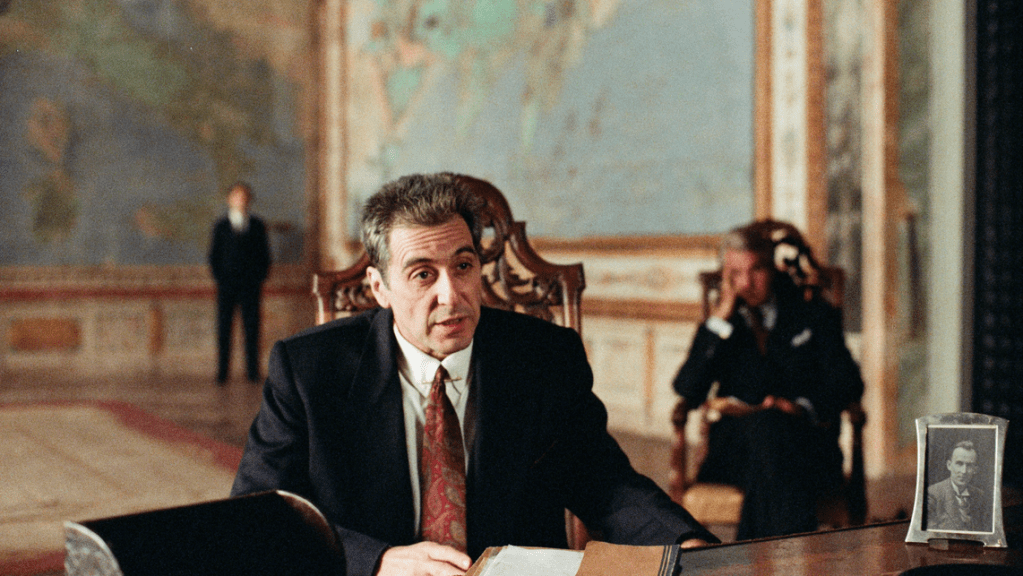
    The Godfather.

    Now I must admit, I never read the book myself, but the movies were so good that I thought the book wouldn’t be able to beat the charm – especially the magic that Marlon Brando and Al Pacino created in The Godfather. 

    The movies are practically loaded with worldly wisdom.

    When negotiating: make them an offer they can’t refuse

    When confused about the choice to make: leave the gun, take the cannoli.

    When faced with an all-out war: go to the mattresses.

    When pestered to reveal something you don’t want to: Don’t ask me about my business, Kaye.

    It has priceless advice for almost every major imaginable life scenario, but the one that I have heard most out of a cinematic setting is:

    It’s not personal; it’s just business.

    The funny thing is I have heard this in informal settings as much as in formal ones. I have seen it used at work and at parties. And almost always, it describes a scenario where someone seemed to have been stabbed in the back. 

    Not to say that the victim didn’t deserve it, but the perpetrator, the stabber in the case, could easily justify doing what they did because it wasn’t personal hatred; it was something that just needed to be handled for them to be able to afford a smooth “sailing” experience.

    Now it may not be personal, it really may be purely business, but I always have trouble digesting that. 

    How is it possible? 

    Maybe in a day and age where machines have risen, and humans are already a relic. 

    But human beings are emotional creatures. With this flawed design in our making, can there be a clear distinction? Doesn’t our personality influence everything we do, work or otherwise?

    Corporate literature is ripe with examples of founders chucked out of their own companies; maybe the company board went with ” it’s not personal, it’s business.” 

    But I bet the fired founder didn’t feel the same way. 

    Kevin Spacey’s character in Horrible Bosses didn’t feel like promoting Jason Bateman’s, despite him proving time and again that he was deserving. 

    a scene from HORRIBLE BOSSES which shows kevin spacey and jason bateman facing each other
    Kevin Spacey (L) and Jason Bateman in Horrible Bosses.

    For a minute, forget about the movie and look around your workplace, I am sure you know of one or two occasions where someone you know, if not you, was told by their boss that the reason for no promotion was strictly business. 

    Our work is a reflection of the people we are. Our experiences – personal and business – shape our personalities. One to exist in isolation, without the other, is impossible unless you are a robot. 

    OR THE GODFATHER.

  • Sorry, what did Betty buy again?

    Sorry, what did Betty buy again?

    For some reason, someone decided that the best way for a person to perfect English pronunciation was to hone their skill in tongue twisters. 

    After all, what other way to royally mark your rite of passage to the world of fluent native speakers than:

    1. Being able to give a perfect account of a lady selling seashells on the seashore.
    2. Being scared of the neighborhood Betty, who loves to buy better butter.

    Seashell lady and I haven’t had much trouble. She has always been very kind to my tongue and tiny brain. She is also not intimidating. She is some mysterious creature somewhere, and I have very high hopes, if not absolute certainty, of never running into her.

    Betty isn’t the same, though. There is something supremely familiar about her personality. She means business. She is here to solve problems. She is also there to haunt your second language lessons for all eternity i.e., if you let her.

    Don’t know Betty? Oh how I envy you! Once the dust settles, Let me explain. With a convenient rhyme, hoping you have come across at least some version of it.

    Betty bought a bit of butter
    But she found the butter bitter
    So she bought some better butter
    To make the bitter butter better.

    Betty is the epitome of creativity, an innate problem solver. 

    As you can see, Betty accidentally bought bitter butter. She could have stopped right there. But she is a curious soul, a butter connoisseur, so naturally, she tastes it.

    She finds it bitter. 

    She does have the option to discard it, But where’s the fun in that? She devises a very well-thought-out plan to solve the problem- throw good butter after bad – to make the bad mildly better than bitter. 

    You can see that she is human because she gives in to the same fallacy as the rest of rational humans. She surely doesn’t abide by the golden rules of gambling – never throw good money after bad. Or maybe the rules of money don’t apply to butter.

    Betty and butter get along very well.

    Butter and I get along very well.

    So per syllogism, do Betty and I get along well?

    You know the answer.

  • How in the world do movie-people kick doors open so easily?!

    How in the world do movie-people kick doors open so easily?!

    I have been watching a lot of crime/investigation shows lately, and it has been messing with me. 

    No, it’s not the rampant gore that gets to me, thanks to my palms-to-eye coordination. Those babies are always on standby, deployed efficiently, at the slightest cue from the suspenseful background score.

    It’s the doors. 

    Yes, you read it right. I did mean doors.

    So, here is how it rolls, someone gets some actionable intelligence, and they head to bust somebody- at their temporary residence or some rendezvous point. Now, this temporary meeting point could be a dingy apartment, a fancy house, a dilapidated house in the country, a stellar spacious condo in a high rise… you get the point.

    What almost inevitably happens is that someone breaks through the door – mostly without so much effort as a kick. One kick, and bam! – the door comes off!

    It does not matter if the person kicking it was a teenager, an average young man, or a mature adult, so long as they are the hero in the scene. 

    The debris from that kick is quite a sight to behold, it makes me question all the science I thought I knew growing up. All those memorization nights with “force equals mass into acceleration” come to taunt me. They laugh at me. 

    One kick, that’s all it takes. Really?

    But then I switch back to my art lessons. What fun would it be if you are armed, with a bunch of officers following you, you wait for the ‘dangerous and armed’ criminal to answer the door for you?

    That would probably switch the scene from intense suspense and thrill to comedy-esque. Maybe?

    I look deeper and realize it’s just plain old jealousy. Just because I can’t smash a door by kicking it hard once doesn’t mean everyone else can’t. Maybe an average person does have it in them to bring a door down with a simple power of a kick. After being driven up the wall with all this door business, I have an epiphany. 

    When life gives you lemons, just kick the door. The closest door you can find.

    And preferably at midnight when everyone is fast asleep, for sweet vengeance. 

  • “Just when I thought I was out, they pull me back in” – The Godfather

    “Just when I thought I was out, they pull me back in” – The Godfather

    I keep watching and re-watching the Godfather trilogy; I must admit that the third one isn’t as regular of a re-run for me as the other two. 

    There are plenty of timeless Marlon Brando dialogues – delivered with immaculate precision in the movie. 

    But the post is not about him. 

    The post is about Al Pacino’s Michael’s iconic line:

    Just when I thought I was out, they pull me back in.

    Years of guilt from killing his brother burst out of Michael, alongwith the anger and frustration around losing control of the empire he had so painstakingly built. 

    Pacino was so true to the character in that scene. His facial expressions, his voice- everything was so spot on! You could feel his emotions. 

    In short, it was quite the scene. In my book, it’s the best scene in the last installment of this trilogy.

    Well, I watched the movie when I was a kid (or at least I thought I was). That’s the world of a don, I thought. It happens to dons, their stooges, and maybe some other people. All in fiction, though. I didn’t see myself ever saying these words in my life. 

    And the kid that I was, of course, I was wrong.

    Since I grew up, saying that I might have used this sentence at least 500 times would not be an overstatement. Plenty of WhatsApp messages, gifs, Teams chats, Google chats, and inadvertent emails are a testimony to that. 

    No no, this is not restricted to formal/informal friendly settings. It has flooded over to engulf my work life too.

    Don’t you hate it when something you did for someone as a favor gets added to the list of your regular responsibilities, and then eventually you become the only person responsible for the work? 

    Years pass by, and you continue to be accountable for it. 

    You are frustrated with all your requests to move on to other work, learn new things, and fall on deaf ears. You are bored after all, and why wouldn’t you?

    Then one fine day, your good karma pays off. Your manager is in an excellent mood, and you restrike the iron when it is hot. Things go unexpectedly well. 

    Et voila! The albatross is finally off your neck. The ancient mariner has been saved.

    Or so it would seem.

    The desk phone rings; there is an urgent issue that they need your help with. Heart races in reflex and then plummets to the depths of hell when the albatross strikes again. You help and it is resolved. But apparently, you have impressed them so much that they can’t see another person taking the work on, at least in the ‘near’ future.

    And that’s precisely when an image of Michael Corleone flashes before your eyes- extremely agitated.

    Just when I thought I was out, they pull me back in.

    You understand him better now. It is challenging to cope when your end goal is, deceptively, just whiskers away before disappearing into dark oblivion. 

    That ‘I was almost out’ thought consumes you to the core. As you continue to see the scene unfolding in your mind’s eye, you see Michael having a heart attack soon after.

    And a switch flips on.

    You are mature. You are an adult. You can do better than Don Michael Corleone.

  • Satiety or Sobriety: What would you choose?

    Satiety or Sobriety: What would you choose?

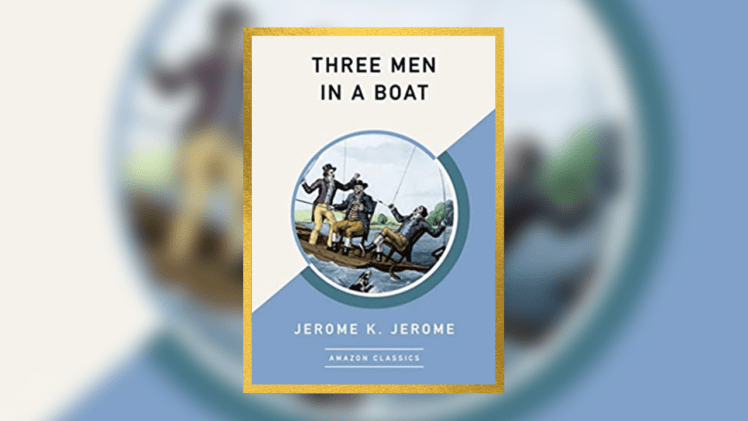
    Time and again, I find myself returning to the age-old humor classic Jerome K Jerome’s Three Men in a Boat. I have sometimes wondered why that might be but have not pursued that train of thought for long in a desperate attempt to avoid paying any cognitive taxes. 

    the cover of the book 'three men in a boat'
    One of my favorite books

    I must admit that it has been life-transforming. Wait, I lie. I have always lived my life that way- avoiding work every chance. 

    It wouldn’t be an overstatement to say that I like almost every sentence written in that book. But on every other re-read, some new wisdom catches my eye.

    The following was the highlight of my most recent re-read of the book: 

    How good one feels when one is full – how satisfied with ourselves and with the world! People who have tried it tell me that a clear conscience makes you very happy and contented, but a full stomach does the business quite as well and is cheaper and more easily obtained.

    Good indeed, no denying that. This might have to do with the fact that I read the book in self-imposed solitary confinement, avoiding all world distractions (food included) as if they were the plague. 

    But that aside, the sentence did leave a good aftertaste. I wondered about it during and after many meals and felt even more strongly that a full belly is a prerequisite for sustainable happiness. 

    Yes, you can be happy without a full belly if you have a clear conscience, but I guess at some point, the grumbling of your stomach will overpower all other senses and thoughts.

    Full disclosure, my belief in my ideas isn’t as steadfast as I would like.

    So naturally, I resort to the public library’s reference section for all the true wisdom out there. 

    This search was quite the workout – moving around in the Psychology, Philosophy, ancient wisdom, and theology aisles- to name a few. A common theme was conscientiousness as the foundational brick for any sustainable human happiness. 

    Out comes Abraham Maslow and his hierarchy of needs, where physiological needs (satiating hunger in this case) are considered key to a satisfied human. 

    And Bam! 

    I see him and Mr. Jerome in my daydreaming mind, shaking hands, hugging, and having drinks at the local bar close to my place. I decelerate my imaginary speeding car and come back to the reality of my own experience.

    The only times I remember having had trouble sleeping was – if I had a presentation at work the following day that I am sure would bring shame to my professional existence, OR I only had a green salad and a soup for dinner. 

    Oh, how powerful hunger is, how accomplished at keeping me awake! 

    Literature tells me love has the same power. Love can make you lose your sleep and your appetite. I thank my stars that I never came across that kind of love (with loss of appetite and sleep, what good would that be to me anyway?)

    This is not to undermine the importance of conscience. Not in the least. Literature worldwide is replete with advice and means of keeping a clear conscience. I wouldn’t comment on my level of conscientiousness; objective self-assessment isn’t my strong suit. 

    But I like to believe that I am reasonably conscientious.

    Now the fun part is, I found myself obsessing over the first part of Mr. Jerome’s sentence, completely ignoring the second:

    “…but a full stomach does the business quite as well and is cheaper and more easily obtained.”

    I can only speak for myself when I say that eating dollops of cream cheese, tzatziki, and a veggie burger gets me tangibly closer to happiness every day than mental cleansing – conscience or otherwise.

    Ogden Nash, from the local library’s fiction aisle, had a terrific insight laid right out: 

    “There is only one way to achieve happiness in this terrestrial ball, and that is either to have a clear conscience or none at all.”

    I have not lost all hope.