Tag: emotional

  • The Last Leaf by O.Henry: Summary, Analysis and Review

    The Last Leaf by O.Henry: Summary, Analysis and Review

    The Last Leaf is one of the most popular short stories penned by O.Henry. First published in the early 1900s, this was part of his short story collection, The Trimmed Lamp.

    The Last Leaf by O Henry: Summary and Plot Analysis

    The story, set in Greenwich village, revolves around the lives of two young female artists – Sue and Johnsy, who live together in a small flat on the third floor of an old house. 

    Johnsy, suffering from pneumonia, is critically ill. She lies in her bed without moving, continually staring outside the window, worrying Sue. Her prognosis doesn’t look good, and the doctor expects her end to be near, given her complete lack of will to live, rendering the medicines ineffective.

    Sue tries to make Johnsy a bit more interested in things around her, but to no avail. Sue begins to paint instead but is soon distracted by Johnsy counting backward, looking outside the window. Sue comes to know that Johnsy was counting the leaves left on the ivy creeper, visible from their window. Johnsy also proclaims that the moment of the last leaf from the creeper falling would be her last breath. 

    Sue, worried sick at Johnsy’s statement, tries to show how absurd that thought was and to convince her not to think such things. 

    Knowing that her efforts did little to convince Johnsy, Sue rushes to seek help from another painter downstairs – a 60-year-old man named Behrman. 

    Behrman’s lifelong ambition was to paint a masterpiece, but so far, he hasn’t been able to paint it. 

    Sue mentions her concerns about Johnsy’s lack of will to leave and her belief that she will sleep forever once the last leaf falls. Seeing no sense in such imaginings, Behrman laughs it off but agrees to honor Sue’s request to pose.

    Johnsy was surprised to see the last leaf still clinging to the creeper the following day and the following evening despite the storm. 

    Filled with remorse at her depression and lack of response to her friend Sue, Johnsy stops thinking of death and moves on. 

    Sue is delighted to see her having soup and combing her hair – something she sees as a sign of the return of her desire to live. The visit by the doctor confirms that Johnsy is well on the path to recovery.

    Once fully recovered, Sue lets Johnsy know of Behrman’s death from pneumonia, painting the last leaf which kept her alive.

    The Last Leaf: Review and My Thoughts

    This story brought back flashes of Gift of Magi; however, I surprise myself when I say that I find this one more saddening than the latter. 

    The lonesomest thing in all the world is a soul when it is ready to go on its mysterious far journey. The fancy seemed to possess her more strongly as one by one the ties that bound her to friendship and to earth were loosed.

    While somber at the core, there are a lot of other flavors in the story. Consider the unnamed physician, for example. There is a certain weird comic relief from the unnamed physician that visits Johnsy, 

    I will do all that science, so far as it may filter through my efforts, can accomplish. But whenever my patient begins to count carriages in her funeral procession, I subtract 50 percent from the curative power of medicines. 

    If you will get her to ask one question about the new winter styles in the cloak sleeves , I will promise you a one-in-five chance for her instead of a one-in-ten.

    And then there is quite the strong emotion that Sue betrays, when asked if love with a man was what was root of Johnsy’s misery.

    Has she anything on her mind worth thinking about twice – a man, for instance?

    “A man?” said Sue, with a twang in her voice. Is a man worth – but no, doctor; there is nothing of the kind.

    Not once is there a mention of the families of either Sue or Johnsy. And as far as I can recall, not of Behrman either.

    The girls seem poor and young but devoted to each other and the craft. 

    The old man downstairs: a drunk but soft-hearted; he is willing to go the distance for them. There is a certain purity in their emotion – otherworldly, seemingly embodying art itself.

    O.Henry has painted for us quite the life of struggling artists. I marvel at how astute the painting is. Almost as good, if not better, than Behrman’s masterpiece.

  • A Dollar’s Worth by O.Henry: Summary and Analysis

    A Dollar’s Worth by O.Henry: Summary and Analysis

    This short story by O.Henry, published in the early 1900s, explores the theme of justice, compassion, and love.

    A Dollar’s Worth: Summary and Plot Analysis

    The story opens with a letter. The letter is a threat from one of the convicts to the judge Mr. Derwent, who had presided over the case leading to his conviction. 

    The judge, used to such threats in his line of work over the years, brushes it aside, although he does make a note of the threat against the district attorney.

    The district attorney, Mr. Littlefield, is engaged to be married to Nancy Derwent, the judge’s daughter.

    The judge informs Littlefield of such a threat, who smiles with contempt, but is curious to know the writer, who, he soon learns, is a man nicknamed Mexico Sam.

    The distraction didn’t last long, as the district attorney was soon called upon to judge the case of counterfeiting by Rafael Ortiz.

    There were witnesses to him passing on the counterfeit coin to purchase a medicine bottle. According to the deputy that brought him in, this was the first time he was caught.

    A woman named Joya Trevinas soon visits them and claims to be the one that made the counterfeit money and got Rafael to pass it along. It was her fault that he was in prison, and she would happily swap places with him.

    Littlefield, having seen such occurrences commonly, denied offering to make any such accommodation. He would prosecute based on evidence and nothing else. Rafael would have to make his case in court.

    Littlefield and Miss Derwent went off for plover shooting later that day. While busy enjoying the shooting and each other’s company, they soon see a man attempting to attack them. Littlefield tries to keep Miss Derwent out of harm’s way while struggling to defend himself against the attacker.

    Littlefield gets minor injuries in a crossfire that ensues, while Mexico Sam, their attacker, dies.

    The following day in the court, Littlefield requests the court to strike off the case and requests a pardon for Rafael Ortiz.

    It is later revealed in the conversation between Littlefield and Kilpatrick that the fake lead counterfeit coin ended up saving their life. He also asked for the address of Ortiz’s girlfriend, Nancy Derwent, who had been meaning to meet her.

    Who doesn’t like happy endings?

    A Dollar’s Worth: Review and My Thoughts

    The story brought back memories of a movie I watched years ago. A movie called The Judge starring Robert Duvall and Robert Downey Jr.

    The story, like the movie, explores the themes of justice, compassion, revenge, love, and gratitude. 

    A disgruntled convict, a fair judge, a clever deputy, and two young men, willing to do whatever it takes to shield their love from harm. The thing about the story is that it is authentic and believable. The evolution of the district attorney’s perspective is very organic and, as a result, heartwarming.

    I can do nothing. The case comes up in the morning, and he will have to make his fight before the court.

    Pity hasn’t a place in jurisprudence.

    Can’t you go down the jacals and find where Joya Trevinas lives. Miss Derwent wants to know.

    Not to say that the judge was any less fair after, but the incident with Mexico Sam, and seeing the mortal threat to the love of his life and his own, opened his eyes to the importance of compassion. At the end of the day, we are all humans.

    Nancy Derwent was shown to be compassionate from the start. Her reaction to the Trevinas’s visit was very different from Littlefield’s.

    Can’t you do anything for them, Bob? It’s such a little thing – one counterfeit dollar – to ruin the happiness of two lives! She was in danger of death and he did it to save her. Doesn’t the law know the feeling of pity?

    I am an expert by no means (read I know nothing), and to me, this quote from Julian Baggini captured the essence of this short story:

    A society needs both justice and compassion, a head and heart if it is to be civilized.

  • Would You Keep Your Promise to Meet Someone Years Later?

    Would You Keep Your Promise to Meet Someone Years Later?

    Every now and then, I feel drawn to a particular genre of movies. Movies, where the lead characters of the same or the opposite sex make a pact to meet at a mutually agreed location sometime in the future. Sometimes in a month, some years, and sometimes in a decade or more. 

    The most recent movie from that genre that I ended up watching was a movie called ‘Before Sunset.’ 

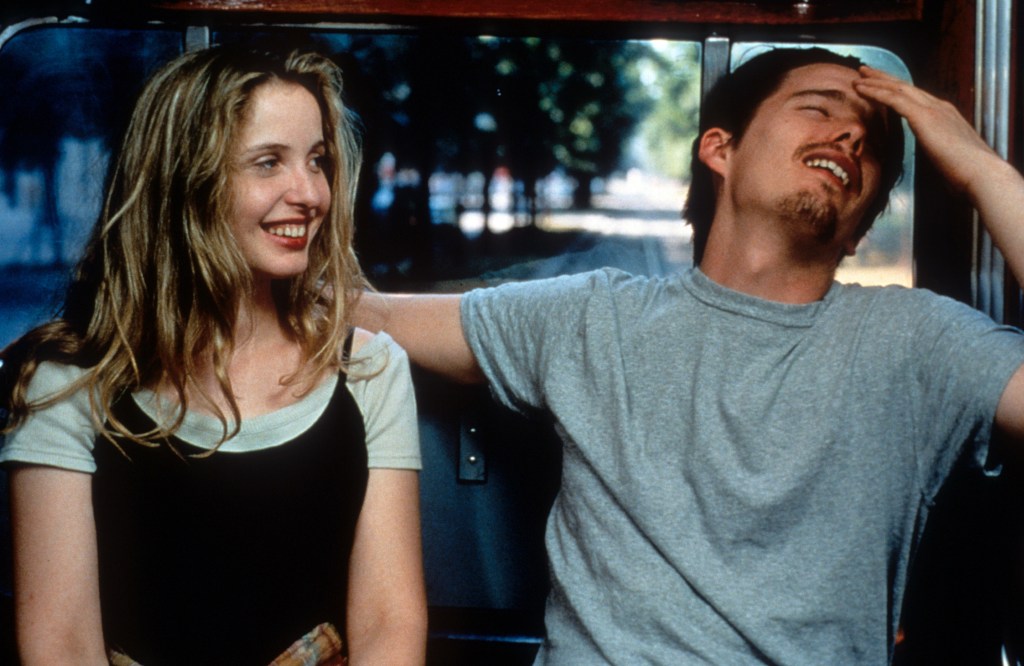
    The movie stars Ethan Hawke and Julie Delpy – the film is simple but endearing.

    a scene from the movie before sunrise
    Julie Delpy and Ethan Hawke enjoying each others company in a scene from the film ‘Before Sunrise’, 1995. (Photo by Castle Rock Entertainment/Getty Images)

    Two strangers meet on a Eurail train, strike a conversation, and end up disembarking in Vienna and spending a night together. 

    Through their free-flowing conversation, roaming the streets of Vienna, they develop an attachment to each other, but instead of acting on it, they decide to meet six months later at the same spot where they parted ways. 

    They only know each other’s first names, nothing more, and agree on having no correspondence in the following six months. 

    I must have seen the movie ten times. But it never grows old.

    Like any other well-meaning fan, I thought their idea of no communication was stupid; I wanted them to make that meeting happen while secretly hoping for a happily ever after. So why the rant?

    I recently read short stories by O.Henry and came across one called After Twenty Years. Yes, you guessed it right! 

    It’s on the same theme, about two friends deciding on a rendezvous two decades later. 

    Jimmy and Bob, two very close friends, were kids when they parted ways, agreeing on a pact to see each other at the restaurant they were together at last. 

    Billy has become a very successful criminal, while Jimmy has taken up a job at the city department.

    While Billy is waiting for his friend at the designated meeting spot, a patrolman walks around and strikes a conversation. Billy is confident that his friend will show up. 

    The patrolman soon takes his leave, and soon after Jimmy shows up. It doesn’t take long for Billy to realize that the man is not Jimmy. 

    The guy mentions that he is a policeman sent by the patrolman, the real Jimmy Wells, to arrest him because his old friend didn’t have the heart to do so himself.

    Of course, I wanted the criminal to be caught but seeing a friend betraying another was still painful. For them to keep a promise made as a child, two decades later, the friendship meant something to both of them. The criminal was entirely in the wrong here, and his friend was duty bound to have him arrested; the moment of betrayal still stings, though.

    I can’t help but wonder if things would have been better if the boys had kept in touch all those years. Was there a possibility of Billy turning Jimmy into a criminal and Jimmy turning him into a police officer? 

    Maybe they would have drifted apart, knowing how different from each other they were, and gone down their separate paths. 

    That’s life as we know it. We grow (and sometimes apart). 

    That possibility, in my mind, still seems a little less painful.

    Was Billy too careless or too gullible to think nothing would change between the friends after two decades of separation? Was he wrong to be fully convinced that the loyalties of ‘yore would still stand? Or was he a little too human? A little too eager to show his accomplishments to his friends and make him proud?

    All I know is that in addition to following the 

    “Location. Location. Location.” mantra all those years, it wouldn’t have hurt him to try:

    Communication. Communication. Communication.

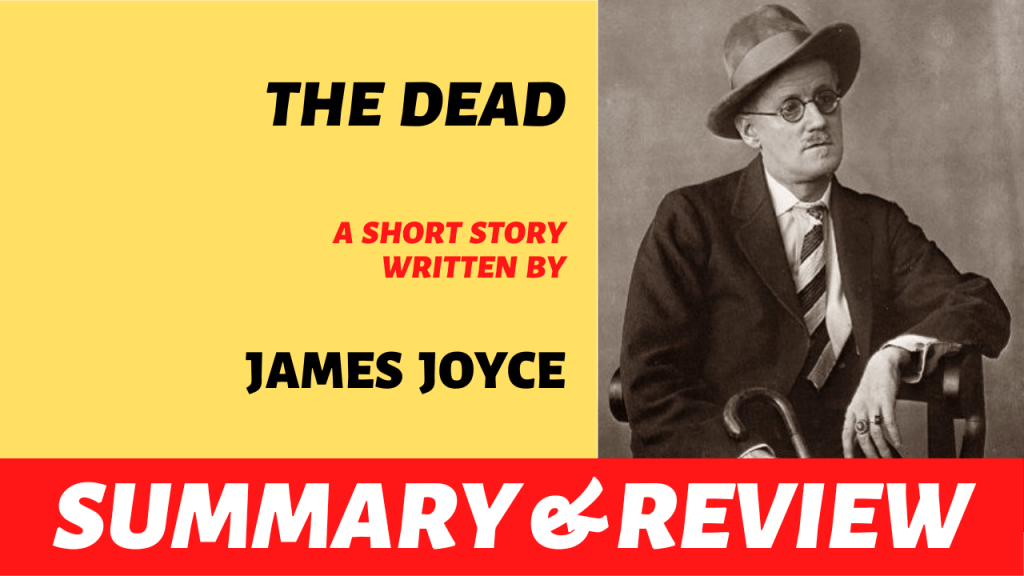
  • The Dead by James Joyce: Review and Analysis

    The Dead by James Joyce: Review and Analysis

    The Dead is a part of James Joyce’s short story collection called The Dubliners, first published in 1914. The Dead is one of the most celebrated short stories of James Joyce, frequently adapted into plays and movies. It had a broad appeal – in and outside Ireland.

    The Dead by James Joyce: Summary and Plot Analysis

    The story opens in the setting of Misses Morkan’s annual dance. Sisters Kate and Julia Morkan, along with their niece Mary Jane Morkan and their housemaid Lily are hosting friends and family at the Morkan residence. 

    Kate and Julia are eager to welcome Gabriel Conroy, a professor, and a writer, along with his wife, Gretta. 

    A very awkward conversation with Lily about her love life makes Gabriel a tad uncomfortable, but he quickly regains composure once in the company of his aunts. 

    Guests keep pouring in, including Freddy Malins – the drunk, and Mr. Browne – the flirt.

    Mary Jane entertains the audience with a piano performance, and guests dance. Gabriel ends up getting paired with Miss Ivors, a fellow university professor fervently supportive of Irish culture. 

    She puts Gabriel ill at ease, labeling him West Briton on account of his literary reviews written for a conservative newspaper. Gabriel fights the allegations and politely declines her offer to visit the predominantly Irish Aran Isles citing his planned European cycling trip.

    Miss Ivors takes that to be his lack of interest in his own country and pokes him for that – Gabriel, cornered, blurts out his dislike for the country.

    He moves on from that conversation and talks to other people, but the bitter aftertaste lingers in his mind.

    Miss Ivors leaves soon after, to the surprise of the Morkans and the relief of Gabriel. Dinner soon follows, with Gabriel at the head of the table, carving out the goose.

    Everyone eats, and Gabriel delivers his speech, expressing his appreciation for his aunts, cousin Mary Jane, and their warm hospitality. His speech is met with loud applause, and everyone toasts their three hostesses.

    Guests slowly begin to leave, and while Gabriel is getting ready to do so, he notices his wife transfixed by a song Mr. Bartell D’Arcy sang in the drawing room.

    As guests continue to leave, she remains lost in thought, completely detached from her surroundings. Gabriel feels drawn to his wife; the aura of mystery around her evokes strong memories of their courtship and young love.

    They leave and head to the hotel for the night’s stay. Gretta continues to be detached and thoughtful, oblivious to her husband’s romantic plans for the night.

    After further prodding by Gabriel, she reveals the cause of her sudden emotional outburst. A song from earlier that evening reminded her of her youth, and in it, a young man called Michael Furey, who was a devoted lover. Michael used to sing the song for her back in Galway.

    He died soon after she left Galway for Dublin, meeting his tragic end after contracting a cold, waiting for her in the cold, outside her residence.

    The Dead: Review and My Thoughts

    What started as a very regular family party – with its drama and chaos, quickly turned into something else – a story of frustrating personal and professional expectations, love, loss, passion, and disillusionment. 

    Gabriel looks like a regular guy – eager to impress people, loves the smell of new books (who doesn’t, right?), and is nervous about public speaking, awkward at small talk (who asks a housemaid about their love life to boot?) but as the story evolves you get to know more about him – his discomfort on being branded a West Briton, his irritation at the paltry review cheques, his frustration at the spousal love lost and the cognitive dissonance resulting from the requirement of letting go of the past, vis-à-vis his inability to do so.

    His wife’s revelation of the death of a young lover makes him uncomfortable, long for the life of passion he never had, and makes him ruminate on the hold the dead have on the living. 

    Escaping the past was a theme in Gabriel’s speech; the speech was so well-liked at the party, but can he practice what he preaches?

    At one point in the story, while Gretta is sleeping and Gabriel is deep in thought, you can’t help but wonder if his wife having a deeply dedicated lover makes him grow even more morose, thinking to himself : 

    Better pass boldly into that other world, in the full glory of some passion than fade and wither dismally with age.

    James Joyce’s The Dead shines brighter as the years pass by.

  • A Little Joke by Anton Chekhov: Summary and Analysis

    A Little Joke by Anton Chekhov: Summary and Analysis

    This is the time of the year when love is everywhere, absolutely everywhere! 

    You just can’t miss the red roses, the greeting cards lining up the aisles everywhere you go. You might also be getting those subtle hints from your partner, your love interest, in anticipation of the gifts they are expecting, come the 14th of February! 

    What if they say that you will be given a joke instead – a joke that will stay with you the rest of your life.

    A Little Joke by Anton Chekhov is not your typical love story. The story is one of his earlier works, published back in 1886. It is also available as part of a short story collection called Fifty Two Stories published by Alfred A Knopf, translated by Richard Pevear and Larissa Volokhonsky.

    A Little Joke: Summary and Plot Analysis

    The story opens with an unnamed young man and a young woman named Nadezhda Petrovna on a bright winter noon. The unnamed man, who is also the narrator of the story, tries to persuade the woman to slide down the mountain with him. The woman is petrified at the prospect and disagrees, but after multiple requests from the man, agrees to do so.

    As they sled and are mid-air, the man whispers, ‘I love you Nadya’. They finally sled to the bottom and come to a halt. Nadya is completely harrowed from such a scary experience and vows never to do it again.

    I wouldn’t do that again for anything. Not for anything in the world! I nearly died!

    It’s not long after she starts wondering if he had said anything of the sort. She looked at the man’s face for clues that might reveal more, but there was nothing to be found. She wondered if nothing was said, and she imagined it all. 

    The riddle obviously troubles her. Were those words spoken or not? Yes or no? Yes or no? It’s a question of pride, honor, life and happiness.

    She is visibly disturbed by her cluelessness on the matter. The man offers to take her home. She declines. Determined to find out the truth for herself, against her better judgment, she asks the narrator if they could sled again.

    I… I like sledding. Can we do it one more time?

    They sled again, and the same thing is repeated. She is in agony and wants to know the truth. It still evades her. They retire for the day. Nadya leaves a note for the narrator that if he goes sledding, she would like to tag along.

    If you go sliding down the hill for me, will you take me along?

    They go sledding again, and the same incident is repeated. Nadya doesn’t have a clue if those words are actually being said or she has been imagining it all. But that doesn’t matter to her anymore.

    She soon gets used to the phrase, as to wine or morphine. She can’t live without it. True, to go flying down the hill is as frightening as before, but now fear and danger lend a special allure to the words of love, words that constitute as much of a riddle as before and torment her soul.

    Winter fades away, and Nadya is visibly sad now since neither the wind nor the narrator will be around to say those magical words to her, the latter on account of his long-term move to Petersburg. 

    Years pass by, and the narrator reveals that Nadya is now married with children, and he is still not sure why he chose to joke with her.

    As for me, now that I am older, I no longer understand why I said those words, why I was joking…

    The readers are left wondering if it was actually a joke.

    A Little Joke: Review and My Thoughts

    If you ask me, I would call it a load of bollocks. No way! It could not have been a joke. But that is the die-hard romantic in me having a knee-jerk reaction.

    Note to self: Calm down, tiger! Let’s try to be as logical as we can be.

    The guy observes Nadya closely and is able to see the whole spectrum of emotions on her face. 

    Strike one.

    He knows what to say to make her feel happy when seeing her in pain. 

    Strike two.

    After years apart, he still thinks about her and their time together when they were young, eons ago. There you have it.

    Strike three.

    But the funny thing is being right about this (in my head) doesn’t make me happy. There is a lot of pain and regret about leaving things unsaid. The dark clouds of what – if is not something I would want hovering over my head for the rest of my life.

    Would you?

    Moral of the story: use your words. Enunciate. Life is loads of fun that way.