Latest Comics

  • The Old Man and The Sea: Summary, Analysis and Review

    The Old Man and the Sea is a novel written by Ernest Hemingway. It was first published in 1951. It is a story of an old fisherman named Santiago who catches an enormous marlin (a type of fish) far out in the sea only to lose it and the pain that accompanies that loss.

    “Let him think that I am more man than I am and I will be so.”

    This statement by the old man from the Old Man and the Sea sums up the essence of this tale of poignant yet uncelebrated heroism in the face of a series of misfortunes.

    old man and the sea novel cover
    The cover of The Old Man and The Sea

    This is one of the best works on Ernest Hemingway, touted as the major contributor towards him being awarded the nobel prize. He was awarded the Pulitzer Prize for Fiction for this novel.

    To think of it, isn’t it ironical that a man’s story of a soul-wrenching loss got Hemingway the noblest prize of his life time?

    The Old Man and the Sea: Summary and Plot Analysis

    The protagonist Santiago is a fisherman, who is considered the most unlucky man of the village, having gone for months without catching a fish, so much so that people do not want to be associated with him, lest his bad luck rubs off on them.

    This includes his former apprentice – a young boy called Manolin who has deserted him for a better, prosperous ship.

    He carries the albatross of misfortune around his neck.

    This apathy and distrust, however does not deter him from fishing. Rather on the contrary, he sets out to the open sea – off Florida coast – and goes farther than he usually does – in an attempt to catch fish.

    He does catch one – only to find that the fish is far too big for him to handle by himself.

    Restricted by resources and his old flailing body, but backed by years of experience fishing, Santiago decides to delay killing the fish, betting on his patience – he lets the line go slack, only to find himself being dragged out to the sea for three days.

    He eventually feels as if he has developed a sense of kinship with this creature he has set his mind to kill.
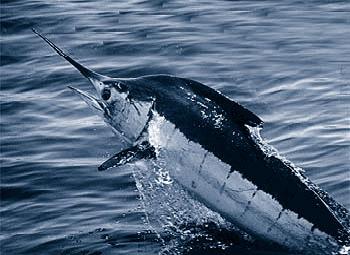
    marlin fish
    Marlin – a species of fish

    The fish eventually grows tired, which is when Santiago kills it. This magnanimous catch is still too early for the victory trumpets.

    Santiago decides to drag the fish behind the boat. This proves not only to be a failure but dangerous – in the sense that the blood of the dead fish, attracts sharks to the boat.

    Not only is there no hope to take the fish with him, which the sharks were feasting big portions of, flanking his ship from all directions , his life is also threatened.

    The sharks eventually discard the ship, but not before every piece of flesh from the giant Marlin is gone, leaving behind a skeleton of his prized catch. The shark took away the fish and last remnants of any hope that the old man felt in his heart.

    There is, however, a silver lining to this heroic yet grim tale of the old man, when looking at the big skeleton of fish on his boat, people seemed to have changed their perception of him and Manolin offers to fish with him again.

    There is light at the end of the tunnel.

    Want to read The Old Man and The Sea?

    The Old Man and the Sea is available on Amazon if you want to get yourself this book. You can use the links given below to check the price of this book:

    Check Price on Amazon US
    Check Price on Amazon Canada
    Check Price on Amazon India

    The Old Man and The Sea: Review and My Thoughts

    Old Man and the Sea is one of the most famous works by Ernest Hemingway.

    Deceptively simple on the surface, this is a testimony to the vagaries of human spirit – a tale of bravery, heroism, optimism, pessimism and an old man’s struggle against the elements and his own demons.

    This novel is an old man’s dance with success and failure taking turns, but throughout it, shines the human quality of perseverance and the man’s undying effort to fight against the elements and his own doubts.

    What is the main theme of the Old Man and the Sea?

    As Hemingway shows the old man fighting with the Mighty Merlin, holding the rope with every single morsel of strength his flailing body could muster, ignoring the cuts, the pain, the hunger and the sleep – fighting the mighty creature as if something more than his life was at stake, we are simply left to wonder how powerful a simple man can be, with the simplest of resources in the simplest of habitats.

    That you can be more than what you think you are only when you think and accept that in your heart.

    Its simple yet very profound- the realization that how the prospect of a looming death, whether of the body or the spirit – can leave a man invigorated, or rather much more powerful than before. This small novel from Hemingway is a tribute to the human spirit – with all its abilities – for its ability to feel love and jump back from loss- ever so powerful.

    That, human at one with nature, is a magnificent beast that stands tall and bows down to nothing – not its own mortality and not to the magnificent demons of his own mind. We are all heroes of our own epic struggles – which we lose or we win every single day of our lives.

    Scarred maybe, yet ever hopeful.

    And yes, the old man was right when he said “Let him think that I am more man than I am and I will be so.”


  • The Metamorphosis by Franz Kafka: Summary, Analysis and 3 Life Lessons

    The Metamorphosis is a short story (novella) written by Franz Kafka. It was published in 1915. It was originally published in German and its title was Die Verwandlung. It is a story of a salesman named Gregor Samsa who wakes up one day to find that he has mysteriously transformed into an insect.

    Franz Kafka, in his remarkable short story ‘The Metamorphosis’, takes you for a stroll into a world that is mundane yet surreal, absurd yet intriguing, defining a writing style much known and admired as Kafka-esque.

    The Metamorphosis Summary

    The story revolves around the Samsa family with Gregor Samsa, a traveling salesman and the sole breadwinner for the family, as our protagonist.

    He wakes up late one morning dreading the repercussions of not showing up at work on time, only to discover that he has somehow changed into a monstrous vermin.

    the cover of the metamorphosis

    “I cannot make you understand. I cannot make anyone understand what is happening inside me. I cannot even explain it to myself.” Gregor thinks to himself.

    He has lost all his ability to communicate with humans, which is extremely unsettling and unreal to him. His transformation is later discovered by his family members, and eventually his manager who had come to enquire about his whereabouts earlier that day.

    The manager scared out of his wits upon seeing Gregor in his new form, immediately flees, while the family is left to grapple with the enormity of this new problem at hand.

    Having been shoved and locked into his own room, Gregor gradually progresses from a state of disbelief (thinking that a good night’s sleep is going to make it all go away), to a reluctant acceptance of his new reality.

    On the other side of the wall, the family was similarly horrified and perplexed about what the future held for them, with their son and his earnings out of the picture and what people would think, if their new misfortune came to be known to the world outside.

    Gregor and the family, after a painful yet short phase of acceptance, begin to settle into a routine over the following weeks and months.

    Gregor discovers his new form, his likes and dislikes. His newfound love for things rotten, which is confusing to his old self, but essential for his sustenance.

    Grete, his sister and the only individual he feels still understands him, assumes the role of his primary caretaker, feeding him and cleaning his room.

    In a series of events that follow, Gregor finds himself paralyzed by his father’s attack, limiting his capability to move. He slowly sees the growing family indifference towards him. He even sees her beloved sister’s changing behaviour towards him.

    This starts his gradual descent to hopelessness and he starts to lose appetite for food and life.

    A very short-lived respite for Gregor comes in the form of music when his sister plays violin for the guests/boarders. Gregor, inherently drawn to it, moves towards the living area and brings himself in full view of the boarders, the boarders now horrified, give their notice to the family to leave without payment.

    Absolutely horrified by this turn of events, Grete, now vehemently opposes the idea of Gregor continuing to live in the house.

    How does Gregor die in the Metamorphosis?

    Gregor’s despair hits rock bottom, as his sister, the one he held dearest was now against him. He resigns himself to his room, famished and hopeless, never to see light of another day.

    The family, when informed of his demise the following day, asks the guests to leave and takes a trip to the country only to find their new life purpose of finding a husband for Grete.

    Although I started off reading the story with a sense of disbelief in the initial pages, I found myself hooked as it progressed, touched to the extent that I was visibly disturbed by the end.

    Want to read The Metamorphosis?

    The Metamorphosis is available on Amazon if you want to get yourself a copy. You are welcome to use the links given below to order a copy of the book:

    Check Price on from Amazon US
    Check Price on Amazon Canada
    Check Price on Amazon India

    3 Life Lessons from The Metamorphosis

    Although this story left me in pensive mode for quite a few days after I was finished , I could not help but notice that there are so many hidden lessons to learn from.

    1 – Respect yourself

    However clichéd it might sound, but a healthy self-respect for ourselves is vital for happiness and contentment. If we let other’s perceptions of us define what we think we are, how different are we from Gregor?

    two hands holding yellow flower
    If you don’t respect yourself, others have a hard time respecting you.

    2 – Live in the present

    Considering that Kafka wrote this story close to a century ago, It is scary how relatable this is. Gregor was always worried about his future, always worried for not being able to provide for his loved ones, so much so that he didn’t get time to even engage in a decent relationship,

    Also when faced with the grim form he saw himself in, his first reaction was not something to help himself, but was to get to work as soon as he could. How many of us have seen Gregors like that around us, at workplace or otherwise?

    3 – Love unconditionally

    The first reaction that Gregor’s family has upon his transformation was isolating him to avoid him getting exposed and bringing a bad name for the family. He was shown love and consideration at very few occasions, far and sparse, if at all we could call it love,

    When faced with a fearful situation, we always look to be comforted by the ones that we hold closest. When not finding solace there, it is natural to quickly fall into the depression trap.

    So when we love unconditionally, we are not just doing a great service to the loved one but also to ourselves.


  • Snowflakes Vs My Eyes

    Carl Reiner once said – “A lot of people like snow. I find it to be an unnecessary freezing of water.”

    I found it very un-romantic, who does not like snow!

    The soft white bliss from the heavens to the earth in addition to being the perfect snow fights memory maker. After all, didn’t Markus Zusak (the author of The Book Thief) call a snowball in the face to be the perfect beginning to a lasting friendship?

    Those were times, when I was enjoying my childhood in pure tropical bliss. At that point in my life, nothing was worse than a 40 degree Celsius. I used to dream about visiting a country where I could actually see snow in person, not on the screens.

    Those were the only dreams that filled my days and nights.

    Fast forward a couple of decades, and I found myself in a cold country – cold and beautiful. My dreams finally decided to meet me in person. And guess what, like a crazy barking lunatic, I ran out at the first glimpse of snow – short of singing and dancing, giggling like a schoolgirl.

    Your first snow is like your first love, that’s what they say. That’s exactly what it is. Your second love might be Barack Obama, the coolest of them all, but guess what? You are always going to sneak into your ‘first-love-memory-corner’ every now and then.

    Long story short – snow started to look less and less dreamy as the years passed by – to the extent that I have actually started dreading a snow forecast now. Somehow, snowflakes now have the precision to hit my eyeballs as soon as I step out. Smack dab in the middle of my eye!

    Have the snowflakes trained their algorithm for an eye ball landing over the years? Or were they always precise from the start or did I choose to ignore them earlier and just danced and sang like an idiot in the rain?

    Is it the snowfall or is it me?

    Do I agree with Carl Reiner now?

    Hell yeah!

  • Jonathan Livingston Seagull: Summary and Plot Analysis

    Jonathan Livingston Seagull is a short novel (or novella) written by Richard Bach in the 1960s. It is a story of a seagull whose name is Jonathan Livingston who is trying to perfect the art of flying.

    Over the years, this novel has become a classic and is often considered one of the best inspirational or motivational books ever written.

    Who wrote Jonathan Livingston Seagull?

    Jonathan Livingston Seagull is written by Richard Bach.

    Interestingly, it was not written as one complete novel initially; Bach wrote it as a series of short stories which was published in a magazine called “Flying” in the later half of 1960s.

    Then, the series of short stories was compiled by Richard Bach and was first released as a book in 1970. The book was illustrated by Russell Munson.

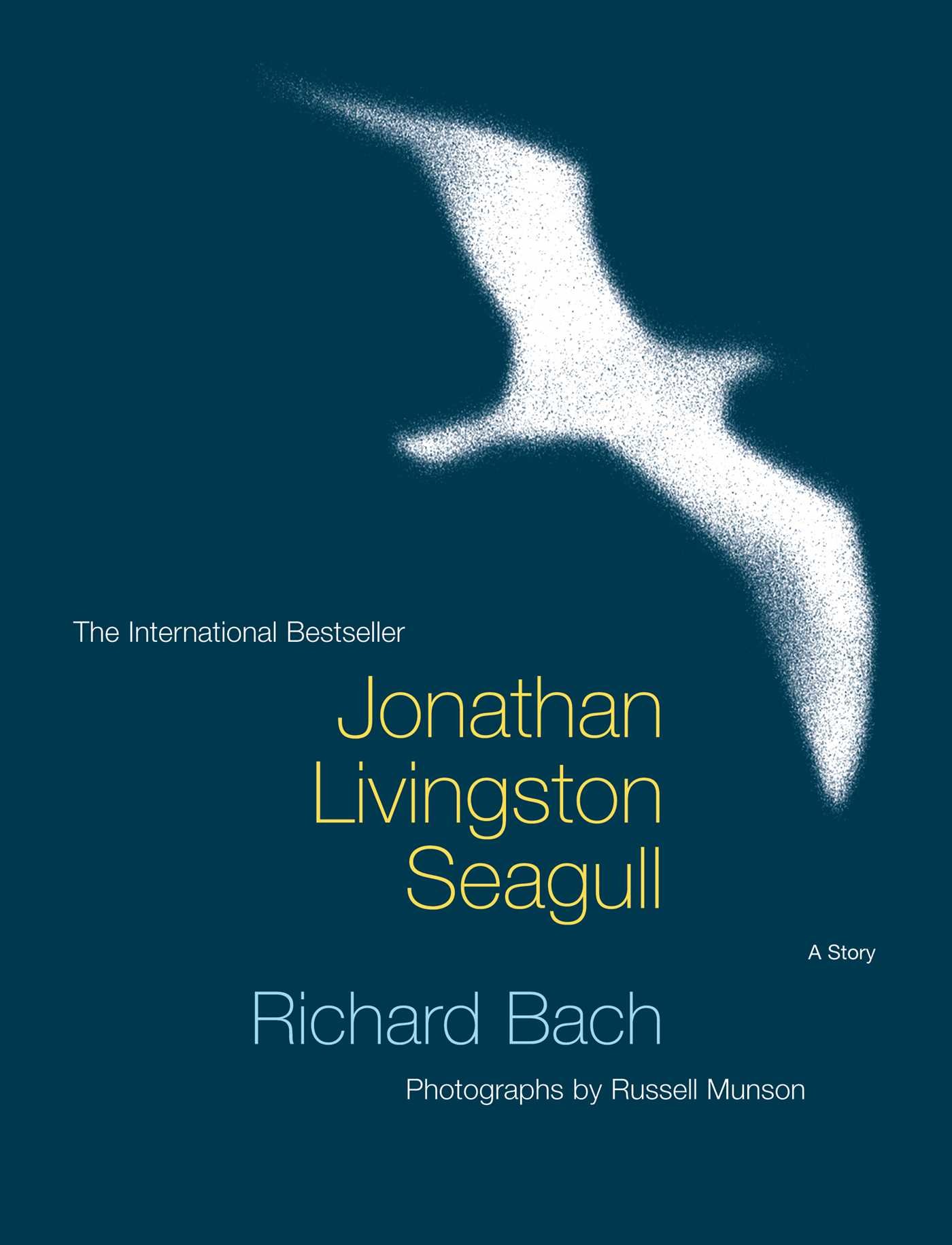
    jonathan livingston seagull book cover
    Cover of Jonathan Livingston Seagull

    Within a few years of publication, Jonathan Livingston Seagull became a best seller and sold millions of copies and became known worldwide.

    Who is Jonathan Livingston Seagull?

    Jonathan Livingston is the name of the protagonist of book Jonathan Livingston Seagull. He is a seagull who tries to perfect the art of flying.

    The name of the novel is also the name of the protagonist of the novel’s story.

    Book Summary: What is Jonathan Livingston Seagull about?

    Jonathan Livingston Seagull, a book by Richard Bach is a story about a seagull’s unbounded passion for flight despite rebuke from his clan, his friends and his most loved ones. His perseverance, and his unquenchable thirst for achieving perfection. Touted as One of the 50 timeless spiritual classics , you will be amazed how he has put this profound truth in such simple words.

    Our seagull is bored with the mundane struggle for food every day and disheartened by the lack lustre passion-less lives the seagulls around him love and expect him to conform to. The lack of encouragement from his fellow folk does not deter him from following his passion and he continually keeps pushing himself to learn all he can about flying.

    This lack of conforming to the norms does not go down well with his folks and he is subsequently expelled from the flock, bringing shame to his family. A new outcast but free nonetheless, he continues to learn, coming closer and closer to his goal of achieving perfection.

    This skill acquired with practice brings him immense joy and resulting contentment in his life.Although alone now, he is a happy seagull.

    One fine day, two seagulls meet him and tell him of a better world found through perfection of knowledge, he meets a fellow seagull that has the same passion for flight as himself. His dedication and love for the craft makes him a very distinguished bird and Jonathan prides himself in the fact.

    white seagull flying over blue water
    Jon’s dedication and love for the craft makes him a very distinguished bird. (Image by Bruno Glätsch from Pixabay)

    Here Jonathan makes friends with a wise gull that reveals to him the secret of
    instantaneous movement anywhere in the world, Jonathan marvels at this skill, eventually acquires it and is humbled by his knowledge. He has acquired what he wants , but still feels empty.

    Jonathan now feels the urge to return to earth to find others like himself to tell them what he’d learned and to spread his love for flight. He is successful in this endeavor and soon finds himself around other outcast but passionate seagulls.

    The first of his students, Fletcher Lynd Seagull, is quick to grasp learnings from Jonathan and ultimately becomes a teacher in his own right. Jonathan leaves to teach other flock thus spreading his love for the flight and the timeless truth of
    limitless human potential.

    Life lessons from Jonathan Livingston Seagull

    “He spoke of very simple things- that it is right for a gull to fly, that freedom is the very nature of his being, that whatever stands against that freedom must be set aside, be it ritual or superstition or limitation in any form.

    “Set aside,” came a voice from the multitude, “even if it be the Law of the Flock?”

    “The only true law is that which leads to freedom,” Jonathan said. “There is no other.”

    Of all the great things Jonathan Livingston seagull has said in Richard Bach’s book of the same name, this speaks the most to me.

    To me Jonathan Livingston seagull brings 3 life lessons:

    1- Our potential is limited only to the extent we let it to be

    And I do not mean in ‘we as humans use only 10% of our potential’ way, but more often than not, we are limited by our perception of what we are capable of achieving. Changing that mindset is solely under our control. Why should we let someone else tell us what we can and can’t do?

    Remember Chris from the movie ‘Pursuit of Happyness’? The scene where he tells his son, “Hey. Don’t ever let somebody tell you… You can’t do something. Not even me. …’.

    That about sums it up.

    2- Find your passion and be relentless in your pursuit of it

    Our seagull Jonathan was exemplary in illustrating that sometimes following our passions can take us away from places and people that we hold dear, but in no way did that deter him from following his passion, or giving it his all. It’s because at the end of the day, he was answerable to himself. And so are we.

    To quote Steve Jobs, “Stay hungry, stay foolish”. Being loyal to our passion brings us
    profound happiness and contentment and that’s the state that we all ultimately strive for. Don’t we?

    3- Pay it Forward

    Jonathan didn’t just stop at achieving perfection, he took it a step further. He thought it best that learnings be shared with others, to let them know that we can think beyond our present circumstances for a blissful future.

    It may not be entirely selfless given that there is a significant upliftment we feel when we help others , but Hey! its feeding two birds with one scone.

    I cannot help but quote Film critic Roger Ebert who praised the book by saying ” the book was so banal that it had to be sold to adults; kids would have seen through it.”

    Food for thought.

    Want to read Jonathan Livingston Seagull?

    Jonathan Livingston Seagull is available on Amazon if you want to get yourself this book. You can use the links given below to check the price of this book:

    Check Price on Amazon US
    Check Price on Amazon Canada
    Check Price on Amazon India

  • What You Seek Is Seeking You: What Exactly Does It Mean?

    ‘What you seek is seeking you’- The magnanimity of this short yet power packed quip never ceases to amaze me . Just like wine, they say, the older it gets, the better it becomes.

    I often imagine Rumi just walking in the glorious Iranian bazaar , wondering and muttering to himself, randomly looking at the sky when this thought must have struck him like a bolt of lightening, I wonder if it made him look at his life in the rearview mirror or if he started connecting the dots in his life backwards, the famous Steve-Jobs style.

    I have played that scenario of his enlightenment in my mind in a thousand different variations, never been able to zero down on one, but the realization itself has been nothing short of life – transforming for me.

    It often gets me thinking for long periods of time, sometimes unknowingly having my gaze fixed on a stranger in a café, where a flurry of questions zigzagging through my head in random Brownian motion: What did I seek in the past? What am I seeking now? What am I going to be seeking in future? What am I seeking? And most importantly Why am I seeking what I am seeking? ( A little episode of brain fog ensues….)jigsaw puzzle.jpg

    And like a jigsaw puzzle , a variety of colors and shapes appear in front of my glazy eyes- only in the form of experiences making it feel like a little time machine experimentation. In this case, more often than not, my personal time machine seems to be eternally rigged to go looking for stuff in the past. I call it the Past Ninja. A deaf past-Ninja, A tunnel-vision-Deaf-Past-Ninja.

    Anyway, So here am I-A kid, drooling for icecream all the time and that’s the single most important non-living object in my life and guess what a bunch of relatives make sure that those icecream companies are never out of business and my current frocks always seems one size short.

    I was seeking icecream while latent obesity was seeking me. Fast forward to High school library, like every text book nerd, I am pouring over books in my one size short frocks (having realized over the years that ice-creams are faster than willpower) processing books as if from an assembly line, and shuddering at the sound of footsteps coming in my direction, lest those footsteps carry a mouth that doesn’t want to stop talking and even more so if they wanted to talk to me instead of the hottie next seat.As I sought books, they somehow swarmed to me even more, creating a seemingly protective wall around me, blocking out small talk and ‘strangers’ who were in the same class as me. I have a lot of friends, only that they are not physical people (they are only in my head). I am best friends with JK Rowling, Earnest Hemingway, Oscar Wilde, Somerset Maugham and Jerome K Jerome to name a few.While I was trying to avoid the physical noise of the footsteps approaching me, there was
    something else that was seeking me, and those were the characters that were seeking me.Cut to the present me, working a corporate job with the same innate tendency to avoid small talk, judging myself for every smile I fake and expression-less greetings that I get from my ‘stranger’ colleagues. Every now and then , in one of those afternoon meetings, my mind can not keep off from wandering to the same sand as Rumi’s.What have I sought all my life – has actually sought me, not in the exact form I expected it to be , but in a slightly twisted yet interesting way, and I am thankful that it is that way. Otherwise, where’s the fun in life?(More on that some other day)All of that random musing to say, in my opinion, what we seek always seeks us- albeit sometimes exactly the way we see it and sometimes in the complete opposite way. Sometimes comprehensible and sometimes the London-city-jigsaw -puzzle way. But guess what?Dots do connect backwards and if you take the same rigged time machine as me for a journey to your past, you will hopefully discover some pattern in your own existence. Maybe your Rumi is a cool beefy guy roaming shirtless at a beach in Barcelona.

    Oh wait, I started projecting again!