Latest Comics

  • A Man Called Ove: Summary, Plot Analysis, Review and Quotes

    A Man Called Ove is a fiction novel that was originally published in 2012. It is written by Fredrik Backman – a Swedish writer and blogger. The novel revolves around a 59-year old man whose name is Ove. It tells the story of love, friendship, compassion, grief and the importance of friends and community in coping with loss.

    “He had never understood the need to go round stewing on why things turned out the way they did. You are what you are and you do what you do, and that was good enough for Ove. He didn’t quite know what he should say to avoid seeming uneducated and stupid, but it proved to be less of a problem than he had thought. She liked talking and Ove liked keeping quiet.”

    That’s Ove, I say this name like I know the person, I have talked to this person, I have met this person in passing, I have seen this person in a mall. I may even have been this person at times-all that to say, this person is everywhere!

    Say Hi to your grumpy neighbour! I am talking about A Man Called Ove (Swedish: En man som heter Ove): it is a 2012 novel by Fredrik Backman, a Swedish author, columnist, and blogger. It was published in English in 2013.

    The English version reached the New York Times Best Seller list 18 months after it
    was published and stayed on the list for 42 weeks. It has also been adapted into a movie, starring none other than Tom Hanks! How about that?

    A Man Called Ove: Summary and Plot Analysis

    A Man Called Ove is a story of love, friendship, compassion, grief and an ultimate ode to the importance of friends and community in coping with loss.

    Meet Ove (pronounced oo-vaa) – a curmudgeon, i.e. a bad tempered person, especially an old one, the kind of person who will call a idiot an idiot on his face, ‘who points at people he dislikes as if they were burglars caught outside his bedroom window’.

    He is a creature of habit with unrelenting principles, routines and temper ready to go off at the drop of a hat. A man with zero political correctness and zero tolerance. People in his community call him – ‘the bitter neighbor from hell’.

    It is very easy to mistake him for that, until you start looking closer.
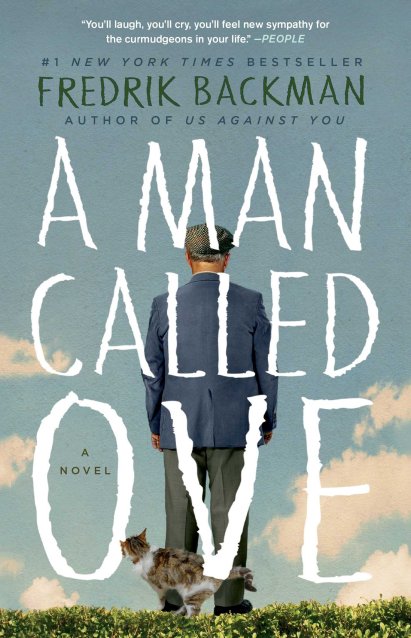
    picture of the cover of a man called ove
    The cover of “A man called Ove”

    What you will find on closer inspection will certainly surprise you, if not completely throw you off.

    You look at this human portrait a bit closely and you start noticing that there is a sadness in his life manifesting in a variety of forms – a difficult childhood, absence of a motherly figure growing up, being orphaned at a very young age, losing of a baby, having wife suffering from a life altering accident, losing friendship of a close friend, losing his wife and a series of failed attempts at taking his own life.

    You begin to realize that it’s a miracle for this man to be alive, let alone having the amount of sanity he does. Always quick to judge, aren’t we?

    He is convinced that he is going to end his life, it is simply a matter of when until one day, where a chatty young couple – his new neighbors – accidentally flatten Ove’s mailbox.

    From that moment on, things begin to change.

    What’s unravelled is a comic yet heartwarming tale of defiant cats, unexpected friendships, unwanted roommates, playful little girls with lots of crayons, rescued
    friendships and finding, exposing the Ove that his wife had fallen for.

    You don’t  only start to understand why Ove is who is, but also love and start cheering for him.

    Want to read A Man Called Ove?

    A Man Called Ove is available on Amazon if you want to get yourself a copy. You are welcome to use the links given below to order a copy of the book:

    Check Price on from Amazon US
    Check Price on Amazon Canada
    Check Price on Amazon India – #1 Bestseller in Humor category

    4 Reasons why you should read “A Man Called Ove”

    I picked up this book as my typical romance dose of the month having read rave reviews about it, but came to like it for reasons far beyond than that, to the extent that I might even sound like a raving barking lunatic going on and on and on about it.

    1 – Funny One Liners

    I literally rolled on the floor laughing when I read these – “that time Rune drove a Volvo, but later he bought a BMW. You just couldn’t reason with a person who behaved like that.”

    Here’s another one:

    “Ove feels an instinctive skepticism towards all people taller than six feet; the blood can’t quite make it all the way up to the brain.”

    I like this quote for two reasons; first- it makes me one of the smarter people as per Ove’s definition and second, I get the required ammunition to get back at all my tall friends for years of teasing me over my ‘minuscule’ stature.

    2 – Timeless wisdom

    I – “Ove, only a swine thinks size and strength are the same thing. Remember that.” And Ove never forgot it.”

    This piece of wisdom imparted to Ove from his father reiterates something that I have always known but seem to forget as the years passed me by. I am sure this would have come in handy as a reinforced principle of thought growing up amongst a bunch of bigger bullies.

    II – “And if you don’t know the story, you don’t know the man.”

    Simple, yes, but hits the right spot. It is very easy to judge a person for what they are or have done to us today completely ignoring the story behind it. I have been guilty of doing that way too many times in my life than I would like to count. This reinforces my belief that a little patience and empathy goes a long way in having better conversations and relationships, no matter what kind they are.

    III – “Has never liked the feeling of losing control. He’s come to realize over the years that it’s this very feeling that normal folk like and strive for, but as far as Ove is concerned only a complete bloody airhead could find loss of control a state worth aiming for. He wonders if he’ll feel nauseated, if he’ll feel pain”

    Pardon my use of strong words but I am in complete agreement with Ove’s viewpoint here. Or maybe I am saying that simply because I am a ‘chicken’? I like to be in control and the idea of losing it completely freaks me out. Maybe time will change that. Who knows?

    But for now, Ove wins!

    3 – Sarcasm

    “His heart is too big.”

    If you thought that Ove was always on the giving end of sarcasm, you are wrong. He was on the receiving end as well and when that happened, it was twice as hilarious. When Ove was hospitalized for a medical emergency and doctor tells Pravaneh that it’s the size of his heart that is the problem, she almost rolls on the floor laughing.

    “Ove points at him with exasperation. “You! You want to buy a French car. Don’t worry so much about others, you have enough problems of your own.”

    I am not sure if this is Ove or Fredrick Backman himself , but this cracks me up every single time. Ove’s biting sarcasm on everything auto is ‘laugh-out-loud-like-a-creep’ funny.

    4 – Of Love and Loss

    “It’s a strange thing, becoming an orphan at sixteen. To lose your family long before you’ve had time to create your own to replace it. It’s a very specific sort of loneliness.”

    “Then Mum died. And Dad grew even quieter. As if she took away with her the few words he’d possessed.”

    “One finds a way of living for the sake of someone else’s future. And it wasn’t as if Ove also died when Sonja left him. He just stopped living.”

    I loved the book for its sarcasm, laughter, fun and friendships, but I hated it too. Although, the reason for it is more personal than literary, this book made me cry. I was quick to judge Ove for the harsh person he was in the initial pages of the book, but as more and more was revealed about his past making him what he was, it teared me up.

    As if losing his mother at such a young age was not bad enough, losing his father and all family before he was barely an adult is such a sad state for a child, or anyone for that matter to be in. I was happy when he found the love of his life, but then having lost a child and then losing her to a sickness again was so saddening.

    That was just part of the reason why. I was also saddened by how quick I was to judge.

    All in all, this book led to be a major eye-cleanup exercise for me.

    In all these years, I have realized that a book is much more powerful when you feel all the emotions the writer intended for you to feel.

    “Love is a strange thing. It takes you by surprise.”

    And so does this awesome novel by Fredrick Backman.
  • The Missing Piece Meets The Big O: Summary, Meaning and 4 Life Lessons

    The Missing Piece Meets the Big O is a short story (conveyed through poems and drawings) written by Shel Silverstein. It was first published in 1976. The story revolves around a “Little Piece” who is looking for its perfect match that would ‘complete’ it.

    “I was hoping that perhaps I could roll with you…”

    “You cannot roll with me,” said the Big O, “but perhaps you can roll by yourself.”

    This exchange between the Little Piece and the Big O captures the essence of a heartwarming tale of self-love and discovery in ‘Little Piece meets the Big O’ by Shel Silverstein.

    He nudges us lightly to the unexplored lane of self-love. His genius lies in the simplicity with which he has relayed his heartwarming tale. Behind his simple words lies the profound truth that there is no such thing as a perfect match.

    The Missing Piece Meets the Big O: Summary, Meaning and Plot Analysis

    The book is centered around Little Piece – who is looking for its perfect match that would complete it.

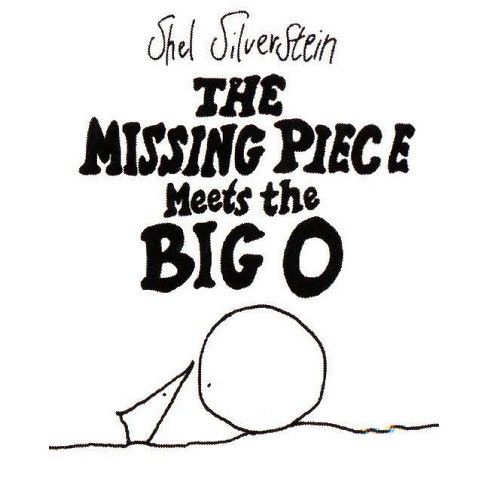
    Cover of The Missing Piece Meets The Big O
    Cover of The Missing Piece Meets The Big O

    it saw all kinds of pieces coming up to it; some fit but couldn’t roll and some that could roll, but didn’t fit. It learned to avoid the hungry and fragile ones, found and let go of the over-analyzing ones and even tried to make itself attractive for the ones it liked.

    None of that worked until it found one that fit, atleast at the start. All was well until the missing piece began to grow. Both of them were not expecting or ready for that to happen.

    This was heartbreaking for the missing piece and eventually they both part ways, making the missing piece alone again. The Missing piece again finds someone that it thinks might be a perfect fit. It has now found the Big O.

    It proposes to roll with it only to be told in response that it could try rolling by itself. It finds the idea strange, the idea of a pointed missing piece to be able to roll by itself, nevertheless, she tries to explore that idea and Lift-Pull-Flop… Lift-Pull-Flop…. it was able to roll by itself!

    an image of a page from missing piece meets the big O

    Why I love The Missing Piece Meets the Big O?

    This tale is an amazing testimony to the simplicity with which Silverstein has driven the profound message home in so few words, the way he has named these characters: the Missing Piece, the Big O… it’s genius!

    The number of myths that this tale has busted, the quintessential silver lining and not to forget the happy ending!

    Want to read The Missing Piece Meets the Big O?

    The Missing Piece Meets the Big O is available on Amazon if you want to get yourself a copy. You are welcome to use the links given below to order a copy:

    Check Price on Amazon US
    Check Price on Amazon Canada
    Check Price on Amazon India

    4 Life Lessons from The Missing Piece Meets the Big O

    There is no perfect match

    While the missing piece feels alone waiting for something that will come along and complete itself, it inherently assumes that it is not complete by itself. It thinks that something more is needed for it to feel good about itself and it fails to look at the world without that assumption embedded in it.

    How many times have we turned into a ball of wax when we see Tom Cruise confessing to Renee Zelleweger in Jerry Macguire – ‘You Complete me’?

    Don’t stop trying

    Other pieces took advantage, ran over her, some were too fragile to have plopped right in front of her; some it scared away with its flashy behavior, but never once did our little missing piece quit.

    image of a page from the book the missing piece meets the big O
    A page from The Missing Piece Meets the Big O

    It kept the faith alive and even resorted to tricks to make her dream more achievable, like making itself attractive, it tried to solicit interest, it even asked people explicitly if they would take it along.

    Be open to experimentation

    Believe that what you end up getting might be different from what you envisioned, but in no way does it mean that what you end up with, is any less than what you had in mind before.

    Every relationship, bitter or sweet, has a place in our lives

    The Little Piece learnt from being ignored that it needed to do something to attract attention, when attracting too much attention, it realized that it was scaring the shy ones away.

    When trying to appear attractive, it realized that it was taken advantage of and while Big O didn’t take it along with her, it learned the very important lesson of self-discovery and contentment.

    Every experience, bitter or sweet makes us better.And what does not kill us makes us stronger.

    We might start off in a relationship believing firmly in our hearts that this is the best and that nothing could go wrong with it. This may not be the case, as many of us discover in the course of our lives.

    People grow out of their relationships… that’s the truth. While this realization is painful, it nevertheless makes us prepared to take our lives forward. Preparedness facilitates coping.

    Albert Einstein once famously remarked “The definition of genius is taking the complex and making it simple.”

    He might very well be referring to Shel Silverstein.

  • Who Moved My Cheese: Summary, Plot Analysis and 3 Reasons To Love It

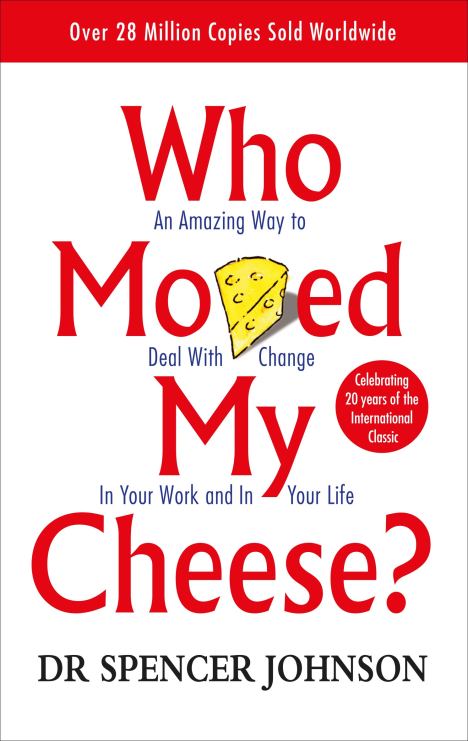
    Who Moved My Cheese is a short story written by Spencer Johnson. It was first published in 1998. It is a motivational story about 4 characters – two of them are mice and two are humans (of very small size). It highlights the importance of anticipating change, adapting to one’s environment and not taking things for granted.

    “The quicker you let go of old cheese, the sooner you find new cheese.”

    Too simple a truth, eh? For cheese and non-cheese lovers alike ! In his world renowned book ‘Who moved my Cheese’ Dr Spencer Johnson treats us with many simple truths like these, leaving us wondering – how could a business self help book be such that it applies to all areas of our life, and doing that in a language that may seem too simple but one that is still  heavy with abundance of life-changing truths.

    Let’s jump right in.

    Who Moved My Cheese: Summary and Plot Analysis

    The story revolves around four characters- Two are mice named Sniff and Scurry and the other two are humans , about the size of mice themselves, called Hem and Haw. They live in a maze and depend on cheese for their survival.

    In their cheese hunt, they chance upon a spot with supply of cheese enough to last their lifetime, they end up spending a lot of time there.

    While the mice are agile and ready to move when the cheese disappears, the humans are stuck in their old ways, All they do is simply take the cheese for granted, sit back and brag about it.

    Eventually cheese runs out.

    book cover of who moved my cheese
    Cover of Who Moved My Cheese?

    While the mice moved on to find new cheese, Hem and Haw, too set in their old habits, are afraid of what lies out there in the maze and simply complain about them deserving more after all of their hard work.

    Too scared to set out, Hem and Haw start blaming each other for their troubles. Over a period of time, Haw gets smarter and decides to explore the maze for more cheese.

    Finding that Hem is hesitant to come along, Haw continues to explore further, leaving a trail of messages for Hem, if he ever decides to follow him.

    Eventually, he does find a ton of cheese , deep in the maze only to find Sniff and Scurry there already. Learning from his past, Haw is now a vigilant explorer, he monitors the current cheese supply to avoid the same fiasco from happening again. He decides it best for Hem to explore by himself to find his way to him.

    3 Reasons to love Who Moved My Cheese?

    1 – Where you are and where you will be is your own doing

    Times got tough for all four of them. They were all faced with the same challenge. Was the result same for all four? No!

    Why?

    Because each of them chose to respond to the situation in a different way. While Hem and Haw were busy in their blame games and petty squabbles, Sniff and Scurry were already resting with their newfound cheese chest. Haw finally did see the error of his ways and changed eventually to find himself rewarded, who’s to say what happened to our poor old Hem?

    2 – Complacency is your worst enemy

    Times do get easy and that’s when our worst enemy, complacency, strikes! We are blinded by comfort to an extent that nothing else is visible- even the dangers staring at us right in the face.

    Amy Lowell, American Poet, was right on point when she said –‘ Happiness, to some, elation; Is, to others, mere stagnation.’

    3 – Stay aware, Be Prepared

    Stay away from ‘Bury your head in the sand’ syndrome. The first step in the preparation is to acknowledge that there is a need to change.Like Sniff and Scurry, be aware that the cheese could disappear and you might need to explore and find novel ways to get to the new and better cheese.

    7 Wall Writings from Who Moved My Cheese?

    The simplicity of this book is priceless. Consider, for instance, the lessons that Haw writes on the wall for Hem.

    1 – Change Happens They Keep Moving The Cheese

    Change is everywhere- work, home, our communities, you name it . Heraclites – the Greek philosopher – wasn’t wrong when he said “nothing is permanent but change.”

    2 – Anticipate Change Get Ready For The Cheese To Move

    Regardless of us seeing change everywhere, how often are we caught by surprise? How often do we see ourselves complaining about it?

    3 – Monitor Change Smell The Cheese Often So You Know When It Is Getting Old

    Are we ever proactive enough to see what lies ahead and what the impending change might entail for us?

    4 – Adapt To Change Quickly The Quicker You Let Go Of Old Cheese, The Sooner You Can Enjoy New Cheese

    Are we ready to make a move when the change happens? Are we prepared?

    5 – Change Move With The Cheese

    Are we changing ? Are we ready to reroute our actions around what the change calls for?

    6 – Enjoy Change! Savor The Adventure And Enjoy The Taste Of New Cheese!

    It could be difficult adjusting to change, let alone enjoy it at times, But are we those
    nimble agile kind of people that can actually savour change?

    7 – Be Ready To Change Quickly And Enjoy It Again They Keep Moving The Cheese.

    Are we ready to change again and faster the next time?

    So, we have Sniff and Scurry and Hem and Haw…. which one of those are you?

  • The Seven Lady Godivas: Summary, Plot Analysis and the Reason You’ll Love It

    The Seven Lady Godivas is an adult illustrated novel – written and illustrated by Dr Seuss – that was originally published in 1939 and then republished in 1987. The novel tells the story of seven Godiva sisters, none of whom ever wear clothing. Wacky, scandalous and oddly unerotic despite the sketches of the nude ladies scattered all over the book, this novel would still make you wonder if you ever actually outgrew Dr. Seuss.

    “You can take a horse to water, but you cannot make it drink”

    I am sure you have heard of this, but did you know that it is one of “horse truths”?

    Confused, eh?

    Enter Dr Seuss with his adult illustrated novel The Seven Lady Godivas: The True Facts Concerning History’s Barest Family. The novel that was first published way back in 1939, provides an account of seven lady Godivas in 11th century Coventry in attempt to explore (horseplay around) the origins of celebrated proverbs – “horse truths” in Seuss’ lingo.

    He declares very early on in the book that ‘there was not one but seven lady Godivas and their nakedness was not actually a thing of shame” referring to the English woman Lady Godiva from the early 11th century that rode naked on the streets to gain a remission on Earl’s (her husband’s) exploitative tax practices.

    Wacky, scandalous and oddly unerotic (despite the sketches of the nude ladies scattered all over the book), this novel would still make you wonder if you ever actually outgrew Dr. Seuss.

    It’s interesting to note that the novel wasn’t successful when it was first launched way back in 1939. In fact, only 2500 copies from the initial print run of 10000, were sold, leading to Seuss calling it his ‘greatest failure’.

    the book cover of the seven lady godivas novel
    The cover of “The Seven Lady Godivas”

    Sometimes the abundance of the sketches of the nude ladies does seem like a cheap titillating tactic, but believe me, this book is more than that.

    You just got to put your ‘horse sense’ to work.

    The Seven Lady Godivas: Summary and Plot Analysis

    Lord Godiva of Coventry has deep admiration for his seven daughters, who do not wear clothes because ‘they chose not to disguise what they are’. He summons them to the castle to bid them goodbye before his departure for the battle of Hastings on a horseback which leaves the sisters nervous considering that the beast hasn’t been tamed yet.

    Rightly so, they are proven right in a few moments when the horse Nathan throws him off itself – leading to the man’s instant death.

    The sisters vow to study and chart horses and refrain from marriage till each one of them have a horse truth, a truth that makes horses safe for posterity.

    This leaves the ‘Peeping’ brothers, the ones dating the seven lady godivas with nothing but a long wait ahead of them. The sisters set off for the truth one after the other and through a series of adventures and misfortunes, eventually come to an understanding about how this majestic beast operates.

    Every proverbs that you may have heard till date, including ‘don’t put a cart before a horse’, ‘never change horses in the middle of the stream’ and so on… you would be truly amazed to see how Dr. Seuss has spun up stories around the proverbs to make sense of them.

    Want to read The Seven Lady Godivas?

    The Seven Lady Godivas is available on Amazon if you want to get yourself a copy. You can use the links given below to check the price of this book:

    Check Price on Amazon US
    Check Price on Amazon Canada
    Check Price on Amazon India

    Why I Love The Seven Lady Godivas

    On the surface this book might seem like a very simple tale, maybe even a little sleazy looking at the illustrations, but beware, this is just the tip of the iceberg. Dive a little deeper and there are parallels that we can draw between the horse truths and our own, and how each of the godiva ladies and their adventures to find the horse truths, have a hidden message somewhere.

    Sometimes serious and sometimes downright funny. Consider Dorcas Godiva for example, she thinks she must research her subject extensively and approach it a scientific way to pave a straight forward but sure shot way to get to her horse truth fast.

    After trying a variety of options with the horse cart and being engaged in the “in the greatest horse-and-tree conflict that Coventry has ever known.”, she comes to realize – ‘never put a cart before a horse’.

    So many times, in our lives we are so focused on the results that we end up underplaying the importance of our means to get there, only to realize in the aftermath that our mad race screwed up our priorities somewhere along the way.

    Consider Arabella Godiva on the other hand, in her quest to uncover her horse truth, she overworks her horse so much that he ends up becoming a drunken bum. And when she stages an intervention by making him drink water from the pump, guess what?

    The horse says-“I’ll die before I touch it.” And he does.

    Does it remind you of a friend or a loved one that was completely unresponsive to your pleas to ‘do it in moderation’?

    How many times have you felt the frustration of ‘sermon’-ing when there was no
    response on the other sides.

    The characters themselves are a window to the variety of people that we meet in our daily lives and depending on our preferences, we associate with.

    Consider Lord Godiva, a liberal but an unprepared moron, Teenie Godiva, an overweight and a curious lady that took her chances even when the going was grim, Dorcas Godiva, uncertainty-averse and a meticulously prepared woman, Hedwig Godiva , an incredibly loyal , dedicated and tenacious woman that didn’t take short cuts, and wanted to do things the right away.

    They all remind us of someone… or maybe ourselves.

    We all have a little godiva in us, don’t we?

  • The Painted Veil: Summary, Review and 3 Things To Love About it

    The Painted Veil is a novel written by W Somerset Maugham in 1925. The novel also inspired a 2006 drama movie of the same name (starring Edward Norton and Naomi Watts). It is a story of love, betrayal, hatred, revenge and redemption.

    “How can I be reasonable? To me our love was everything and you were my whole life. It is not very pleasant to realize that to you it was only an episode.”

    Does this quote sound familiar?

    It’s from The Painted Veil – a novel by Somerset Waugham published back in 1925.

    This amazing tale of the ultimate triumph of love will take you on a roller-coaster ride of a range of human emotions – love, betrayal, hatred, revenge and redemption – none of which is any less than the other in intensity.

    The Painted Veil: Story and Summary

    The story revolves around Kitty Garstin, an outgoing upper middle class socialite and Walter Fane, an introvert bacteriologist and physician.

    Kitty, much to the chagrin of her mother, has declined marriage proposal from quite a few prospective gentlemen.

    Her mother now considering her ‘off-market’ convinces her to accept marriage proposal from Walter Fane, to which she half-heartedly agrees to avoid being upstaged by her comparably plain sister Doris. The newly married couple leave for Hong Kong shortly after.

    Walter, a meticulous and principled man, is a devoted lover while Kitty is callous and indifferent to him.

    It is not long before she gets attracted to Charlie Townsend, a tall, urbane and charming man and begins an affair with him.

    Walter ultimately finds about Kitty’s infidelity and doesn’t confront either Charlie or Kitty, both of whom mistake it for his cowardice.

    Kitty begins to despise Walter even more, but notices that there is an ominous change in his behavior towards her.

    Walter ultimately asks Kitty to accompany him to Hong-Kong, she rejects the idea and conveys that she better be with Charles than accompany him.

    the painted veil book cover
    Cover of The Painted Veil. The novel inspired a 2006 Hollywood movie of the same name. It starred Edward Norton and Naomi Watts.

    Kitty, upon being turned away by Charlie, heartbroken and disillusioned, sets out to Hong Kong with Walter. Initially bitter with the rejection, Kitty tries to contact
    Charles to no avail.

    She increasingly finds herself in the company of Waddington, who inadvertently ends up exposing Charles’ character.

    While Walter completely dedicates his time to researching for the cure for Cholera-endemic, Kitty begins to discover his character and compassion in a whole new light, through her own observations and through the words of nuns and Mother Superior at the local church.

    As the strained relationship between the two start to show the first signs of repair, Kitty now discovers that she is pregnant but not sure about the father of the child.

    This time she is honest with Walter and lets him know.

    Through an unfortunate turn of events, Walter falls ill and eventually succumbs to Cholera, with Kitty by his side.

    While on her way back to Britain, she gets to know that her mother died. She persuades her father to allow her to accompany him to Bahamas, where she looks forward to raising her child.

    3 Reasons You Might Love The Painted Veil

    This book is an amazing read. I absolutely love it!

    Granted that this view from a hopeless romantic can be biased on a topic concerning romance, but hey! I like this book for reasons more than that.

    The book touched a lot of themes, the ones that stood out for me:

    1 –  The characters are flawed

    Kitty is the first character that comes to mind when I think of flaws, but if I scratch the surface a bit more, Walter does not lag far behind. While Kitty obviously crossed the line on occasions more than one, with infidelity and blatant disregard to Walter’s love for her, Walter upon discovering Kitty’s infidelity turns as un-Walter-esque as possible.

    2 – A mismatched couple: Marriages can be challenging!

    This one was not a surprise, considering how much I see this around me. Although it was clear from the start that Kitty had no remarkable affection for Walter. Walter on the other hand, fully aware of her shallowness, still was in love with her.

    The marriage slowly started unfolding as both of them found it difficult to give up on the addiction to their own selves, by doing which they fill their relationship with
    spite.

    Kitty, a product of elite London society finds it difficult to understand her awkward bacteriologist husband. Their background, if anything, makes it difficult for the couple to have commonalities, driving them further apart.

    3 – Forgiveness is key

    Regardless of all the possible flaws their relationship – the shallowness, the infidelity, the mismatched ideals in life, opposite backgrounds- Walter and Kitty eventually did find a way to forgive each other. Both of them had to go on a painful journey of self-discovery to come together at the end.

    Forgiveness couldn’t be stressed enough, and this does not just stand true for a romantic relationship. It’s funny how easy it is for us to hold grudges even when it means letting go of a relationship that may have meant so much to us in the past. Love comes in all shapes and sizes, forgiveness being the glue that it holds it together.

    In the words of Mark Twain

    “Forgiveness is the fragrance that the violet sheds on the heel that has crushed it”

    Want to read The Painted Veil?

    The Painted Veil is available on Amazon if you want to get yourself a copy. You are welcome to use the links given below to order a copy of the book:

    Check Price on from Amazon US
    Check Price on Amazon Canada
    Check Price on Amazon India

    Some common questions related to The Painted Veil

    What is The Painted Veil metaphor for?

    In the novel, the veil represents the set of beliefs that people live by. It’s a comforting illusion that impacts the way we see and perceive others. But when others behave in a way that is not consistent with what we perceive of them, our belief is shattered and the veil is torn apart.

    What does The Painted Veil mean?

    At a wedding, the veil is white, which represents the innocence and purity of the wearer. As the title of the novel suggests, the veil is painted, which implies that the wearer is not innocent any more. The novel takes a dig at how our society and the people that live in it are tainted.

    Is The Painted Veil a true story?

    There’s no proof that The Painted Veil  is a true story. It is a fictionalized account of a young English couple and their journey through a myriad of emotional difficulties and life’s turbulence.

    Was Somerset Maugham a spy?

    Somerset Maugham, the writer of The Painted Veil, was a member of Britain Secret Intelligence Service (SIS). He was recruited by an intelligence officer after his first novel had just been published. The officer suggested that Maugham’s knowledge of the German language and his reputation as a writer would be a perfect cover for his spying activities for the English.