Category: Fiction

  • Do You “Speak Easy”?

    Do You “Speak Easy”?

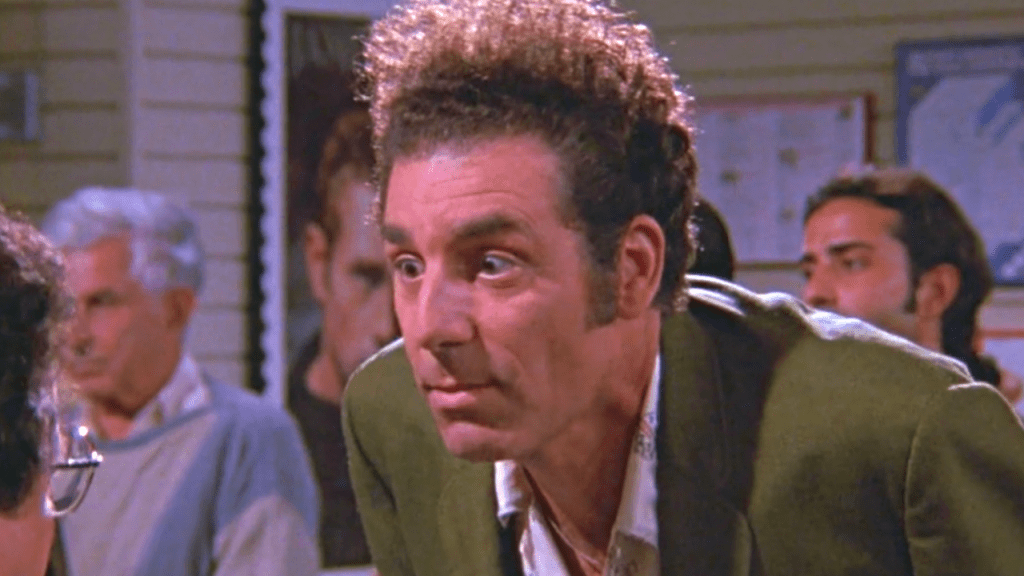
    I love the sitcom Seinfeld very much, at least the first few seasons. A lot of wisdom in my life comes straight from the TV show. 

    The Contest aside (the most famous episode of Seinfeld), there are lots of things worth remembering from that show, but one that hit home was the one from Seinfeld’s comic bit:

    “I saw a study that said speaking in front of a crowd is considered the number one fear of the average person. Number two was death. This means to the average person, if you have to be at a funeral, you would rather be in the casket than doing the eulogy.”

    Just allow me to talk, and I promise you will regret it. God save you if you happen to be a close friend AND ask to have a chat! 

    I have been asked very politely to stop talking and (hyena) laughing. On one occasion at work, a colleague came from the other side of the floor, a couple of medium-size meeting rooms away, enquiring about the culprit making that sound. 

    The irony of it was that I was the first person she asked. 

    That lady didn’t know it was me (at least that’s what I told myself!). Having had my laughter compared to a hyena’s, it hurt because of how villainous they were to Simba and his dad in The Lion King. Growing up, they topped my “enemy animals” list.

    Anyway, long story short, I have now accepted that I laugh that way and have learned not to take offense when someone accidentally points that out to me. 

    As for talking, in all likelihood, I have probably convinced you about my potential of the pace with which I can pour out the mind-numbing stuff. 

    Having accomplished that, I will get to the point.

    The point is that there is some truth to the notion that people detest public speaking. 

    I am no personal trainer, so I can only speak from my own experience, either receiving presentations or delivering them. Curiously, I find myself reasonably comfortable in either of the situations below:

    1. You are my friend, and I know nothing about the topic at hand 
    2. You are not my friend, and I know everything about the topic at hand 

    In the former case, despite no knowledge or agenda of where the conversation is headed, I can talk endlessly mostly because my friends are darlings, and I know they will not judge me if I make mistakes. 

    I made sure not to befriend the grammar police. I don’t like them much, mostly because I can never get my sentences right (enough for them).

    I would be primarily comfortable in the latter case because I know the content pretty well, even if I don’t know the people I am doing the presentation for. 

    Please don’t try going by Shawn Mendes’ advice in his song “Nothing holding me back”; picturing your audience rather unclad isn’t going to help.

    And wouldn’t public speaking be a cakewalk if it was always either of the two scenarios above? 

    But who am I kidding? 

    These are extremes on a spectrum. Most of the presentations I have to do are to strangers and about the topics that I am not an expert on. I have no friendly faces to find solace in, and neither is my knowledge of the topic 100%. So double whammy! 

    So to conquer my fear of making a complete fool of myself in a conference room full of people that have authority to have me fired, I find myself turning to age-old Buddhist advice of finding the middle path, a way between the comfortable extremes – the one where I imagine a few friendly faces in the sea of strangers and convince myself that despite my less than 100% command of the content, no one is posing a question that I am going to be (fully) stumped by. 

    At the very minimum, the synapses are going to respond to my brain’s request of at least being able to manage ‘I don’t have the answer for you right now, but I will be sure to get back to you on this”. 

    It’s counterintuitive, but what also seems to help is me saying “Devil may care” right before I start my rant, a.k.a presentation. That appears to talk me off the ledge.

    I am still somewhere within the extremes, much closer to the hopeless novice than the silver-tongued charmer, but I know that I would rather be alive and talking than be dead and be talked about. 

    No offense to Seinfeld. 

    Hee. Hee. Hee.
  • The Lottery by Maria Edgeworth: Summary and Review

    The Lottery by Maria Edgeworth: Summary and Review

    Did you know they had lotteries back in the 1800s? I didn’t. 

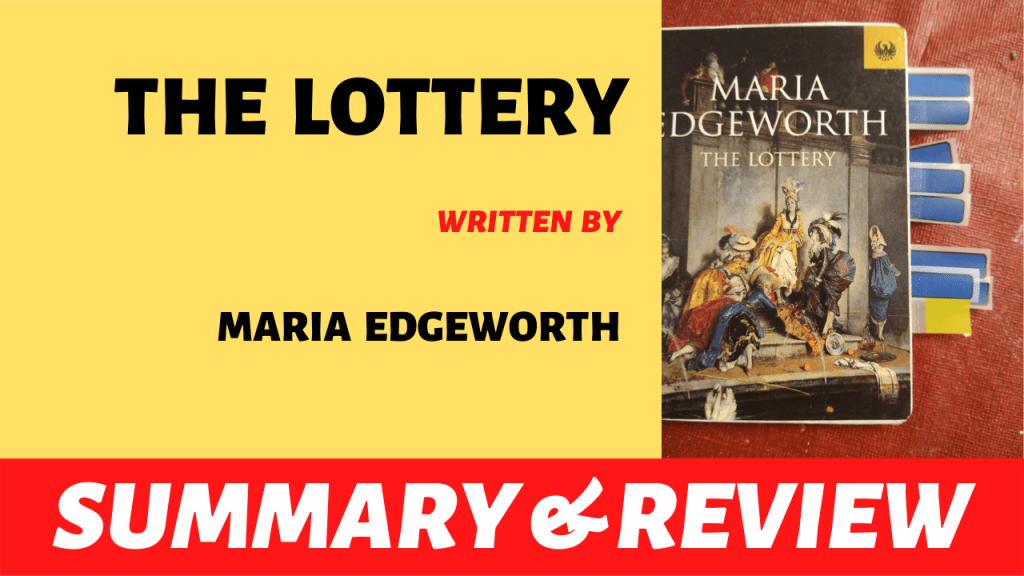
    So I was intrigued when I laid my eyes on The Lottery, written by Maria Edgeworth. 

    And thus began my 48-page journey into the exploration of lottery and its perception amongst the masses – then and now.

    The Lottery by Maria Edgeworth: Summary and Plot Analysis

    The story revolves around a diligent working-class family, a man named Maurice, his dedicated and empathetic wife Elleen, and their young kid George. Maurice’s aunt, an older woman named Mrs. Dolly, comes down to live with them. They are on about living their life, mostly in peace, somewhat peppered by Mrs. Dolly’s harmless tantrums until one day, the discussion is directed to the subject of lotteries.

    Mrs. Dolly is vehemently in favor of buying lotteries; after all, what’s there to lose? Seeing that this argument doesn’t seem to sway Maurice much, she appeals to his love for the kid and the hope of making a better life for him.

    Surely, a man should try his luck, if not for his own, at least for his children’s sake!

    Mr. Deane, a friend of Maurice, whom Mrs. Dolly isn’t particularly fond of, vehemently opposed lotteries. The dangers were too grave for an individual and his family’s present and the future.

    If a man set his heart upon the turning of the lottery wheel, he would leave off putting his hand to anything the whole year around, grow idle, and may be drunken, then at the year’s end, if he have a blank, what is he to do for his rent, and for his wife and children, that have nothing to depend upon but him and his industry

    Being the trusted friend that Mr. Deane was, the family decides not to entertain the idea of lotteries any more. Mrs. Dolly takes to another one of her tantrums to express her disapproval of the family decision.

    She was so low that even her accustomed dose of brandy, in her tea, had no effect.

    maria edgeworth the lottery book cover
    The Lottery

    Maurice finally succumbed and purchased the lottery ticket to appease Mrs. Dolly. Lo and Behold! Their ticket did win a handsome prize of five thousand dollars. Mrs. Dolly was over the moon hearing the news and immediately started thinking of their plans. New house, new coach, anything that would make them sophisticated. She advises Maurice not to work, as it would not reflect well on a family as wealthy as theirs to be working to make money.

    Maurice obliged but found himself with nothing to do. He wasn’t accustomed to living his days doing nothing.

    He gaped and gaped, and lounged about every morning and looked a hundred times at his new watch, and put it to his ear to listen whether it was going, the time seemed to him to pass so slowly.

    The family, mainly Maurice and Mrs. Dolly, got accustomed to this new life; while the former spent a lot of his time outside the home, the latter indulged even more in her alcoholic pursuits.

    Brandy and peppermint, taken together, was an infallible remedy for all complaints, low spirits included.

    One night, Maurice, who looked utterly disturbed and tormented, confided in his wife that he had lost all of their fortunes on the gaming table. His wife Elleen, although wholly saddened by the news, continued to stay by his side, consoling and comforting him. They get similar information from Mrs. Dolly, who seems to have squandered her wealth with all her drinking. Not soon after, she has a terrible accident, resulting in a broken leg and a fractured skull, and later succumbs to the injuries.

    With the help of an acquaintance and Mr. Dean, the family soon finds a way to live their honest, diligent life again, swearing never to let the lottery sway them. Nothing is more important than good character and the importance of a loving and supporting family.

    A good character and domestic happiness, which can not be won in any lottery, are worth more than the five thousand or even the ten thousand pound prize, let any Mrs Dolly in Christendom say what she will, to the contrary.

    The Lottery: Review and My Thoughts

    Yea, I hear you. None of this is news. It wasn’t news to me either. But isn’t it curious to see how we as humans did not change in two centuries? 

    We apparently, brought and squandered lottery wins then, and surprise, surprise! We continue to pride ourselves in doing that now. I was surprised the other day when I read the article on the proportion of lottery winners that end up bankrupt. 

    MIND BLOWN.

    From the way Edgeworth introduced Mrs. Dolly’s character, you could sense she was a ticking time bomb. Her take on no good ‘bookish’ laddies was hilarious. 

    She had seen a deal of life, she said, and never saw no good come of bookish bodies; and she was sorry to see that her own darling George, was taking to the bookish line, and that his mother encouraged him in it.

    Believe in the spin of the wheels and stay away from books to live the ‘good life’ – the advice has ‘wisdom’ written all over it.

    All jokes aside, what stood out the most to me was this little nugget, which resonated with me, bringing back memories of my mother’s advice all those years ago.

    Suffering for folly does nobody any good unless it makes them wiser in the future.

    Odds are in favor of that one. 

    Wanna bet?

  • Ladies by Anton Chekhov: Summary and Review

    Ladies by Anton Chekhov: Summary and Review

    Let’s consider the following two statements:

    I’m surprised I didn’t think of it sooner! Listen, here’s what I can offer you.. Next week the clerk at our orphanage is going to retire.If you like, you can take his post! There you are!

    I have no post for you! None, none! Leave me alone! Don’t torment me! Let me be, finally, do me a favor!

    If I tell you that the same person said both of these things to the same person, what would your impression be of that person? 

    Would you consider them bipolar, or would you give them the benefit of the doubt? 

    I hope you chose the latter because the events that transpired between Scenario 1 and Scenario 2 are a fun ride!

    These scenarios are from Chekhov’s short story Ladies is a comical take on the issues of nepotism and corruption in the Russian society. One of his earlier works, published way back in 1886, is also available as part of a short story collection called Fifty Two Stories published by Alfred A Knopf, translated by Richard Pevear and Larissa Volokhonsky.

    Ladies: Summary and Plot Analysis

    Fyodor Petrovich is a director of public education in a Russian province. He considers himself a fair and generous man. The story opens in his office, where he meets a teacher, Mr. Vremensky. 

    Vremensky, having recently lost his normal voice after a comic mishap, is considered unfit to discharge his educational duties and is being dismissed.

    With such a voice, you can not go on working as a teacher. How did you lose it?

    I was sweaty and drank a cold beer.

    The teacher, who has a family to support, is distraught at the dismissal, and the director seems restless about leaving a man such as him to fend for himself after 14 years of service. The director suddenly has an epiphany and, realizing that a clerk in the orphanage was retiring, offers Vremensky his job. 

    I’m surprised I didn’t think of it sooner! Listen, here’s what I can offer you.. Next week the clerk at our orphanage is going to retire. If you like, you can take his post! There you are!

    The director feels good about himself, having done such a noble deed. 

    His happiness, however, doesn’t last long when later at the dinner table, his wife asks for a favor for one of her acquaintances- happens to be for the same job that he previously offered Vremensky to a chap named Polzhukin. He tries to resist, but his wife is adamant that Polzhukin be given that job.

    And you know my rule: I never make appointments through connections.

    That fop? Not for anything!

    Why not?

    You see, my dear, if a young man doesn’t act directly, but through women, it means he’s trash! Why doesn’t he come to me himself?

    It’s not for the salary, but just… After all, it’s government service.

    Later the same evening, he realizes that he had received a letter from the mayor’s wife recommending the same guy, K.N.Polzhukin. After that, not a day passes when he doesn’t receive one recommending him. 

    On one occasion, Polzhukin presented himself directly to the director. The director, visibly disinterested, is quick to express his dissatisfaction with how the solicitation has gone so far.

    Listen, why is it you didn’t turn directly to me but found it necessary to trouble the ladies first?

    Fyodor doesn’t understand why Polzhukin, a man hailing from a well-to-do family, would be interested in a clerical job. Polzhukin clarifies that it is not the money he was after but the government position. He finally produces a document that the director has no power to veto; he has no option now, but to give him the job.

    He took a paper from his pocket and handed it to the director. Beneath the attestation, written in bureaucratic style and script, was the signature of the Governor. Everything suggested that the Governor had signed it without reading it, just to get rid of some importunate lady.

    Unhappy about having to do that, Fyodor also has to rescind the offer for the same job that he had extended earlier to Vremensky. Unable to find the right words and tone to deliver the news, completely overwhelmed, he explodes on the very man his sympathies were supposed to be directed towards.

    I have no post for you! None, none! Leave me alone! Don’t torment me! Let me be, finally, do me a favor!

    Ladies: Review and My Thoughts

    Fyodor started off as a strong, principled man who took pride in doing the right thing. He was obviously pained by Vremesnky’s calamitous situation, revealing that he has his heart at the right place. 

    As soon as he had the conversation with his wife about the position, things started to change, followed by numerous other referrals for the same person, putting him on edge. These people were providing unsolicited referrals for someone that was already well-to-do. 

    He does not like Polzhukin one bit, mainly because he has women doing his bidding. He also feels that with the comfortable financial standing that he is in, he doesn’t need the job as much as a relatively poorer Vremensky. 

    All through this reader still has the impression that the guy is not going to break. But as soon as he sees the letter signed by the Governor, he gives up. 

    The same man had remarked that he would never make appointments through connections. Now in Fyodor’s mind, it could have been a woman that could have prompted the Governor’s signature prompted by a woman’s persistent pestering, but how does that justify Fyodor or the Governor making the wrong call?

    John Amaechi once said -’ You can not be a part-time man of principle’. 

    Fyodor better sit up and take notice.

  • Before the Wedding by Anton Chekhov: Summary and Review

    Before the Wedding by Anton Chekhov: Summary and Review

    Unmarried girls are crazy to get married, but they are the only ones, because it is no good at all. I’m married, I should know. Give it time; you’ll see for yourself.

    If you are interested in reading plenty of (good) advice like the one above, you should pick up Anton Chekhov’s short story called Before the Wedding. The story was first published in October 1880 in Dragonfly magazine. It is now available as part of a short story collection called Prank published by The New York Review books translated by Maria Bloshteyn.

    Before the Wedding: Summary and Plot Analysis

    The story opens with the marriage of Podzarylkins’s daughter to a collegiate assessor named Nazariev. Contrary to expectations around such a ceremony, the betrothal went without a hitch. The Podzarylkins’s daughter is entirely unremarkable, considers good spelling as the best intelligence one could have, and loves tall men and the name “Roland.” 

    The Podzatylkins’daughter is remarkable by the virtue of being completely unremarkable. Since no one has ever seen any evidence of her intellect, let’s not talk about it.

    Nazariev, on the other hand, fancies himself as a real ladies’ man, talks loudly, and doesn’t shy from recommending literature reading to almost every woman he meets. He does not make much money, barely enough to cover his tobacco expenses.

    The match looks doomed from the get go.

    After the wedding, the daughter was called on to visit her mother. Her mother has some advice to give to her daughter. She starts with calling her husband names and ends with the same, sprinkling random words of caution about her son-in-law in between. 

    The mother doesn’t seem enthusiastic about her own marriage and advises the daughter to advise caution against her husband and father. In the mother’s mind, nothing good seems to ever come out of a marriage. She also feels offended by her daughter’s complete lack of moroseness on the occasion of the betrothal. 

    How bad would it look to the community- a child not crying! As if the daughter never loved her parents in the first place and is happy to leave them

    Yesterday that ugly balding nitwit – your father, I mean -decided to play the joker. He handed me a shot glass. I thought it was wine, but it was vinegar and herring oil instead.

    You didn’t weep once; what’s there to be so happy about? Everyone must have thought that you are happy to be leaving your parents. That’s how it looks.

    A husband is never going to give you sound or sensible advice. He’s just going to do whatever suits him best. Don’t listen to your father either.

    I hope he swells up till he can’t move!

    The daughter left to see her father soon after. There was plenty of advice to be had there as well. A little more laid back than the mother, the father began with a lot of praise for Nazariev. 

    He then mentioned the vast amount of dowry he had to give him for the marriage, then warned about husbands never having their best interests in mind and finally closing with how untrustworthy his wife and any mother-in-law in the world was.

    Hear your mother out, sweetie, but be careful. She’s nice enough but no less of a double-dealing, flighty, namby-pambyish unbeliever for all that. Her advice can’t compare to that of your father, the very author of your being.

    What does your husband love? Your personality? Your kindness? Your tender feelings? None of that! He loves your dowry.

    Husbands don’t take to their mothers-in-law. I detested mine so much I put burnt cork in her coffee.

    A father comes first – always! Don’t listen to anyone else.

    Nazariev comes to meet his betrothed soon after. He begins with how much he had missed her and then goes on with a lengthy rant about her parents having duped him by not offering the amount of dowry as promised initially. 

    Also, that her father had not disclosed his correct rank before the betrothal, he is adamant to bring her parents to heel.

    That was before the wedding. You don’t need to be a prophet to figure out what happens after.

    Before the Wedding: Review and My Thoughts

    What’s fun about this story is its relevance to our times. It doesn’t seem like much has changed about the perception of mothers-in-law over the last century and a half. 

    The mother hates the father, and the father doesn’t seem to respect the mother. The husband seems to care only about the money and the wife is almost clueless. 

    What was consistent in the message was that her parents, who were at loggerheads with each other, lacked trust in the institution of marriage. Both the parents caution her about trusting her husband too much. No one would love her the way they would. After all, parents love their kid for who they were, unlike the husband, who was in it for his own personal gain – dowry in their case. 

    Of course, the main thing he had on for the discussion when the husband came was how he had been duped on the dowry.

    Chekhov’s message for you here – married or not – Proceed with caution.

  • A Little Joke by Anton Chekhov: Summary and Analysis

    A Little Joke by Anton Chekhov: Summary and Analysis

    This is the time of the year when love is everywhere, absolutely everywhere! 

    You just can’t miss the red roses, the greeting cards lining up the aisles everywhere you go. You might also be getting those subtle hints from your partner, your love interest, in anticipation of the gifts they are expecting, come the 14th of February! 

    What if they say that you will be given a joke instead – a joke that will stay with you the rest of your life.

    A Little Joke by Anton Chekhov is not your typical love story. The story is one of his earlier works, published back in 1886. It is also available as part of a short story collection called Fifty Two Stories published by Alfred A Knopf, translated by Richard Pevear and Larissa Volokhonsky.

    A Little Joke: Summary and Plot Analysis

    The story opens with an unnamed young man and a young woman named Nadezhda Petrovna on a bright winter noon. The unnamed man, who is also the narrator of the story, tries to persuade the woman to slide down the mountain with him. The woman is petrified at the prospect and disagrees, but after multiple requests from the man, agrees to do so.

    As they sled and are mid-air, the man whispers, ‘I love you Nadya’. They finally sled to the bottom and come to a halt. Nadya is completely harrowed from such a scary experience and vows never to do it again.

    I wouldn’t do that again for anything. Not for anything in the world! I nearly died!

    It’s not long after she starts wondering if he had said anything of the sort. She looked at the man’s face for clues that might reveal more, but there was nothing to be found. She wondered if nothing was said, and she imagined it all. 

    The riddle obviously troubles her. Were those words spoken or not? Yes or no? Yes or no? It’s a question of pride, honor, life and happiness.

    She is visibly disturbed by her cluelessness on the matter. The man offers to take her home. She declines. Determined to find out the truth for herself, against her better judgment, she asks the narrator if they could sled again.

    I… I like sledding. Can we do it one more time?

    They sled again, and the same thing is repeated. She is in agony and wants to know the truth. It still evades her. They retire for the day. Nadya leaves a note for the narrator that if he goes sledding, she would like to tag along.

    If you go sliding down the hill for me, will you take me along?

    They go sledding again, and the same incident is repeated. Nadya doesn’t have a clue if those words are actually being said or she has been imagining it all. But that doesn’t matter to her anymore.

    She soon gets used to the phrase, as to wine or morphine. She can’t live without it. True, to go flying down the hill is as frightening as before, but now fear and danger lend a special allure to the words of love, words that constitute as much of a riddle as before and torment her soul.

    Winter fades away, and Nadya is visibly sad now since neither the wind nor the narrator will be around to say those magical words to her, the latter on account of his long-term move to Petersburg. 

    Years pass by, and the narrator reveals that Nadya is now married with children, and he is still not sure why he chose to joke with her.

    As for me, now that I am older, I no longer understand why I said those words, why I was joking…

    The readers are left wondering if it was actually a joke.

    A Little Joke: Review and My Thoughts

    If you ask me, I would call it a load of bollocks. No way! It could not have been a joke. But that is the die-hard romantic in me having a knee-jerk reaction.

    Note to self: Calm down, tiger! Let’s try to be as logical as we can be.

    The guy observes Nadya closely and is able to see the whole spectrum of emotions on her face. 

    Strike one.

    He knows what to say to make her feel happy when seeing her in pain. 

    Strike two.

    After years apart, he still thinks about her and their time together when they were young, eons ago. There you have it.

    Strike three.

    But the funny thing is being right about this (in my head) doesn’t make me happy. There is a lot of pain and regret about leaving things unsaid. The dark clouds of what – if is not something I would want hovering over my head for the rest of my life.

    Would you?

    Moral of the story: use your words. Enunciate. Life is loads of fun that way.