Category: Fiction

  • A Retrieved Reformation by O Henry: Summary and Analysis

    A Retrieved Reformation by O Henry: Summary and Analysis

    Originally called Retrieved Reform, this short story was first published more than a century ago in Cosmopolitan magazine. 

    A Retrieved Reformation: Summary and Plot Analysis

    The story opens in prison, where an inmate, Jimmy Valentine, is diligently working in the prison shoe shop. The man is serving a four-year sentence but is freed much earlier, apparently owing to his outside connections. 

    Knowing Jimmy to be a good man, the warden advises him against cracking any more safes and living a decent life. 

    He denies all wrongdoing and, although a bit tired, is happy to be 9762, the free man.

    On his way to meet a man named Mike Dolan, Jimmy stops at a restaurant to enjoy a meal and a smoke as a free man. 

    In a later conversation between Dolan and Jimmy, Dolan apologizes for the delay in securing Jimmy’s release from prison. Jimmy retires to his room and finds it in precisely the same condition it was left in. 

    He quickly checks and locates his high-quality, safe cracking equipment. He soon leaves the apartment in his elegant clothes and a briefcase. Upon being asked, he responds that he was now a Salesman for a famous NY bread and cake company.

    A week after Jimmy’s release, a series of robberies surface. Neat, professionally done, with increasingly more significant amounts being stolen. 

    This soon catches the attention of Ben Price, a policeman, who notices the distinct nature of these robberies. 

    They had Jimmy written all over them.

    However, that knowledge was insufficient, given Jimmy worked alone and had great connections.

    Not much later, Jimmy finds himself in Elmore, where he is at a bank, when he sees a beautiful young woman named Annabel Adams. Adams happens to be the banker’s daughter. Jimmy is smitten. He is later seen enquiring about the woman as well as any openings for the shoe business. 

    He is a changed man, literally. He takes up the identity of one Ralph Spencer, opens a town shoe business, and flourishes. 

    Jimmy and Annabel are engaged to be married soon.

    Jimmy, set on a fresh new start, sends a letter for an old trusted friend to come to visit him so that he can hand over his tools. 

    Unknown to him, Ben Price soon comes to the town, spots Jimmy, and discovers that he is soon to marry the banker’s daughter. Price plans to visit the bank soon while Jimmy is thinking of getting himself a wedding suit and a gift for Annabel. 

    Before leaving, he stops by his father-in-law’s bank to see the newly-installed safe. One of Annabel’s sister’s kids gets trapped in the safe. 

    Panic ensues, and with little time to act, Jimmy calls for his suitcase and, within minutes, expertly cracks the safe and saves the child.

    The public display of these safe-cracking skills made him feel exposed. He no longer feels fit to live in Elmore or marry Annabel.

    As he leaves the bank, he notices Ben Price and offers to come along. To his surprise, Price acts as if he doesn’t know who Jimmy is, responding with, “Guess you are mistaken, Mr. Spencer. Don’t believe I recognize you.”

    The story leaves a great aftertaste. After all, who doesn’t like a fresh start?

  • The Ransom of the Red Chief by O Henry: Summary and Review

    The Ransom of the Red Chief by O Henry: Summary and Review

    In 10 minutes, I shall cross the central, southern, and middle western states and be legging it trippingly for the Canadian border.

    What comes to mind when you read this? Hot air balloons? Spaceships? Science fiction?

    The answer will come to you in the form of Ransom of the Red Chief, a short story by celebrated American author William Sidney Porter, commonly known as O.Henry. 

    First published in Saturday Evening Post in 1907, this story captures, in its very essence, a kidnapping gone awry.

    Ransom of the Red Chief: Summary and Plot Analysis

    The story opens with a scheme. A scheme, in the making, by two small-time criminals – Sam, the mastermind, also the narrator of the story, and Bill, his accomplice.

    Their scheme to make a quick buck is simple – kidnapping a wealthy man’s kid and demanding ransom for his release.

    The boy’s father is Ebenezer Dorset, a respectable mortgage fancier and forecloser.

    The execution of the scheme is even simpler than the kidnapping plan – Bill and Sam, in their buggy, entice the boy with a promise of a bag of candies and a nice ride.

    The plan is executed successfully.

    Kidnappers and the boy reach their hideout soon after, and that’s when the early signs of the plan’s unraveling are seen. Instead of being scared, the boy enjoys the company of his kidnappers. It does not take long for the boy’s role-playing and demands to surface.

    The first role he plays is of the Red Chief, the terror of the plains, unleashing the terror, true to its name.

    When not terrorizing Bill and Sam, he frustrates them with his constant chatter and relentless and mostly unreasonable demands and pranks – a couple of which are to ride on Bill as if he was a horse, for 90 miles no less and scalping Bill for real, pulling his hair out with all his might.

    The role playing, fun for the boy, is a disaster for the kidnappers.

    The kidnappers, eager to rid themselves of this liability/threat to their life, soon plan to reach out to Mr. Dorset, letting him know that he was being held for ransom and that no harm would befall the kid if the father provided them with 1500 dollars peacefully.

    Little did they know the response to their letter would be an extension of their nightmare.

    Fully aware of the boy’s intolerable, patience-thinning talents, the father, instead of sending the required sum, offers to take the child off the kidnapper’s hands – if they paid him $250.

    The harrowed kidnappers, eager to rid themselves of this living nightmare, jump on the offer, and proceed for a swift handover – of the money and the boy.

    The boy, funnily enough, tries to cling to the kidnappers instead of his own father.

    The Ransom of the Red Chief: Review and My Thoughts

    This brought back memories of one of my Christmas favorite movies, Home Alone #3. I always marvel at how talented the kid was at protecting himself- his insane knowledge of physics behind all the levers and pulleys used for trapping his victims would put my whole eighth-grade physics class to shame. 

    But O.Henry’s Red chief was a class apart. He made me believe you don’t need intelligence to drive someone insane. Non-stop blabbering and treating adults as enslaved people is good enough.

    I just loved the boy’s character. He knew no fear. Instead of being scared for his life and crying his eyes out, he had a lot of fun in addition to showing his kidnappers some great time. He made the most of his ‘trip,’ doing nothing else but being himself. 

    Talk about seeing the glass half full!

    There is a very famous quote by Dickens “Child is the father of the man.”

    I can’t say about anyone else, but this Red Chief definitely is.

  • The Dead by James Joyce: Review and Analysis

    The Dead by James Joyce: Review and Analysis

    The Dead is a part of James Joyce’s short story collection called The Dubliners, first published in 1914. The Dead is one of the most celebrated short stories of James Joyce, frequently adapted into plays and movies. It had a broad appeal – in and outside Ireland.

    The Dead by James Joyce: Summary and Plot Analysis

    The story opens in the setting of Misses Morkan’s annual dance. Sisters Kate and Julia Morkan, along with their niece Mary Jane Morkan and their housemaid Lily are hosting friends and family at the Morkan residence. 

    Kate and Julia are eager to welcome Gabriel Conroy, a professor, and a writer, along with his wife, Gretta. 

    A very awkward conversation with Lily about her love life makes Gabriel a tad uncomfortable, but he quickly regains composure once in the company of his aunts. 

    Guests keep pouring in, including Freddy Malins – the drunk, and Mr. Browne – the flirt.

    Mary Jane entertains the audience with a piano performance, and guests dance. Gabriel ends up getting paired with Miss Ivors, a fellow university professor fervently supportive of Irish culture. 

    She puts Gabriel ill at ease, labeling him West Briton on account of his literary reviews written for a conservative newspaper. Gabriel fights the allegations and politely declines her offer to visit the predominantly Irish Aran Isles citing his planned European cycling trip.

    Miss Ivors takes that to be his lack of interest in his own country and pokes him for that – Gabriel, cornered, blurts out his dislike for the country.

    He moves on from that conversation and talks to other people, but the bitter aftertaste lingers in his mind.

    Miss Ivors leaves soon after, to the surprise of the Morkans and the relief of Gabriel. Dinner soon follows, with Gabriel at the head of the table, carving out the goose.

    Everyone eats, and Gabriel delivers his speech, expressing his appreciation for his aunts, cousin Mary Jane, and their warm hospitality. His speech is met with loud applause, and everyone toasts their three hostesses.

    Guests slowly begin to leave, and while Gabriel is getting ready to do so, he notices his wife transfixed by a song Mr. Bartell D’Arcy sang in the drawing room.

    As guests continue to leave, she remains lost in thought, completely detached from her surroundings. Gabriel feels drawn to his wife; the aura of mystery around her evokes strong memories of their courtship and young love.

    They leave and head to the hotel for the night’s stay. Gretta continues to be detached and thoughtful, oblivious to her husband’s romantic plans for the night.

    After further prodding by Gabriel, she reveals the cause of her sudden emotional outburst. A song from earlier that evening reminded her of her youth, and in it, a young man called Michael Furey, who was a devoted lover. Michael used to sing the song for her back in Galway.

    He died soon after she left Galway for Dublin, meeting his tragic end after contracting a cold, waiting for her in the cold, outside her residence.

    The Dead: Review and My Thoughts

    What started as a very regular family party – with its drama and chaos, quickly turned into something else – a story of frustrating personal and professional expectations, love, loss, passion, and disillusionment. 

    Gabriel looks like a regular guy – eager to impress people, loves the smell of new books (who doesn’t, right?), and is nervous about public speaking, awkward at small talk (who asks a housemaid about their love life to boot?) but as the story evolves you get to know more about him – his discomfort on being branded a West Briton, his irritation at the paltry review cheques, his frustration at the spousal love lost and the cognitive dissonance resulting from the requirement of letting go of the past, vis-à-vis his inability to do so.

    His wife’s revelation of the death of a young lover makes him uncomfortable, long for the life of passion he never had, and makes him ruminate on the hold the dead have on the living. 

    Escaping the past was a theme in Gabriel’s speech; the speech was so well-liked at the party, but can he practice what he preaches?

    At one point in the story, while Gretta is sleeping and Gabriel is deep in thought, you can’t help but wonder if his wife having a deeply dedicated lover makes him grow even more morose, thinking to himself : 

    Better pass boldly into that other world, in the full glory of some passion than fade and wither dismally with age.

    James Joyce’s The Dead shines brighter as the years pass by.

  • A Painful Case by James Joyce: Summary and Review

    A Painful Case by James Joyce: Summary and Review

    Friendship between man and woman is impossible because there must be sexual intercourse.

    If you thought this was straight from the Meg Ryan-movie When Harry met Sally, you are as wrong as I was. This is a quote from a short story A Painful Case by famed Irish author James Joyce. 

    This was featured in his short story collection called Dubliners, first published in 1914.

    A Painful Case: Summary and Plot Analysis

    The story revolves around a middle-aged man, Mr.Duffy, who lives a basic but organized life in Chapelizod. He is a man who worships routine – goes to the same restaurants, does the same daily commute, and occasional visits to opera or concerts.

    He doesn’t have friends and only visits relatives occasionally, mainly at Christmas or funerals.

    On one of his visits to the opera, he strikes up a conversation with a Mrs. Sinico, another audience member, whom her daughter accompanied.

    After several such engagements, Mr. Duffy sets a time and place to meet Mrs. Sinico.

    It turns out Mrs. Sinico’s husband is a Merchant navy captain and is away from home for long periods. Her being married makes Mr. Duffy uncomfortable carrying on their engagements, but he does so regardless, at her home.

    Mr. Sinico assumes his visits to be merely an attempt to court their daughter and doesn’t have the slightest clue that it’s his wife who is of interest to Mr.Duffy.

    Mr Duffy and Mrs Sinico continue to meet until one day, when Mrs. Sinico betrays her emotions by holding his hand to her cheek. Mr Duffy,not used to display of affection such as this, retracts, feeling that Mrs. SInico misinterpreted their companionship. He cuts off the relationship, by stopping his visits, and meeting Mrs. Sinico one final time – in a neutral territory, a cake shop. He breaks it off and Mrs Sinico’s emotional response to such a news makes him uncomfortable and he leaves quickly.

    Mr. Duffy and Mrs. Sinico continue to meet until one day when Mrs. Sinico betrays her emotions by holding his hand to her cheek. 

    Mr. Duffy, not used to the display of affection such as this, retracts, feeling that Mrs. Sinico misinterpreted their companionship. 

    He cuts off the relationship by stopping his visits and meeting Mrs. Sinico one final time – in neutral territory, a cake shop. He breaks it off, and Mrs. Sinico’s emotional response to such news makes him uncomfortable. He leaves quickly.

    He goes back to living his organized, monotonous life. 

    Four years later, one evening, while having dinner, he reads a newspaper article. Surprised, he stops eating and hurries home. 

    The article mentions a painful case. The case of a woman, a Mrs. Sinico, who was hit by a train at a Dublin railway station. 

    The coroner’s investigation and witness accounts corroborate that her death would have been more because of mental pains than physical. 

    Over the last two years, she had grown increasingly distant from her husband and turned to alcohol. 

    Noone was deemed responsible for her death.

    A Painful Case: Review, Quotes and My Thoughts

    My knee-jerk reaction to reading this was to brand Mr. Duffy – a lunatic, if not an as**ole.

    Why would you let go of something so special to you? 

    Why would you deny yourself shade in the desert? 

    And why would you shy away from the company that makes you feel alive and engaged?

    At first glance, he did seem like someone with a severe commitment phobia. But not surprisingly, the guy has a layered personality. How could he be cozy with someone else if he looks at himself from a distance?

    He lived at a little distance from his body, regarding his own acts, with doubtful side glances.

    He had an odd autobiographical habit which led him to compose in his mind from time to time, a short sentence about himself containing a subject in the third person and a predicate in the past tense.

    The more I re-read, the more I felt sorry for him.

    He had neither companions nor friends, church nor creed. He lived his spiritual life without communion with others, visiting his relatives at Christmas and escorting them to the cemetery when they died.

    Now, I tried to seek solace in that he liked to do that; he liked to be alone. Human company to him was like the plague. He would rather be by himself and live an adventureless, strictly by the book life. 

    But there are clues throughout the story that it wasn’t the case.

    While they talked, he tried to fix her permanently into his memory.

    Little by little he entangled his thoughts with hers. He lent her books, provided her with ideas, and shared his intellectual life with her.

    Would you do or think all that if you were trying to avoid someone? 

    He seemed shaken reading about her death in the papers. A painful case, they call it.

    Mrs. Sinico’s pain ended at the train station. 

    As for Mr. Duffy, I would never know.

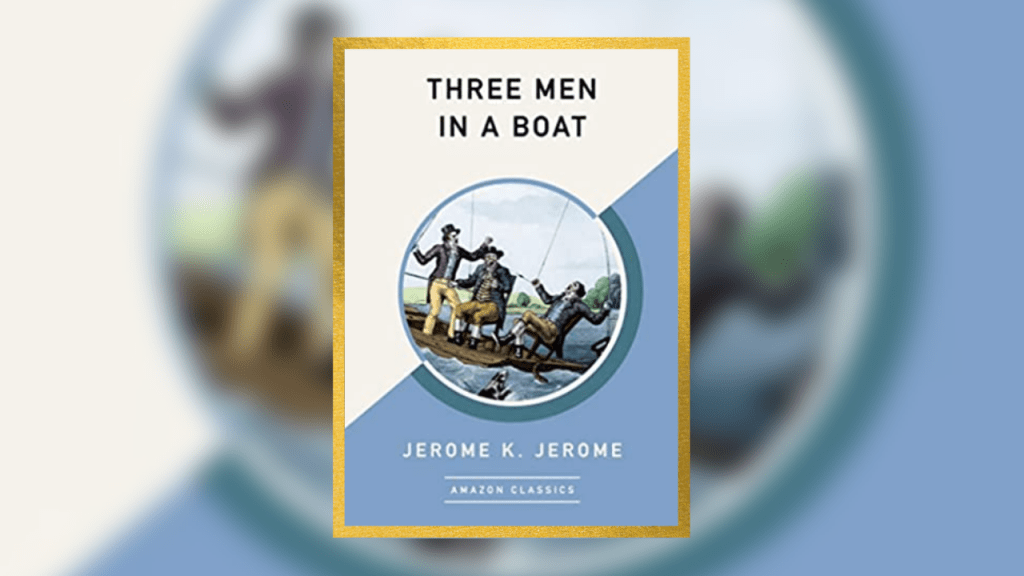
  • Three Men in a Boat by Jerome K Jerome: Summary and Review

    Three Men in a Boat by Jerome K Jerome: Summary and Review

    Three Men in a Boat (To Say Nothing of the Dog) is a humorous account by the renowned British author Jerome K Jerome, detailing a boating holiday spanning a couple of weeks. 

    Funnily enough, the book was initially meant to be written as a serious travel guide, but the comic element in the presentation ended up overpowering everything else. The book was first published in 1889, had widespread success, and never went out of print since its first publication.

    Three Men in a Boat: Summary

    The story begins with an account of three friends- George, Harris, and Jerome (always called J) and J’s dog called Montmorency. The friends happen to be discussing the variety of ailments that plague them and unanimously come to the same conclusion – overwork was to blame. 

    Naturally, the best antidote in that situation turns out to be a holiday, an impromptu one. Options for a holiday are floated around, and the decision of a boating trip on the Thames is finalized.

    They set off the following weekend, reaching the starting point of their journey – George got there first while J and Harris came later after a series of haphazard incidents also involving their bribing a train driver. 

    The rest of the story describes their journey, peppered with a description of the landmarks they passed along the way, ruminating over the historical association of these places. Most of the time, it slips into a series of humorous anecdotes- on a wide variety of topics – weather, the (un)reliability of thermometers, towlines, boats, artificial trout, Irish stew – you name it. 

    Their journey ends the same way it started- eventful.

    Three Men in a Boat: Review and Quotes

    Back to my rant on Three Men in a Boat. 

    I wish I could rave more about it than I do. The story has always had a significant influence on me. There are too many things I relate with J on. Just too many. 

    I am a fan of his stupefying laziness and hilarious condensation of life’s profound philosophical truths. Oh no, never, I don’t think I can ever bring myself to review this – because I relate to the book personally, on so many levels. 

    There is neither a start nor an end to the love that I have for this sacred piece of writing.

    There is much to feel lighthearted about.

    Beware of J’s uncle Podger for example:

    Oh, you leave that to me. Don’t you, any of you, worry yourselves about that. I’ll do all of that.

    Because he’s gonna follow up with this not long after :

    Oh, you can give it up! I have found that myself now. Might just as well ask the cat to find anything, as expect you people to find it

    I’d be surprised if you don’t know at least one such character from your own life. I have more than I need of this Podger supply.

    Their familial woes are not even the tip of the iceberg; their culinary skills are simply out of the world. 

    Consider their community-based preparation of the Irish stew. Even Montmorency was fully invested in the preparation of this exotic meal:

    I forget the other ingredients, but I know nothing was wasted; and I remember that, towards the end, Montmorency, who had evinced great interest in the proceedings throughout, strolled away with an earnest and thoughtful air, reappearing, a few minutes afterwards, with a dead water-rat in his mouth, which he evidently wished to present as his contribution to the dinner; whether in a sarcastic spirit, or with a genuine desire to assist, I cannot say.

    If you thought that was enough, the gentlemen even deliberated putting the rat into the stew.

    Wait till you hear his rant about weather predictions; it’s funny that this is as relevant now as it was a century and a half ago:

    I do think that of all the silly, irritating tomfoolishness that we are plagued with, this weather forecast is about the most aggravating. It forecasts precisely what happened yesterday, or the day before, and precisely the opposite of what is going to happen today.

    And then there are priceless hacks on tenets on preservation:

    I take a great pride in my work, I take it down now and then and dust it. No man keeps his work in a better state of preservation than I do.

    The book was first published in the late nineteenth century and never went out of print. Fans of the book recreate the trip to this day, replete with visits to some of the joints mentioned in the book that survives to this day. 

    One of Mr.Jerome’s publishers famously mentioned this to a friend:

     “I pay Jerome so much in royalties”, “I cannot imagine what becomes of all the copies of that book I issue. I often think the public must eat them.”

    That says something, doesn’t it?

    The book has much to offer if you are looking for a light-hearted read. At the very least, it offers a respite from the mad rush of life-jumping from one goalpost to another. Running from one mindfulness lesson to another implementing none. 

    If nothing else, the bare minimum takeaway from this book is a mantra as simple as this: 

    Sit back. Relax.

    If the three men with extraordinary intelligence could survive a Thames trip, it would be a miracle if you don’t.