I read this quote in Franz Kafka’s popular and absolutely amazing short story The Judgement.
“So now you know what else existed in the world outside of you, before you knew only about yourself!”
Reading this from the story felt like seeing through a kaleidoscope – moments from my own life where I was either saying this to someone or was at the receiving end of this ‘angry’ remark.
In the spirit of complete honesty, I did deserve having it said to me on several occasions.
But on all of them? Hell no!
However, if you ask me if the people I said it to deserved it, I would probably say yes on most of those occasions.
Where is this bias coming from? And am I alone in feeling that I am right and the world is wrong?
Turns out that the answer is NO.
There is a humongous volume of literature around human selfishness. Glaucon, a Greek philosopher, is known to have mentioned in a discussion with Socrates that people’s good behavior actually only exists for self-interest.
Hell! Forget literature and just take a look around. Betrayals, fraud and meanness hog headlines in newspapers and prime time television.
Think selfish leaders driving their own countries to war, or bringing them to the brink of bankruptcy. Think spouses fighting in front of their kids every day. Think an alcoholic father caring for his own pleasure more than the well being of the people who depend on him. Think kids insulting their parents to conform to peer ‘requirements’.
We are selfish, aren’t we?
Yes we are, but there is a silver lining.
We are not all selfish to the extent of narcissism. More often than not, we feel guilty when we realize our mistake. Some of us even act on it and apologize.
This does two things – we feel better and so does the person we wronged. There’s nothing more relieving than admitting – to someone whom you wronged – that you realize your mistake and regret your behavior towards them.
Sometimes, when we care for a person too much, we might even swallow our pride and apologize for the mistakes we know we didn’t make (I can see those of who you are spouses or partners smiling at this).
There are quite a few altruistic people out there – willing to risk their own lives for the greater good. And luckily the world has been producing gentle souls like those since time immemorial as well. And the world is all the better for it.
Not all of us can be Florence Nightingale, Mother Teresa or Nelson Mandela. If you aspire to be one, go you! I am proud of you.
But for the less ambitious ones out there, what is our role? What can we do to contribute?
It’s pretty simple actually….
Be Kind
Next time when your spouse fights with you, before retorting, take your time, think what might be causing him/her to behave that way.
Did you leave them alone to take care of the kids for a month ?
Did you ditch three dates in a row?
Did you not offer help with the chores when they were in desperate need?
Next time when an ageing parent makes a rude remark, instead of getting into ‘self-defense’ mode, try to understand what might have caused them to do it.
Are they feeling neglected?
Are they in pain?
Kindness, like money, grows manifold when invested right. But unlike money, it can’t be stolen or destroyed. Hoarding the currency of kindness only makes our life as well all those it touches better.
Next time you feel that the world revolves around you, remind yourself that it has got better things to do!
If you liked this quote from the short story The Judgement (written by renowned author Franz Kafka), you might want to take a quick look at the summary of that story. You can check it out here:
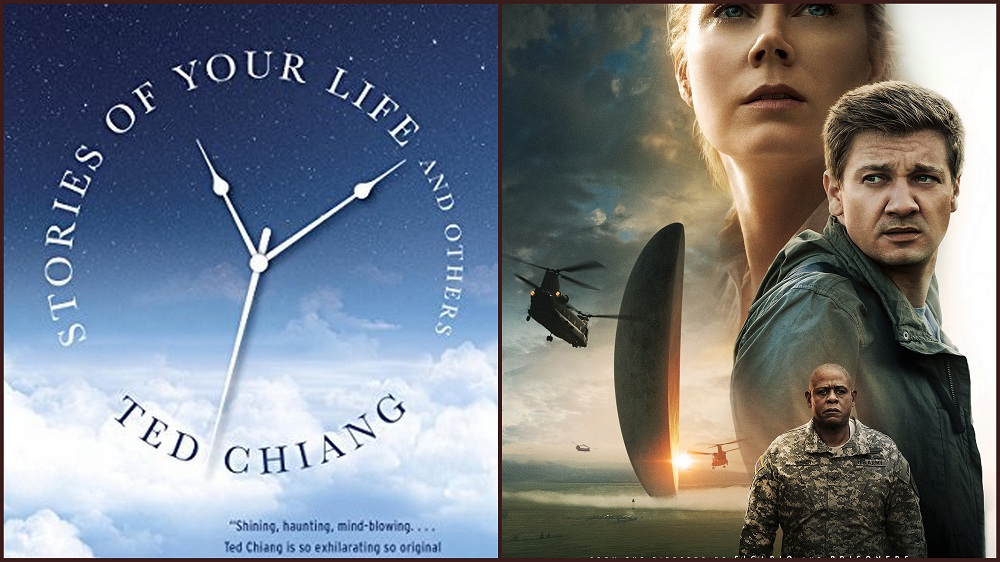
Story of Your Life is a science fiction short story written by Ted Chiang. It was first published 1998. The story revolves around a renowned linguist and how she makes a breakthrough in communicating with the aliens that have landed all over the world in massive spaceships. This story received many accolades and shot to immense popularity following the success of a Hollywood movie ‘Arrival’, which is based on this story.
“Despite knowing the journey and where it leads, I embrace it and welcome every moment.”
What would you do if you somehow chance upon the ability to be able to see your future?
Will that scare you, or will you be hopeful? Or both?
Ted Chiang, in his short story “The Story of Your Life”, brings you some answers in a very humane sci-fi manner, traversing through the themes of language and determinism.
First published in Starlight 2 way back in 1998, this story has received multiple accolades. Its most recent adaptation into a Hollywood movie – Arrival, starring Amy Adams and Jeremy Renner – is a testimony to its ever-growing popularity.
Story of Your Life: Summary and Plot Analysis
The story revolves around Louise Banks, a respected linguist, who is also the narrator of the story. Louise is recounting the events of her life to her daughter and story alternates between glimpses into her past and future.
The story opens with a couple enjoying a romantic dance on a day which happens to be the one where their daughter was conceived.
The pivotal point in the story is the arrival of aliens in spaceships that land in different parts of the world, including the US, Russia, China etc. And not just one or two, a total of 112 gigantic semi-circular spaceships land all over the planet.
These ‘devices’ serve as an audio visual link to the aliens.
This is the alien spaceship which land in different parts of the world. This image is a screenshot of the movie Arrival, which is based on this short story. (Photo Credit: Arrival Movie)
Aliens initiate communication with humans and Dr. Banks and Gary Donnelly (who is a physicist) have been brought in to assist with the process.
Aliens, whom people call ‘Heptapods’, because of their seven limbs and radially symmetrical appearance, communicate in a language that is nothing like any form of language (both written or verbal) that humans have ever known.
Louise and Gary are assigned to 9 “looking glass” sites (that’s what humans call the sites where these spaceships have landed) and start to work with them to understand their language in order to be able to communicate with them.
They work with two aliens, whom they nickname Flapper and Raspberry.
Through a series of conversations with them, Louise realizes that their written and spoken words are not related to each other at all! She and her group refer to speech as “Heptapod A” and the written form of the language as “Heptapod B”.
Through a series of experiments that Louise and her team run to understand the aliens’ language, both in linguistics and physics, they infer that the alien language has a ‘free word order’. In addition to that, their language does not seem to have any linear sequence making it even more complicated to understand.
Not much progress is made until one day Gary explains Fermat’s ‘principle of least time’ to Louise. From this fresh understanding, it dawns upon Louise that similar to the light in Fermat principle (where light knows exactly where it will end up before it chooses its path of travel), aliens know their full sentences beforehand.
Instead of experiencing events sequentially, they experience all of them at once, hence confirming why the Fermat principle resonated with them so much.
Armed with this knowledge, Louise becomes proficient in Heptapod B quickly, but it also alters her understanding of reality. She observes that her train of thought is now absurdly directionless.
She experiences complete immersion in Heptapod B and starts to think in it and perceives time the same way as Heptapods do. She now sees glimpses of a future, a daughter she does not yet have, her daughter’s death and a life she doesn’t have yet.
One day, the aliens announce that they are leaving. They shut down the looking glasses and disappear. It is never established why they came and why they left, although there were rumors flying around that implied that they found human race to be too primitive to be of interest to them.
This knowledge of the heptapod language changes Louise’s life. She knows the future now, but does nothing to alter it.
She knows that she is going to end up together with a man, have a daughter and will lose her when she is still young. Despite this knowledge of her future, she goes on ahead with her life, changing nothing.
Flash back to the present, when Gary asks her if she wants to make a baby, she says yes.
Want to read Story of Your Life by Ted Chiang?
Story of Your Life is a short story which is published in a collection of short stories written by Ted Chiang. You can use the links given below to buy this short story collection on Amazon:
Story of Your Life has won numerous awards for Ted Chiang, including the prestigious Hugo award. Mr.Chiang has this innate ability to convert extremely dense topics to something that you can not only comprehend, but think and marvel at the new perspectives that it brings.
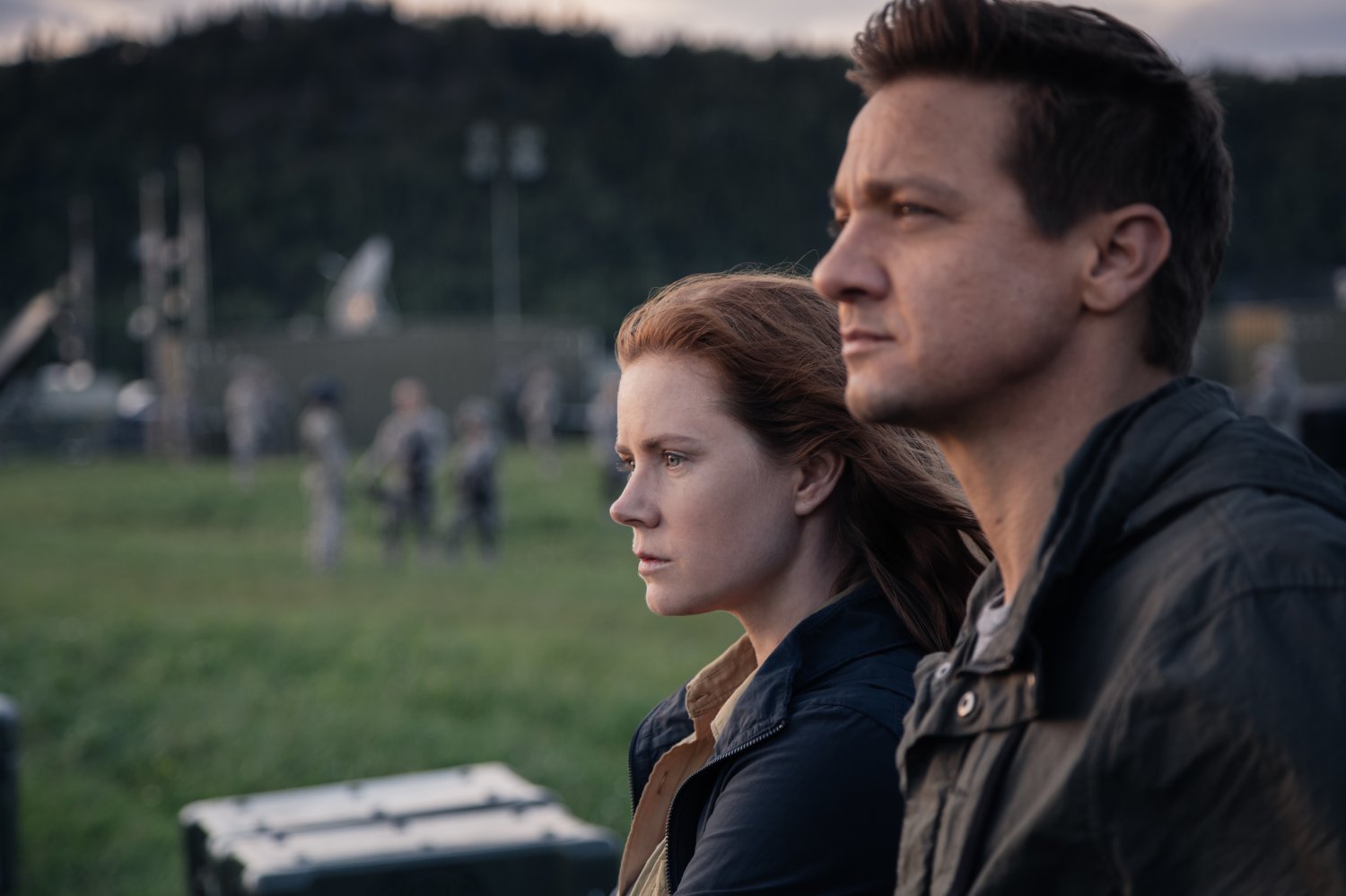
A still from the movie ‘Arrival’ – it is based on A Story of Your Life
This story brings the debate of free will and determinism to the fore. The portrayal could not have been any more gripping and profound than it is. The story shines in its intellect and humaneness.
It has got rich material that will keep both the dreamer and scientist hooked.
Consider for example, how Chiang has broken down the concept of Fermat’s principle:
“Any hypothetical path would require more time to traverse than the one actually taken. In other words, the route that the light ray takes is always the fastest possible one.”
The way that he has married science with philosophy in his story is remarkable. He is known to have remarked once: “Science fiction is very well-suited to asking philosophical questions; questions about the nature of reality, what it means to be human, how do we know the things that we think we know.”
The clarity with which he has presented the linguistic challenges, realizations and the character epiphanies are spellbinding. It speaks to the amount of research that must have gone towards this immaculate description of a linguists approach towards a new language.
And the biggest sentences had an effect similar to psychedelic posters : sometimes eye-watering, sometimes hypnotic.
7 Quotes from Story of Your Life
Here are some quotes from A Story of Your Life that I absolutely loved:
1 – Whether scientists or tourists they were an awfully incurious bunch.
(Referring to the aliens who had landed in different parts of the world but didn’t seem to do anything after they had landed)
It might be the woman in me talking but I found the depiction of mother-daughter relationship extremely heart-warming. At those specific instances in the story I forgot that I was reading science fiction.
Here are some quotes through which the author depicts the beautiful mother-daughter relationship:
2 – Even if I had never laid eyes on you before, I would be able to pick you out from a sea of babies: Not that one. No, not her either. Wait, that one over there. Yes, that’s her. She is mine.
3 – It will be like growing an errant limb, an extension of myself whose sensory nerves report pain just fine, but whose motor nerves do not convey my commands at all. It’s so unfair. I am going to give birth to an animated voodoo doll of myself. I didn’t see it in the contract when I signed up. Was this part of the deal?
A still from the movie ‘Arrival’ – it is based on A Story of Your Life
4 – My own mother could never understand why I couldn’t just be a high school English teacher. You’ll do what makes you happy and that’s all I ask for.
5 – Living with you will be like aiming for a moving target, you will always be further along than I expect. All those vows that I will give reasonable answers when I became a parent, that I would treat my own child as an intelligent, thinking individual,all for naught, I am going to turn into my mother.
6 – I can fight it as much as I want, but there will be no stopping my slide down that long dreadful slope. Not to forget a little lesson in mindfulness that Ted threw in there as a bonus read-
7 – And the lesson in mindfulness – NOW is the only moment you will perceive; you will live in the present sense. In many ways, it’s an enviable state.
And there is always this overarching message in this book, which he very nicely intrigues us with using the Book of Ages ages and the fallacy of the argument that it exists, leaving us with this gem on his favorite topic of free will vs determinism.
8 – From the beginning I knew my destination and I chose my route accordingly. But am I working toward an extreme of joy, or of pain. Will I achieve a minimum, or a maximum?
James Gleick, an American author, speaking about The Story of Your Life once said, “For us ordinary mortals, the day-to-day experience of a preordained future is almost unimaginable.
But Chiang does just that in this story, and with this brings the hope and faith that our present is all the more enriched with authors like him around.”
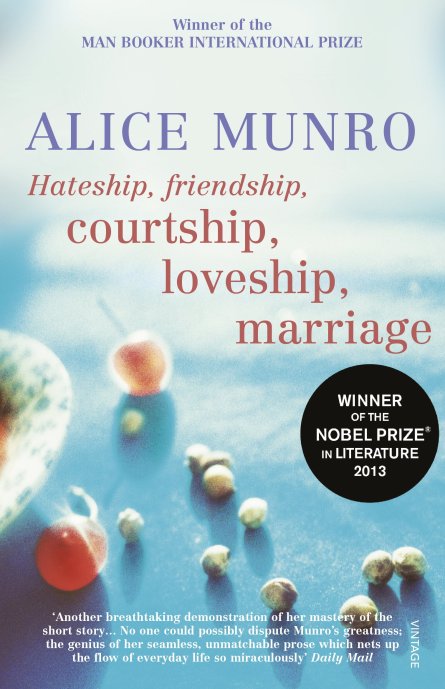
Hateship, Friendship, Courtship, Loveship, Marriage is a short story written by Alice Munro. This story was published in a book of the same name which contained a few other short stories by Munro. This story revolves around the life of Johanna, a plain-looking, poor but a dedicated unmarried woman. She works for Mr McCauley, a reticent old man known in the community.
“Hateship, Friendship, Courtship, Loveship, Marriage” – this remarkable piece from Canadian Nobel Prize Laureate Alice Munro is a short story that lets you peek into the lives of her characters –almost all of them humane, flawed and endearing.
Hateship, Friendship, Courtship, Loveship, Marriage: Summary and Plot Analysis
Mr McCauley has a granddaughter Sabitha who has now moved to a big city, taken in by her aunt Roxanne. Sabitha’s mother Marcelle has deceased a long time ago and her father Ken Boudreau, having changed jobs multiple times, is on the verge of bankruptcy and currently lives in Saskatchewan. Johanna is the housekeeper and takes care of Sabitha.
Sabitha’s closest friend is Edith, who is a daughter of Mr. and Mrs.Schulz, owner of a shoe shop in the city and friends of Mr McCauley.
The story starts with Johanna arriving at the train station to enquire about shipping furniture from Ontario to an address in Saskatchewan, she also enquires about the journey there and finalizes her tickets. Her exchanges with the station master are curt, and he considers the journey as well as the shipment pretty uncharacteristic.
Hateship, Friendship, Courtship, Loveship, Marriage book cover
She then goes on to shop for a fancy dress, which she considers rather expensive, and later tells the store person about it being her possible wedding dress. She rushes back home, leaves a letter for Mr.McCauley and leaves the house for her trip to Gdynia in Saskatchewan.
Johanna likes Sabitha but doesn’t like her friend Edith much, because Edith seems too clever for her taste. She gets to meet Ken Boudreau, McCauley’s son in law when he comes down to meet his daughter.
Ken frequently reaches out to Mr.McCauley for financial assistance. The most recent instance was when he asked Mr. McCauley to sell his own furniture and lend him some money. Mr.Mccauley, irked by this, disregarded the request altogether.
Sabitha and Edith, close friends in their early teens – in one of their characteristic naïve conversations, come up with an idea of forging love letters from Ken Boudreau to Johanna.
Having been shown interest from a man, which she seldom gets, Johanna starts to respond to the forged letters, and the girls keep forging letters from Ken. With each progressive exchange between Johanna and the girls posing as Ken, the messages become more and more personal and intimate.
Johanna ultimately decides to help Ken by shipping the furniture and running away to be with him but didn’t write a letter to Ken to inform him of this.
Johanna finally makes her way to Ken, who lives in what seems to be a dilapidated construction in the middle of nowhere.
Ken, down with a terrible cough aggravated by his intense smoking habits, is unable
to notice or question her unannounced arrival.
Johanna takes charge of the situation – she sets up the place and devotedly nurses Ken back to health. As he gets better, he thinks of having a conversation with her about her sudden and unexpected appearance in his life, but looking at the money that she has brought with her – decides against it.
Impressed by Johanna’s resolve, substantial savings and meticulous approach – all of which he lacks – Ken surrenders to her will.
Several years later Edith comes to know that Ken and Johanna are married and have a kid.
This is a fantastic short story for several reasons:
1 – ‘Human’ characters
The characters in her story are so amazingly ‘human’; all flawed yet intriguing. Who would not respect a person in control of their life, a person that makes things happen – our Johanna did a great job at that.
Sabitha – just another directionless adolescent, not very clear about what she wants but doesn’t much care for it either.
Ken – a person who cannot flourish without someone guiding and assisting them throughout, sometimes even to the extent of being a parasite.
2 – Plain adults and cunning children
I absolutely loved how the adults and children were portrayed in the story – Johanna, dedicated and meticulous and having lived a hard life, immediately succumbs to the feeling of love, easily trapped by a child’s prank. So much so that she completely went on a different path in her life- something she would never have imagined.
Even while I was reading the story, I was heartbroken in the anticipation that Ken
will break her heart. Lo and Behold! They actually marry and are a happy couple. The power that Munro gave to the child’s prank is humbling.
3 – Ego
McCauley’s transformation after the ‘smell of betrayal’ is so real. Shown initially as a very reticent guy, mostly apathetic to the things happening around him, he completely transforms into a bantering old man; people couldn’t recognize this man (“something’ has gotten into him”).
And all because a housekeeper left, the one that he could not recall the age or build of. I am amazed at the power ego exercises and Munro has done justice to this monster in her work here.
4 – Superbly titled story
When I first picked up the story I read the title of the story multiple times to understand what it might mean. In addition, to be a mouthful to speak, it had a certain childish ring to it- an endearing one at that.
Only when I read the story did I realize that growing up we played a variation of that too! I quickly drifted to my childhood days where games like that made dollops of sense. I believe any writer who can have you traverse through your own life reading their words- is a force to reckon.
While accepting her Nobel Prize, Alice Munro remarked, “I want my stories to move people”… and move she does, with this gem of a story!
If You’re Not Yet Like Me is a short story written by Edan Lepucki. It is a story of a single woman – Joellyn – who lives alone in an apartment in New York. Joellyn happens to be narrating the stories of her (failed) romance with an unemployed, terribly-dressed man named Zachary to her unborn child.
If You’re Not Yet Like Me: Summary and Plot Analysis
Joellyn is a very relatable vision of a woman in her mid 20s to early 30s – a woman that is insecure yet boisterous, independent with a burning desire of companionship, compassionate yet indifferent, funny yet grappling with solitude. A woman that seems smart at some occasions and lost in others.
Joellyn is an independent, confident woman living in the big city when one day she comes across an unremarkable gentleman Zachary at a crowded coffee house – one of those days where people order complicated coffee and the barista is cornered with a backlog.
She strikes a conversation with Zachary, who was right behind him in the queue. Although Joellyn finds nothing remarkable about Zachary, she ends up setting a date with him later that night against her better judgement.
She keeps her end of the bargain and shows up for the date only to re-affirm that Zachary is still as invisible a guy, as the one she met earlier that day. She carefully observes the events of their date, Zachary ordering beer and a salad with onions – making her think if he already found her as repulsive as she did.
When he offers to buy another drink , she does not decline and ends up making another impulsive decision to invite him over to her place, despite the precautionary measures she takes earlier in the day to avoid this scenario.
They end up having a good time together; although Joellyn’s impression of Zachary does not change much, she begins to soften for him over the time they spent together.
Over beachwalks, pinatas, Imagine- land and pinatas , she starts to bond with Zachary, starts feeling warm and cozy in his presence and begins imagining his husband like behavior towards her, only to have the relationship end one day over Zachary not seeing how this could work out for them.
Instead of trying to salvage the relationship, Joellyn ends up putting the blame of the failure of their relationship on his ‘invisibility’, driving a final nail in the coffin. Although she is heartbroken, instead of composing herself and starting afresh, she ends up making a mistake with an ex and ending up pregnant with his child.
If You’re Not Yet Like Me: Review
The story is told by Joellyn to her unborn child perhaps as a lesson for her not to make the same mistakes as her mother did.
Although the story and the characters seem a little less developed to begin with, Lepucki does a good job to make up on the relatability front. The characters are quite relatable and so are the struggles of an adult still trying to find her bearings. The humor in the story did muffle the blow of the tale of a failed romance.
If You’re Not Yet Like Me: Quotes
There are some quotes from the story that made me laugh to myself, because I did find them relatable-
“The coffee table covered with Venn diagram stains of cup’s past”
This would probably apply to any anti-coaster adult that has lived alone at some point either in hostels, dorms, or hotel rooms. It brought back a flurry of memories from my college days where we had a variety of geometrical shapes adorning my study table, coffee table, bedside table – you name it.
I remember quoting University of Minnesota research to my friends about how people with cluttered desks are geniuses actually, and as such, they should be left alone devising their genius plans to make the world a better place (atleast for them!)
“The ending changes everything that came before it”
This is what Joellyn tells her unborn child when revealing who her father is. She blatantly announces that she did not shed her superficiality after the heart break.
Although it did seem to her at one point that her story could have been one of the Happy Ever Afters, but it never became that. The sad end to their short lived romance is all that stuck in her mind, the beautiful journey before that faded away into oblivion.
I guess whether you will like the book depends on what you care for more – the destination or the journey.
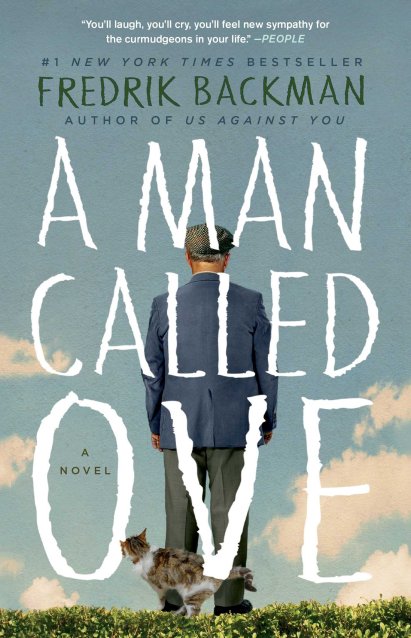
A Man Called Ove is a fiction novel that was originally published in 2012. It is written by Fredrik Backman – a Swedish writer and blogger. The novel revolves around a 59-year old man whose name is Ove. It tells the story of love, friendship, compassion, grief and the importance of friends and community in coping with loss.
“He had never understood the need to go round stewing on why things turned out the way they did. You are what you are and you do what you do, and that was good enough for Ove. He didn’t quite know what he should say to avoid seeming uneducated and stupid, but it proved to be less of a problem than he had thought. She liked talking and Ove liked keeping quiet.”
That’s Ove, I say this name like I know the person, I have talked to this person, I have met this person in passing, I have seen this person in a mall. I may even have been this person at times-all that to say, this person is everywhere!
Say Hi to your grumpy neighbour! I am talking about A Man Called Ove (Swedish: En man som heter Ove): it is a 2012 novel by Fredrik Backman, a Swedish author, columnist, and blogger. It was published in English in 2013.
The English version reached the New York Times Best Seller list 18 months after it
was published and stayed on the list for 42 weeks. It has also been adapted into a movie, starring none other than Tom Hanks! How about that?
A Man Called Ove: Summary and Plot Analysis
A Man Called Ove is a story of love, friendship, compassion, grief and an ultimate ode to the importance of friends and community in coping with loss.
Meet Ove (pronounced oo-vaa) – a curmudgeon, i.e. a bad tempered person, especially an old one, the kind of person who will call a idiot an idiot on his face, ‘who points at people he dislikes as if they were burglars caught outside his bedroom window’.
He is a creature of habit with unrelenting principles, routines and temper ready to go off at the drop of a hat. A man with zero political correctness and zero tolerance. People in his community call him – ‘the bitter neighbor from hell’.
It is very easy to mistake him for that, until you start looking closer.
The cover of “A man called Ove”
What you will find on closer inspection will certainly surprise you, if not completely throw you off.
You look at this human portrait a bit closely and you start noticing that there is a sadness in his life manifesting in a variety of forms – a difficult childhood, absence of a motherly figure growing up, being orphaned at a very young age, losing of a baby, having wife suffering from a life altering accident, losing friendship of a close friend, losing his wife and a series of failed attempts at taking his own life.
You begin to realize that it’s a miracle for this man to be alive, let alone having the amount of sanity he does. Always quick to judge, aren’t we?
He is convinced that he is going to end his life, it is simply a matter of when until one day, where a chatty young couple – his new neighbors – accidentally flatten Ove’s mailbox.
From that moment on, things begin to change.
What’s unravelled is a comic yet heartwarming tale of defiant cats, unexpected friendships, unwanted roommates, playful little girls with lots of crayons, rescued
friendships and finding, exposing the Ove that his wife had fallen for.
You don’t only start to understand why Ove is who is, but also love and start cheering for him.
Want to read A Man Called Ove?
A Man Called Ove is available on Amazon if you want to get yourself a copy. You are welcome to use the links given below to order a copy of the book:
I picked up this book as my typical romance dose of the month having read rave reviews about it, but came to like it for reasons far beyond than that, to the extent that I might even sound like a raving barking lunatic going on and on and on about it.
1 – Funny One Liners
I literally rolled on the floor laughing when I read these – “that time Rune drove a Volvo, but later he bought a BMW. You just couldn’t reason with a person who behaved like that.”
Here’s another one:
“Ove feels an instinctive skepticism towards all people taller than six feet; the blood can’t quite make it all the way up to the brain.”
I like this quote for two reasons; first- it makes me one of the smarter people as per Ove’s definition and second, I get the required ammunition to get back at all my tall friends for years of teasing me over my ‘minuscule’ stature.
2 – Timeless wisdom
I – “Ove, only a swine thinks size and strength are the same thing. Remember that.” And Ove never forgot it.”
This piece of wisdom imparted to Ove from his father reiterates something that I have always known but seem to forget as the years passed me by. I am sure this would have come in handy as a reinforced principle of thought growing up amongst a bunch of bigger bullies.
II – “And if you don’t know the story, you don’t know the man.”
Simple, yes, but hits the right spot. It is very easy to judge a person for what they are or have done to us today completely ignoring the story behind it. I have been guilty of doing that way too many times in my life than I would like to count. This reinforces my belief that a little patience and empathy goes a long way in having better conversations and relationships, no matter what kind they are.
III – “Has never liked the feeling of losing control. He’s come to realize over the years that it’s this very feeling that normal folk like and strive for, but as far as Ove is concerned only a complete bloody airhead could find loss of control a state worth aiming for. He wonders if he’ll feel nauseated, if he’ll feel pain”
Pardon my use of strong words but I am in complete agreement with Ove’s viewpoint here. Or maybe I am saying that simply because I am a ‘chicken’? I like to be in control and the idea of losing it completely freaks me out. Maybe time will change that. Who knows?
But for now, Ove wins!
3 – Sarcasm
“His heart is too big.”
If you thought that Ove was always on the giving end of sarcasm, you are wrong. He was on the receiving end as well and when that happened, it was twice as hilarious. When Ove was hospitalized for a medical emergency and doctor tells Pravaneh that it’s the size of his heart that is the problem, she almost rolls on the floor laughing.
“Ove points at him with exasperation. “You! You want to buy a French car. Don’t worry so much about others, you have enough problems of your own.”
I am not sure if this is Ove or Fredrick Backman himself , but this cracks me up every single time. Ove’s biting sarcasm on everything auto is ‘laugh-out-loud-like-a-creep’ funny.
4 – Of Love and Loss
“It’s a strange thing, becoming an orphan at sixteen. To lose your family long before you’ve had time to create your own to replace it. It’s a very specific sort of loneliness.”
“Then Mum died. And Dad grew even quieter. As if she took away with her the few words he’d possessed.”
“One finds a way of living for the sake of someone else’s future. And it wasn’t as if Ove also died when Sonja left him. He just stopped living.”
I loved the book for its sarcasm, laughter, fun and friendships, but I hated it too. Although, the reason for it is more personal than literary, this book made me cry. I was quick to judge Ove for the harsh person he was in the initial pages of the book, but as more and more was revealed about his past making him what he was, it teared me up.
As if losing his mother at such a young age was not bad enough, losing his father and all family before he was barely an adult is such a sad state for a child, or anyone for that matter to be in. I was happy when he found the love of his life, but then having lost a child and then losing her to a sickness again was so saddening.
That was just part of the reason why. I was also saddened by how quick I was to judge.
All in all, this book led to be a major eye-cleanup exercise for me.
In all these years, I have realized that a book is much more powerful when you feel all the emotions the writer intended for you to feel.
“Love is a strange thing. It takes you by surprise.”
And so does this awesome novel by Fredrick Backman.