Tag: love

  • The Witch by Anton Chekhov: Summary and Review

    The Witch by Anton Chekhov: Summary and Review

    “A witch is a witch” – Savely, the Sexton says to his wife Raissa, in Chekhov’s ‘The Witch’.

    Husband calling the wife a witch, is nothing we haven’t heard before. What’s new and refreshing, is a little Chekhov spin on it.

    “The Witch” (Vedma) was first published in March 1886 in Novoye Vremya (Issue No. 3600). It made its way into the 1887 collection titled In Twilight, and was later reproduced, unchanged, in numerous subsequent editions.

    The Witch: Summary and Plot Analysis

    The story revolves a woman named Raissa Nilovna, who is married to a sextant, Savely Gykin. It’s made apparent in the beginning that there is no love in the marriage. There seems to be a storm raging outside, and judging by the audible ruckus, it is a huge one.

    Savely is quick to assume that nature’s destruction is pointed towards a specific person, and that his wife has played a huge role in bringing it about.

    Raissa is a beautiful young woman. She seems distracted, while continuing to mechanically do her chores, completely indifferent to the presence of her husband.

    Savely is convinced that his wife is a witch, that she has the power to conjure up storms and natural disasters which always result in young handsome men requesting a refuge at their home. He argues with her, while she logically denies all his claims.

    No sooner are they are done arguing, they hear a loud knock at the door .Lo and behold! A handsome postman who seems to have had lost his way in the storm is standing at their doorstep with a carriage driver in tow.

    Savely, cursing his wife under his breath, ignores the guest’s presence and goes back to bed, While Raissa blushes in the presence of the young postman. Savely can’t seem to ignore the man’s presence for long, still thinking of his witch wife’s malicious ploy.

    He glances at his wife and finding her staring at the man, gets up from the bed and tries to cover the man’s face with the handkerchief to stop her from staring at him.

    After all his efforts to stop her failed, he starts to wake the man from his sleep against Raissa’s requests to let the man stay and have some rest, He even offered to help carry the bags and show them the way so they leave their house pronto.

    The postman, still quite sleepy and dazed, finding himself incredibly intoxicated with Raissa’s youth and beauty, the post man’s desire for her overpowers him. However, before he could do anything, he is told that the carriage is ready to go.

    The postman, the carriage driver and Savely leave shortly and Raissa finds herself alone in the house. The sight of Savely’s unkempt bed repels her to the core, so much so that, she is ready to tear it to shreds but decides against it.

    A couple of hours later, Savely returns and finds Raissa undressed and lying on the bed. Although having initially thought that he wouldn’t be touching her that day, he finds the idea of taunting her simply irresistible. Raissa retorts but soon starts sobbing at her misfortune of having Savely as her husband.

    She finally calms down while the storm continues to rage outside. Savely tries to caress her neck boldly, a response to which is a hard punch on his nose by his wife.

    The Witch: Review and My Thoughts

    Sounds like a really loveless marriage, right?

    What’s so special about it? You might wonder.

    After all, it is nothing that you have not seen before, in some or the other form at least.

    But this is no ordinary story. At least not to me.

    Let’s start with Chekhov’s poetic expressions, some of them are downright swoonworthy, to say the least.

    “So a beautiful fountain expresses nothing when it is not playing”- Chekhov beautifully portrays the mood and the atmospherics around her protagonist’s hopeless and loveless life as she has “No desire, no joy, no grief”. Nothing was expressed by her handsome face with its turned-up nose and its dimples”.

    Look at his other vivid portrayals of scenes that normally, couldn’t be more mundane, Chekhov’s very special magic dust everyone!

    “And the wind staggered like a drunkard,it would not let the snow settle on the ground, and it whirled it around in darkness at random.

    “..jingling monotone like the shrill note of a gnat when it wants to settle on one’s cheek and is angry at being prevented”

     There is obviously no love in the marriage, how can there be? The husband is convinced of his wife’s witchery and the wife is disgusted by the man’s existence. When the wife comes right out and says:

    “How miserable I am! If it weren’t for you, I might have married a merchant or some gentleman! If it weren’t for you, I should love my husband now! And you haven’t been buried in the snow, you haven’t been frozen on the highroad, you Herod!”

    That statement followed by a hard elbow kick on the husband’s nose, hard enough for him to see the stars. There is not much room for doubt about the complete lack of love or empathy, Is there?

    And then there is Savely’s steadfast belief that his wife is a certified witch. He is so convinced of it, that instead of being disgusted by his foolhardiness, you would start laughing at the comicality of it all.

    Consider this –

     “Oh the madness! If you really are a human being and not a witch, you ought to think what if he is not the mechanic, or the clerk, or the huntsman, but the devil in their form, You’d better think of that”

    “..Grin away! Whether it is your doing or not, I only know that when your blood is on fire there is sure to be bad weather, and when there is bad weather, there is bound to be some crazy fellow showing up here. It happens so every time! So it must be you!”

    “I know that it’s all your doing, you she-devil! Your doing, damn you! This snowstorm and the post going wrong. You have done it all- you!”

    With such sombre themes underpinning the story, humor would be the last thing  that you would expect Chekhov to come up with. That’s where you would go wrong probably. Of all the things I like about the story, the husband-wife bickering comes right on top! Here is a quick glimpse

    Savely : The postman is lost in the storm. I know!.. Do you Suppose I don’t?

    Raissa(eyes fixed on the window, looking for the lost postman) : What do you know?

    Savely: I know it is all your doing, you she-devil!

    Raissa(smiling) : Here’s a fool! Why do you suppose, you thick-head, that I make the storm?

    Savely: H’m grin away! I only know that when your blood is on fire, there is sure to be bad weather, there’s bound to be a crazy fellow turning up here. It happens so every time! So it must be you!

    Although having gone to bed, set on ignoring his women’s mischiefs and the postman, Savely kept peeking to see what his wife was up to, Upon seeing that she was continually gazing at the handsome young man, he couldn’t stay in the bed anymore and rushed to cover his face with the handkerchief.

    The sexton cleared his throat, crawled down on his stomach off the bed and put a handkerchief over his face.

    “What’s that for?” asked his wife

    “To keep the light out of his eyes”

    “Then put out the light!”

    Just about to put out the light, he abruptly stops himself and remarks

    “Isn’t that devilish cunning? Ah! Is there any creature slyer than womenkind?”

    Unable to control his wife, he directs his attention on the postman instead.

    “Hey, your honor, if you must go, go; sleeping won’t do”

    “You, driver. What’s your name? Shall I show you the way? Get up; postmen mustn’t sleep!”

    When are you going? That’s what the post is for – to get there in good time, do you hear? I’ll take you.

    He even steps out in the God foresaken storm to rid them of the postman and the driver’s company. Interesting things insecure husbands do, no? Nothing unbelievable about that.

    There are so many shades of human emotions in this delightful short story by Chekhov. I simply love it.

    According to Chekhov’s 28 March 1886 letter to Dmitry Grigorovich, he wrote “The Witch” in a day.

    One day, huh? I can’t say that I am surprised, given Chekhov’s genius. Can’t believe the story is  a century and some decades old now.

    Written to last, they say.

  • Jakarta by Alice Munro: Plot Summary, Analysis & Review

    Jakarta by Alice Munro: Plot Summary, Analysis & Review

    Jakarta, a short story by Alice Munro, first appeared as part of her collection of short stories in Love of a Good Woman.

    Jakarta: Plot Summary and Analysis

    The story is set in Vancouver and spans over three decades, starting in the 1950s and lasting until 1990s. It is narrated in a back and forth manner and is split in four parts. Part I and III are set in the 1950s whereas Part II and IV are set in the 1990s.

    Part I of the story opens at a beach where Kath and Sonje, two young married women, are hiding behind logs at a beach to avoid the eyes of a group of women they call Monicas – who came there everyday with a bunch of kids in tow.

    Kath and Sonje both dread the stage of lives these Monicas are in, Kath more so, being a new mother herself to a baby girl named Noelle.

    Kath and Sonje knew each other from the Public library that they both used to work at.

    Kath was married to Kent, a conservationist, whom she didn’t feel particularly very attached to, while Sonje was married to Cottar, a free-spirited journalist and a very liberal husband whom she adored.

    It was Cottar’s trip to Red China which triggered the scandalous publicity of him being a left-wing writer and that using her job as a librarian, she might be promoting communism among children to further her husband’s cause.

    Sonje was not fired, but she quit anyway – to accommodate upcoming changes in their lives.

    Kath secretly admired Sonje – both her looks and her intelligence.

    One day as they were discussing a story by D.H Lawrence, they got into a fight – which reveals to Kath that she had never felt about Kent the way Sonje felt about Cottar – that Sonje’s happiness depended on Cottar.

    She never wanted that to be true for her, but then she never wanted Sonje to think that she was the woman that had missed out on love.

    Part II of the story features Kent and Sonje, who happen to meet in the present(1990s), while Kent reminisced events from their past. He went to Sonje’s with his much younger wife, one she mistook to be his daughter.

    Looking at Sonje, hearing her speak, her house, her mannerisms, all brought back memories from the past for him.

    He got to know that Cottar died more than 30 years ago, caught a bug and was buried in Indonesia before the news got to Sonje.

    Sonje took care of his mother till her death (she was best friends with her). They converted her house into a dancing school. The way the house was set up still reminded him of their place from years ago.

    He was surprised by how talkative Sonje was, which was in complete contrast to her personality that he had known, perhaps the loneliness causing that transformation in her.

    Part III of the story had an account of the party that Sonje and Cottar threw before Cottar’s trip to Indonesia and Sonje’s to Oregon to take care of his mother. The party had a big crowd – friends, neighbors and Monicas.

    Once Noelle was asleep, Kath put the baby in the care of the baby-sitter and proceeded to participate in the celebrations. Kath and Sonje met and professed how much they valued their friendship and that they were going to miss each other. 

    Kath let Amy do her makeup and she was absolutely impressed with her made up appearance.

    Feeling rebellious, she danced and was making out with a stranger when the babysitter called her in to nurse the baby. She got back only to see that Kent was already there with the baby’s bottle. She almost concluded that Kent did not see her with the stranger but  the reaction from Kent convinced her otherwise. Guilt-ridden, she proceeded to wash all the make up off her face.

    Part IV of the story is back to the present again where Sonje and Kent are talking to each other. Sonje reveals that she had an idea where she thinks that Cottar might not be dead at all. That she was going to go to Jakarta in person to inquire all about Cottar.

    Convinced that he was alive, she was desperate in making Kent see the logic of it. 

    Kent, convinced that this was a bad move, in complete honesty, let her know what he felt about it, albeit not with his youthful brashness this time. He wondered if Sonje and Kath were still in touch and if Sonje was going to tell Kath about how good his life looked. He couldn’t help but wonder how Kath and Cottar got away.

    While one was, more likely than not, dead, the other couldn’t be more alive – yet both were somehow unreachable. 

    Want to read Jakarta?

    Jakarta is a short story which is published in a collection of short stories called The Love of a Good Woman. This collection won the Nobel Prize for Literature in 2013. You can use the links given below to check the price of this book:

    Check Price on Amazon US
    Check Price on Amazon Canada
    Check Price on Amazon India

    Reasons why you would love this story

    Like every other Alice Munro story, this one is a wondrous little short story, an astute observation of human nature.

    But what stood out in this one was the added layers of complexity and the back and forth narration device. The story is replete with instances that are so real, you can easily find yourself in one of them.

    Consider, for example, her description of Monicas –

    Where’s your hat? Where’s your ball? You have been riding on that thing long enough, let Sandy have a turn.

    Even when they talk to each other, their voices have to be raised high, over the shouts and squalls of their children.

    How many times have you seen this happening? How many times have you done this? I can bet that you can find yourself in a beach right now living the same conversation, if not witnessing it second hand.

    Munro is pure magic, I tell you.

    When she nurses her baby, she often reads a book, sometimes smokes a cigarette, so as to not sink into a sludge of animal function.

    It’s scary how she observes, like the human soul is laid bare in front of her eyes and she can pen it with a daftness, I can only believe is second nature to her.

    It seemed to her (Kath) that life went on, after you finished school, as a series of further examinations to be passed. The first one was getting married. If you hadn’t done it by the time you were twenty-five, that examination had, to all intents and purposes, been failed.

    I can’t tell you how many times I have had this conversation with friends, sometimes fully sober, sometimes in a stupor induced philosophical state. 

    Look down, look down – see how the reeds wave in water, they are alive but they never break the surface. And that is how female nature must live within his male nature. Then she will be happy and he will be strong and content. Then they will have achieved a true marriage.

    I am not surprised that she would say such a thing, considering how much a society at that time would value patriarchical dominance/influence.

    My happiness depends on Cottar.

    This is scary, very scary.

    And out the window goes every teacher’s wisdom that told you to be happy inside. That reasons of your happiness should not be outside of you. That your happiness is fully dependent on some one else. And that their entry or exit from your life spells an instant doom for you. (this statement and the one before it don’t resonate with earlier statements – they are two different things).

    No wonder Kath didn’t want that for herself. I am on her side. 

    She changed the spelling herself and scorned her mother’s frivolity. They all scorned their parents then, for something.

    Little things like this- children not seeing eye to eye with their parents. Times have changed but this thing never did. It’s as relevant in 2020 as it was way back in 1940s. .

    You would expect an old mother would be grief-stricken talking about how her only child had run off and left her, but no. Maybe old people aren’t like that. Really old people. They don’t get grief-stricken anymore. They must figure it’s not worth it.

    This one was a terribly tiny tale – a story in itself. Made me think.

    Just when you crown her the queen on the sombre human nature, she drops humor on you. She can bring a smile to your face as simply as she can bring tears to your eyes.

    There wasn’t any insurance?

    Don’t be silly.

    If there had been insurance, they would have found out the truth.

    This story with so many layers is laden with gems. Exploding with gems rather.

    But If I had to pick just the one, I would pick this one- a thought on Kent’s head

    You picked up the wrong idea, surely the wrong idea. That somebody dead might be alive and in Jakarta. But when you knew somebody was alive, when you could drive to the very door, you let the opportunity pass.

    It was painful to see the composed Sonje, who was completely and thoroughly in control of herself, lost it all for Cottar. Her life and happiness, in a way, were always dependent on Cottar.

    She was ready to chase the elusive, chase the unicorn to get the love of her life back. She was sure that he was alive and all she had to do was to track him down.

    On the other side was Kent, seemingly composed on the surface, having an interesting life, young wife and all that you would think that would make a person happy, but beyond the surface lied the longing for Kath.

    Kath, who wasn’t far from him at all, very much alive, so much so that he could drive up to her house and show right at the door. But he doesn’t choose to do that; he chooses to live life in the past and wonder what it would have been.

    Humans are complex and no one has done a better job of bringing that to the fore than Alice Munro. And she does that consistently.

    “It’s a wonderful thing for the short story,” Munro said of her Nobel Prize noting that her kind of writing is “often brushed off as something that people do before they write their first novel.”

    Well, to be completely out of the line, I don’t think that is true, for each of her stories is equivalent to multiple novels and more. She can do more in a short story that one can do in a novel. That’s her superpower. 

    If you have watched The Godfather III and are an Al Pacino fan, you might remember a line from the movie where Al Pacino goes – “Just when I thought I was out, they pull me back in”.

    My relationship with Alice Munro’s stories is the same. Although unlike Pacino, I am loving every minute of it.

  • A Dog’s Tale by Mark Twain: Summary, Analysis and Review

    A Dog’s Tale by Mark Twain: Summary, Analysis and Review

    A Dog’s Tale is a short story written by Mark Twain. It was first published in 1903. The story is told from the perspective of a dog and narrates the journey of a dog’s life..

    Mark Twain had once said:

    If you pick up a starving dog and make him prosperous, he will not bite you. This is the principal difference between a dog and a man. The dog is a gentleman; I hope to go to his heaven, not man’s.

    If you are a dog lover, whether or not you own one right now, you will understand in an instant what Mr Twain is saying here.

    You come home tired from a bad day in office, the minute you open the door, you get the welcome reserved only for kings and queens, the dog is so happy to see you that for a minute there you forgot you had a bad day.

    You sit restfully on a weekend with coffee in one hand and your favorite crossword in other, your dog calmly climbs on to your lap and sits there comfortably staring at the crossword in amazement, like that was the best thing in the world at the moment, you feel your sense of calm multiply manifold.

    There is something ethereal about the connection between a man and his dog. I stand corrected: a dog and his man, which explains why we see so many on-screen adaptations of this beautiful relationship.

    I have a huge list of movies that I would recommend if you are planning to start on what I call the Dog Movie journey, but more on that later..

    This is about a Dog’s tale. Twainspeak.

    A Dog’s Tale: Summary and Plot Analysis

    Aileen Mavoureen is a Presbyterian. As the story opens, she reminisces about her mother, an ‘educated’ Collie, she likes big words and shows off her prowess to the rest of them, leaving them surprised and envious.

    Although Aileen did think of her mother as a rather vain character, she believed her virtues more than made up for that flaw. There was more to  Collie than just her education.

    Aileen grows up fully and is eventually sold to another family. Broken hearted at their impending separation, they cry.

    Aileen’s mother comforts her the best way she could leaving her with the wisdom to perform her duties as a dog with the utmost dedication. To think not of oneself but others in the times of danger.

    Aileen finds her new home charming. Her Grays are a loving family. She feels like a part of the family and enjoys the affections people send her way.

    Mr Gray is a scientist, Mrs Gray a homemaker, Sadie, their elder kid, a 10-year old girl and a one-year old baby.

    a white puppy sits and looks at the screen
    Humans’ best friend.

    Aileen’s days are mostly spent being petted by the family, watching the baby in nursery, playing with Sadie on the grass and in occasional visits to the neighboring dogs.

    Aileen is positively pleased with her life and has nothing more to ask for. Her happiness multiplies manifold when she welcomes her pup into the world.

    Aileen finds her world too perfect until one day where an incident happens during her nursery watch.

    The baby and Aileen were both sleeping when the baby’s crib caught fire. Awakened by the baby’s cries, the dog darts, and is half way on her way out when the parting words from her mother strike her.

    When in danger, don’t think about yourself.

    Aileen ran towards the baby in the nursery and drags the crying baby out and is almost out of the door, feeling proud and happy about her feat, when Mr Gray mistaking it for a dog’s mischief strikes at her with his cane.

    She is able to duck all but one painful blow to her left foreleg, which leaves her whimpering in pain. Mr Gray soon realises his mistake upon noticing the fire in nursery and runs in that direction.

    The dog thinking that Mr Gray would soon return for her escapes to the storage trying to hide away from further torture, all the while licking her wound for comfort.

    After a while the frenzy from the fire dies down and the family begins looking for her, calling out his name, whereas she continues to hide.

    She eventually devises a plan to escape the house but stops dead in her tracks in despair when she realises she does not have her puppy.

    Accepting her fate, she decides to stay back dreading her fate, for she was sure that torture would continue when she is found.

    She is eventually discovered by Sadie and is very happy when she realises that she is actually being celebrated for being a hero that saved the baby. She is happy again being the object of the family’s worship.

    The days pass by and one day Mr Gray invites a few of his colleagues over to his laboratory. They discussed the fire at the house, the dog’s role in saving his child and went on comparing intelligence and reasoning in a human and a beast.

    She feels proud that she is an object of their conversations and thinks about her mother wondering how proud she would have been of her that day.

    One day, Mr Gray and his friends take the pup to the laboratory for an ‘experiment’. Aileen is excited and proud for her pup but is horrified to see that they have blinded the pup to prove a point.

    As the pup staggers, Aileen runs to comfort him but the pup succumbs to his injuries shortly after. Aileen observes the footman burying the pup in the ground and mistaking it to be the same as the process of planting a seed resulting in a fresh healthy plant to come out, sits there in anticipation of her pup coming alive.

    The footman, after the burial, patted Aileen’s head. She notices tears in his eyes when he says “Poor Little Doggie, you saved his child?”

    She waits by the burial ground for two weeks hoping  for the pup to come up but is disheartened when he doesn’t.

    A terrible fear grips her and she could not eat or sleep. She doesn’t return home even when people beg her to ‘not break their heart’ and come back.

    As she lies there waiting and fearful, she breathes her last.

    The humble little friend is gone where go the beasts that perish.

    A Dog’s Tale: Review and My Thoughts

    If you are the sentimental type, I would be very surprised if Aileen’s story didn’t get a tear or two from you. But parking my own emotions for a minute, let’s get back to Mr Twain’s heart rending portrayal of Aileen’s tale.

    There are many highlights in this  short story but these are the ones that tugged at my heartstrings the most.

    When AIleen’s remembers her mother fondly:

    She had a kind heart and gentle ways and never harbored the injuries done onto her, but put them easily out of her mind and taught her children her kindly way. And from her we learned also to be brave and prompt in the time of danger, and not to run away, but face the peril that threatened friend or stranger, and help him the best we could without stopping to think what the cost might be to us.

    I could not help but wonder, is it possible for human to be this compassionate? If it was , these would be the most compassionate people walking the face of earth and we would all be in awe of them.

    How come, a creature so close to us, goes unnoticed, having devoted their life for us? Are we even capable of devoting ourselves to any creature this way?

    When Aileen tries to explain what a laboratory is:

    The laboratory was not a book, or a picture or a place to wash your hands in- No, that’s lavatory; the laboratory is quite different and is filled with jars, and bottles and electrics and wires and strange machines.

    Mark Twain, has nailed (for the lack of a better word) the innocence of a dog with this. For a fleeting minute Aileen transforms to an adorable toddler  just beginning to learn the rules of the vocabulary.

    When Aileen waits for the pup plant to grow:

    There the footman dug the hole and I saw he was going to plant the puppy, and I was glad, because it would grow and come up fine handsome dog, like Robin Adair, and be a beautiful surprise when they came home.

    Oh, this broke my heart and I cried.

    However to me, the story did more than just make me sob.

    It filled me with hate. It filled me with disgust.

    Hate and disgust both for human kind. About the cruelty that humankind afflicts on creatures just because it can.

    It was pleasantly re-assuring to chance upon an article while researching Mark Twain’s animal-lover side.

    I was so happy upon discovering that he stood up for animal laws back in the day. Giving us stuff to reflect, and at the same time walking the talk put him right up on the pedestal.

    He did show us through his work and through his life, that there are things that we can do. We can still correct the wrong.

    I don’t know if heaven or hell exists, but I am with Twain when he says that he would prefer a Dog’s heaven over a Human’s.

    Want to read A Dog’s Tale?

    A Dog’s Tale is available on Amazon if you want to get yourself a copy. You are welcome to use the links given below to order a copy:

    Check Price on Amazon US
    Check Price on Amazon Canada
    Check Price on Amazon India

    What do YOU think of A Dog’s Tale?

    What did you like about the story? What stood out the most to you?

    Do you have an interesting dog tale that you’d like to share with us?

    We are open to any and all dogly conversations and we would love to hear your favorite stories involving our cute, pawed friends.

    Also, if you’re up for it, let us know in the Comments and we’d be happy to share some awesome dog movies.

    Till then, a friendly woof to all Friends of Words!


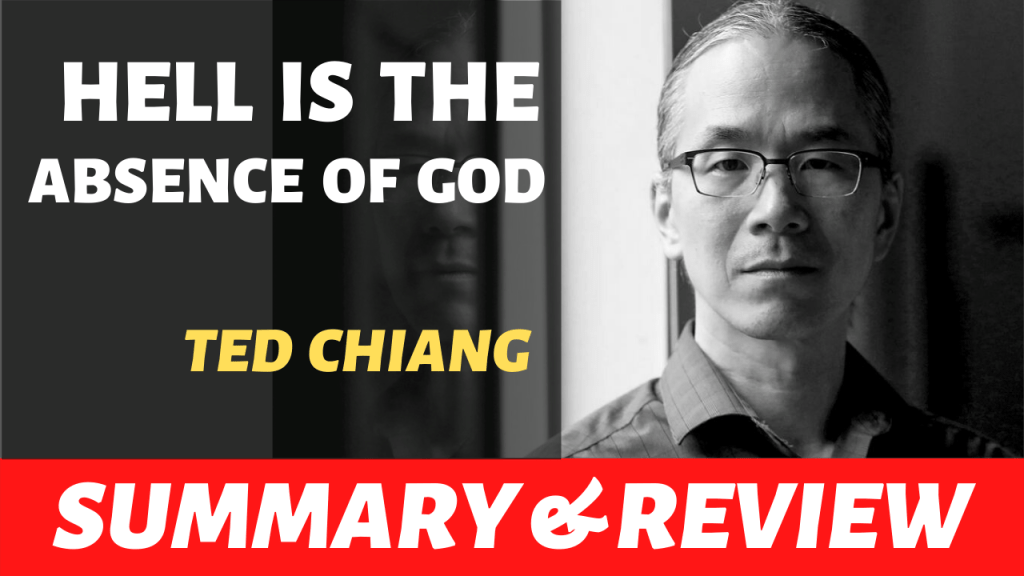
  • Hell Is The Absence Of God: Summary, Analysis and Review

    Hell Is The Absence Of God: Summary, Analysis and Review

    Hell is the Absence of God is a short story (novellete) written by Ted Chiang. First published in 2001, this story primarily revolves around Neil Fisk, a recent widower, who lost his beloved wife in the aftermath of an Angel’s visitation.

    “Obedience, he might have managed, but sincere, heart-felt love (for God)? That was a ransom he couldn’t pay.”

    With this short story Hell is the absence of God, Ted Chiang takes us on an exploration, the one where angel visitations, hell and heaven are as real as the physical world around us.

    This story is one of the more celebrated stories of Ted Chiang. First published in 2001, this one has Hugo, Locus and Nebula awards to its name.

    Hell is the Absence of God: Summary and Plot Analysis

    The story primarily revolves around Neil Fisk, a recent widower, who lost his beloved wife in the aftermath of an Angel’s visitation.

    Sarah’s soul was seen to be ascending to heaven, leaving her non-devout husband in pure grief and scampering for means to find pure devotion to God. This, he feels, will help him reunite with his wife in heaven.

    He starts attending support group meetings with similar people who were affected by that visitation. These are people whose faith has strengthened even further than before, either from gratitude or from terror.

    He is not able to relate to either of those emotions and finds himself drawn to another group where people who are feeling quite the opposite, struggling to continue their devotion.

    He finds it increasingly impossible for him to be devout or committed to God now.

    The story then follows two other characters, Janice Reilly and Ethan Mead, both of whom eventually play an important role in Neil’s final fate.

    Janice Reilly is a woman who was born without legs after her mother had an angelic visitation. She is a positive individual and has made a name for herself as a motivational and spiritual speaker.

    One day, after an angelic visitation, she finds herself able-bodied. She is now disillusioned, unsure as to whether to take this act of God as a gift or punishment.

    This uncertainty spills over in her speaking engagements and the crowd begins thinning. She is yet to find a reason as to why she would get her legs back when she didn’t even wish for it.

    As an able-bodied woman, getting used to having legs, she starts getting attention from all kinds of men, which is when she gets to meet Ethan Mead.

    She thinks Ethan has a romantic interest until one day he clarifies his purpose.

    Ethan has been raised in a devout family, who thinks that God is directly or indirectly responsible for the good fortune bestowed upon them.

    His family has never had any visitation and is happy with the status quo.

    Ethan, however, has a strong feeling that God has a special purpose for him and longs for an encounter with the divine to provide him with direction. He doesn’t go to the holy sites where angelic visitations are frequent, thinking that that’s the doing of a desperate man, and patiently waits for it to come.

    The visitation does happen, and Janice gets her legs as a blessing, but nothing out of the ordinary happens for him, and having got no insights about his calling, he decides to pursue Janice to find it.

    Neil, in the meantime, is still struggling to cope with Sarah’s loss and finding devotion to God to reunite him with her in heaven.

    He gets to hear of different perspectives of people in the support group and through a woman called Valerie also comes to know of the humanist movement. The followers of the humanist movements were individuals that advocated people acting as per their own moral sense, nothing else.

    Neil felt drawn to that ideology but refrained from pursuing it for the fear of being driven further apart from Sarah if he did.

    Desperately looking for ways to reunite with Sarah, he chances upon stories of heaven’s light comes to know of people’s encounters with heaven’s light. Heaven’s light appears when angels enter or leave the mortal world.

    People witnessing heaven’s light ascend to heaven regardless of the sins in their lives, no matter how grave they are.

    This attracts people to many pilgrimage sites in the hope that they will witness the sight and ascend. Some even try to follow the angel around when it appears so that they can witness it.

    Upon discovering that Janice will be attending a shrine for a visitation to return her gift, he decides to go on the pilgrimage as well.

    In preparation, Neil uses up savings to buy a truck that could handle the harsh ride on the terrain on his hunt to witness heaven’s light. He familiarizes himself with the terrain and one day sees an angel flying over the holy site.

    He follows the angel through dangerous terrains, crashes his vehicle and is mortally wounded.

    He sees Janice and Ethan approaching  to rescue him and heaven’s light striking Janice. The light strikes him as well. Both of them turn blind.  Neil dies shortly after.

    Ethan witnesses the whole scene, sees Neil’s soul ascending to heaven initially but finally descending to hell.

    Armed with this insight that heaven’s light does not guarantee an admission to heaven, he finds his purpose – he becomes a minister and goes on to spread this message to the world.

    Neil (who is in hell now), however, finds true devotion to God he was desperately after.

    He accepts that he will never be reunited with Sarah but continues to stay devoted  because ‘Unconditional love asks nothing, not even that it be returned.’

    Hell is the Absence of God: Analysis and My Thoughts

    Ted Chiang, in an interview, had said that after watching the movie “The Prophecy”, he wanted to write a book about angels, but could not imagine a scenario where it would work.

    In this novellete, he examines, rather brilliantly, the role of faith in religion. He maintains that if God undeniably existed, then faith would no longer be applicable.

    Neil, who has now moved on to hell, still finds true devotion to God, which goes on to say that Chiang believes that it’s still possible to be devoted to God, even when you’re in hell.

    All in all, this short story presents a rather unique perspective on the role of faith in religion and how people deal with suffering or the loss of a loved one.


  • Cupid and the Paintbrush by PG Wodehouse: Summary, Plot Analysis, Review

    Cupid and the Paintbrush by PG Wodehouse: Summary, Plot Analysis, Review

    Cupid and the Paintbrush is a short story written by PG Wodehouse – an English author and one of the most popular humorists of the 20th century. The story revolves around a man who proposes marriage to his love interest through a unique contest. 

    Let’s take a look at the plot summary of the short story:

    Cupid and the Paintbrush: Summary and Plot Analysis

    The story starts with the narrator (who is not named anywhere in the story except for his initials “R.A”) talking to Marjorie – his love interest.

    The narrator tries to persuade Marjorie to get married to him. Marjorie, however, is reluctant about the idea of marrying him. She insists that she would “make him wretched”, and that he would “hate the sight of her in a few years” and that he has no idea what she’s really like.

    RA doesn’t back down and continues trying to convince Marjorie to marry him. She remarks that she has nothing against marrying him per se, and that she actually likes him too, but it’s the idea of marriage that she is unsure about.

    R.A is puzzled by this. “What is your objection to marriage in the abstract? Tell me the worst. Are you a woman with a mission?” he asks.

    “Well, I suppose, I am, in a way. I want to paint.” she replies.

    He then asks why would that stand in the way of her marrying him. She explains that she wouldn’t paint so much once she is married to him as she would get lazy.

    RA assures her that that wouldn’t happen, as he is something of an artist himself. He then proposes a bargain to Marjorie.

    “We will each paint a picture for the Academy this year, and whoever paints the better one has his or her way in the matter. Do you agree?”

    Marjorie, after a little hesitation, accepts the offer.

    The couple meets again after 15 days and discuss the progress they’ve made with their respective pictures.

    RA, very cheerfully, informs Marjorie that he has chosen an allegorical subject for his picture. He intends to “represent a beautiful young lady dressed in a neat creation of white, standing on a rustic bridge with her back to a rather sweet thing in Turneresque sunsets.” He has titled the painting “Waiting”.

    Marjorie then tells him that she is painting a landscape which has a cow in a corner.

    RA is now convinced that his painting will easily win this contest, because the President (presumably the judge of the contest) will remember the beautiful young lady from his painting, and will hand him the win.

    After the result of the contest is declared. RA pays a visit to Marjorie’s house, where he finds her crying.

    He inquires if her picture was rejected.

    “Yes” Marjorie sobs. “I see how silly I was ever to think that I could paint.”

    RA consoles her and mocks his stupid contest. Once again, he implores her to marry him.

    An emotional Marjorie says yes.

    They embrace each other and make love.

    Afterwards, RA tells Marjorie that he came in to ask her to accept his marriage proposal despite that stupid wager.

    “But you won it.” says Marjorie.

    RA then informs her that his painting also failed to impress “the Committee”.

    Marjorie is surprised. “What! You were refused?”

    “My picture was. I was accepted. By you. Don’t move.”

    Following a long silence, RA proposes that they take to photography, share the same camera and “develop off the same plate”.

    Marjorie comments that she realized that she never did think very highly of “the Academy”.

    RA replies “Exactly what I have always thought about it. Don’t move.”

    And the story ends with a rather cryptic line “She did not move”.

    You can read the full version of this short story here

    Cupid and the Paintbrush Review

    This short story by Wodehouse is, in many ways, very much like his other stories. There is an underlying theme of humor which keeps you hooked to the characters and the plot.

    However, this story is a little unusual in the way it concludes.

    In the last few lines of the story, RA asks Marjorie to “not move” and she obliges by not moving. In the very last line of the story, Wodehouse emphasizes that Marjorie didn’t move.

    This makes you wonder – is there a hidden meaning to this “do not move” reference? Has Wodehouse tried to convey something here?

    I can assure you that when you read the story for the first time (which I highly recommend, by the way), you are highly likely to be puzzled by its conclusion.

    Wodehouse has left it to readers’ imagination to make their own interpretations of the story.

    What happens at the end of Cupid and the Paintbrush?

    The end of Cupid and the Paintbrush is really cryptic as the story ends with “she did not move” in reference to Marjorie – the love interest of the narrator.

    Let me share with you two interpretations that I made of the story’s ending:

    The narrator was proposing to paint her, not marry her?

    One way to look at the ending of the story is that right from the start, he sought Marjorie’s permission to paint her. This is conveyed in the story by means of R.A proposing marriage to Marjorie, when, in fact, he was proposing painting a picture of her, and wanted her to say yes.

    Marjorie is not a real person?

    One interpretation that I drew about the story’s ending is that Marjorie is not a real person. Rather, it’s an imaginary individual who R.A (who’s a painter) has fallen in love with, wants to draw her. Maybe that’s why he keeps asking Marjorie to not move (so that he could paint her)?

    To be honest, I am really not sure what Wodehouse wanted to convey through the conclusion of this story. These are the two interpretations that I made.

    However, I would love to hear your thoughts on it.

    Here’s a challenge for you: What’s your interpretation of the ending of Cupid and the Paintbrush?

    Share your thoughts and get featured on this website!

    What do you think happens at the end of Cupid and the Paintbrush? What does it mean when R.A says the mysterious line “she did not move” in the end?

    If you want to read the original copy of this short story by PG Wodehouse, you can read it here – it’s not more than 4 pages.

    Please take a look at the story and share your interpretation of its conclusion in the Comments section. We would love to hear your thoughts.

    If your interpretation of the ending fills all gaps and connects all dots of the story convincingly, then we would feature your interpretation in this article and credit you for it.

    What our fellow FriendsofWords (FOWs) are saying

    Sanebishop, a reader of FriendsofWords, agrees with my first interpretation of the ending, i.e. RA proposed to paint Marjorie, not marry her.

    Sanebishop also presented an interesting perspective: could we be missing something that was more obvious 100 years ago, when Wodehouse originally wrote this short story?

    I must admit that I had overlooked this aspect of the story – it is a century old tale!

    Many things make sense only in a specific time period. There are many examples of stories, novels and movies that were huge successes when they first released decades ago, but if you read or watch them today, it’s possible that you may feel “That book/movie isn’t that great. I don’t understand why it got so popular.”

    Is it possible that we, reading the story today, are missing something that made sense 100 years ago?

    If that’s the case, then what is it that we’re missing?

    In the end, let me just say this – this is a really underrated and relatively unknown short story from Wodehouse.

    Believe me, I talked to a lot of people about the ending of this short story, but surprisingly, most people were unable to crack the mystery of the “did not move” line at the end.

    I was first challenged to interpret the ending of the story by a friend. In response, I came up with two interpretations, which, in my opinion, are not as watertight as I’d like them to be.

    Now, my dear reader of FriendsofWords, I present the challenge to you!