You walk into a restaurant you like, not having eaten for the last 18 hours. The girl at the counter looks pretty, but you have no time to stop n’ chat. You are on a mission—a mission to get a table.
Immediately.
Right this second.
The restaurant seems like a stock market, with loud people yelling at each other from across the room. The lamps at the table are blinding. Your memory of this place was lovely.
“This doesn’t look like the same one. Maybe it is. Too difficult to tell.”
Brain fog.
You see a live hog sitting at the table. Now that can’t be true!
You close your eyes, and open them again. The hog is gone, and so is the receptionist.
You close your eyes again to resume the previous scene. A Live hog sitting on my table is better than no table.
A lady walks right up; she is looking for a receptionist too. She looks pregnant. You need to be polite and let her go first. But hey, there is no proof she is pregnant. She might be obese. Or may not even be there. She might be a hog, for all you know.
The receptionist is taking forever. Maybe she has jumped behind the food counter and is working on the fries. Perhaps the fries are complimentary. Maybe the loaves of bread are. Perhaps even the tomato ketchup.
Are the tissues on her desk edible? Ooooh, Candy cane! Candy canes with caps!
Weird, but what the hell, if she takes one more minute, you are chewing that cane. Lollipops are hanging from the ceiling, candy canes on her desk, a Nanaimo bar for a paperweight, and incensed thin mints.
Oh, here she comes; she has chocolates in her hand.
You can’t take it anymore and snatch that bar right out of her hand.
She lets out a scream, and so do you. She disappears, and you are sitting in your bed, wide awake, having chewed up half your comforter.
I have heard and read that our body regenerates almost completely every ten years while vital body organs regenerate faster. Thanks to the influence Three Men in a Boat has on me, I never had enough initiative to research it to vet the accuracy of this statement.
Like a fool, who errs in favor of more speaking than less, and less work than more, I just blurted it once or twice in sporadic conversations with friends and colleagues.
Now, we all know the feeling of being new at our jobs. Those initial jittery days, when we can’t tell a head from a tail.
I know I do. I remember mine pretty clearly, mostly because I think I messed up everything I laid my hands on that fine summer day. And instead of making my ignorance obvious, I choose to act like a better fool.
An oblivious fool – I promise you they are the best entertainment because I have been told I was a splendid entertainer in the first six months at my new job.
Then a miracle landed right on my lap. I thought I had landed a jackpot with “I am new” – the king of all cop-outs.
What was there to lose? One ‘I am new‘, and my angry client would instantly drop a shade of anger. After all, new people are allowed to make mistakes.
Thankfully, years passed, and I had the company of some great (cool) colleagues, who were patient with me, teaching me the tricks of the trade while keeping from guffawing at my foolishness. I made mistakes, but less dreadful and less frequently than before.
But that also meant I didn’t have the cop-out of ‘I am sorry, I didn’t know that, I am new.’
Being new and wrong is passably tolerable at worst; being experienced and wrong will get you at least two to three verbal and/or non-verbal “Lord o Lords!”
All that to say that my years as a newbie have taught me a few things. Patience and understanding. If I was lucky enough to have that, it’s only fair that I pay it forward.
But it turns out I am not as patient as I thought.
Fast forward, there is a cell phone store close to where I live, and I usually go there for my cell phone purchase/fix/repair needs.
The store has been there for, I am told, a decade now. It’s pretty decent. Excellent display, clean, spacious, and organized.
I only have one complaint.
One of their guys handling customer service requests likes saying ‘I am new’ a lot. With the number of people that get to the store every day, I guess it will be difficult for them to remember who they serve.
Luckily for me, I don’t have that volume problem. That’s the only store I go to, and it usually has the same 3-4 people that serve customers. The guy obviously doesn’t remember that I have been on the receiving end of his ‘I am new’ for the past four years.
I found it funny the first few times and brushed it off. New people can afford not knowing.
But then it started getting to me. How did I grow four years older with 40 times more grey hair on my head, and the guy continues to be new for that entire period?
My imagination started getting more and more interesting, given all the superhero content I have been consuming in recent years, more so to cope with the lockdown.
If you are a superhero nerd and have watched Will Smith As Hancock, you would probably remember the scene where he chases his Alien superheroine, Charlize Theron (Mary), across Los Angeles in a violent fight. All because he responded to her cold-blooded “Call me cuckoo one more time!” with exactly that.
Cuckoo!
I reign in my imagination and then start thinking. What if there was a corporate guideline on the usage of the statement ‘I am new’ that you will not be allowed to say after you’ve been doing the job for a certain amount of time?
Should ‘I am new’ be banned and replaced with ‘I do not know’?
Will using the latter prod us into taking a more active role in our learning/development journey?
Of course, cognitive expenses become overwhelming at this point, and my little brain gives up. All I have decided at this point is if the guy tells me he is new one more time…
I don’t know why, but when I think of this term, the first image that comes to my mind is a completely flushed face, extremely cold hands, and a racing heart—all mine.
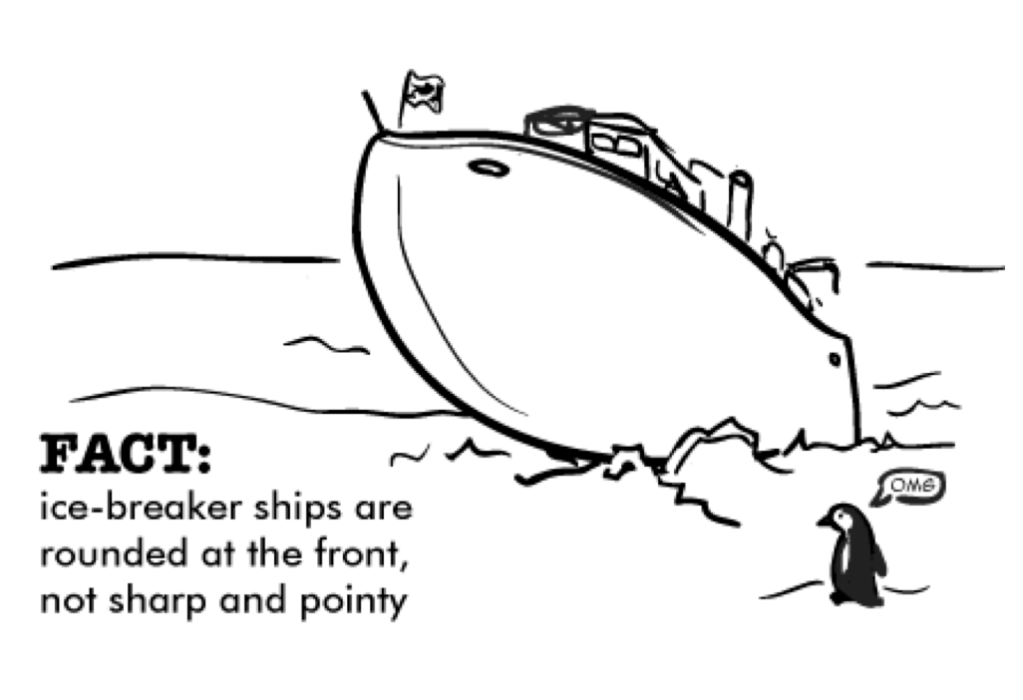
For those of you who aren’t aware of what these are, I envy you and then offer you a little bit of Wikipedia wisdom:
“An ice-breaker is a facilitation exercise intended to help members of a group begin the process of forming themselves into a team. Ice-breakers are commonly presented as a game to “warm up” the group by helping the members to get to know each other. They often focus on sharing personal information such as names, hobbies, etc. Ice-breakers are also used at social gatherings such as parties to introduce guests to one another in situations where they may not know one another.”
Sounds pretty harmless, doesn’t it?
A bunch of strangers, going around and telling everyone a little tidbit about themselves. This doesn’t even have to be personal information, which is just the icing on the cake I need.
Yeah, okay. I am good. Bring it on.
And out comes the ball exercise variation of the ice breaker, which is just the same as above, but with participants passing a ball around to catch, after sharing their tidbit. You would probably say, what’s the big deal?
And here is the explanation:
This object is the stuff of my nightmares. Nightmare exacerbated by plenty of childhood memories with laughing kids surrounding me (or at least that’s how I imagined it).
All because of my stellar hand-to-eye coordination playing catch. Always.
The curious thing about this particular deficit is that I never improved. My skills playing catch are at the same level as when I was four, maybe. If anything, they have worsened, thanks to my questionable physical agility and lack of attachment to any outdoor sports. The scores from the most recent frisbee game I played are a testament to that.
Unsurprisingly, I had the rock bottom scores – even when the co-players were aiming for the frisbee to land right into my hands. For my self-esteem, I suppose.
So back to the ice breakers.
Here’s how a typical one goes:
A: Hi, My name’s A. I love playing soccer.
Me (thinking): Oh God, he’s gonna throw the ball to me.
A throws to B
Me (thinking): Thank goodness! Please throw to someone else now, Not me , not me , Please!
B: B here, I love philately
Me (thinking): What a show-off, Philately! Not me, Not me, Please not me!
B throws to me.
Me (thinking): I am not gonna catch it, I am not gonna catch it, I am gonna make a fool of myself, everyone is gonna laugh, why the hell do they have to use balls in ice breakers? I will quit this today. No one will talk to me after today’s debacle anyway.
Sure enough, the ball grazes my nails and heads for the sky. I am no Usain Bolt. I run for the first two minutes and then walk to get it back (all the while telepathically begging it to stop and help me out).
After a walk of shame, I return to my spot in the circle.
I was rewatching the standup bit by John Pinette the other day – the one in which he expresses resentment against people that can’t decide what to get from the menu. He just wants them to get out of the lineand let the others get served.
I love the bit, mostly because I love John Pinette and his comic timing. He is hilarious, and in my book, he is one of the most likable standup comics of all time.
After my usual dose of serotonin watching him in all his glory, I go back to wondering – why? Because I am one of those people.
Wondering why I am so pathetic at ordering stuff at restaurants.
Why do the simplest of menus confuse me?
Why, even after so many years of eating out, I haven’t developed on-the-spot ordering skills?
Why do I gravitate to buffets?
Well, scratch the last question. I know the answer to that—best bang for the buck.
That’s a couple of very close friends and me.
And then there are people out there that know exactly what they want and feel pride in their capability to do so.
And then there are people out there that know exactly what they want and feel pride in their capability to do so.
Quoting Joe F-O-X from “You’ve got mail” (another movie I have been guilty of rewatching more times than I can count):
“The whole purpose of places like Starbucks is for people with no decision-making ability to make six decisions just to buy one cup of coffee. Short, tall, light, dark, caf, decaf, low-fat, non-fat. So people who don’t know what they’re doing, or who on earth they are, can, for only $2.95, get not just a cup of coffee but an absolutely defining sense of self.”
Again, I think of myself.
I have been placing the same order of coffee for years now, but I still forget to mention milk and sugar on more occasions than I would like. I do pay the price of that with angered taste buds and a decent blow to my Ordering self-esteem.
I gape in awe of people that place an order that is so clear that the barista doesn’t have any follow-up questions. I doubt that even my “can you please get me a glass of water” order can be that clear, no pun intended.
In my mind, I had crowned myself the most order-challenged individual until I discovered a friend’s struggle, quite worse than mine.
So we are at a bagel place that also serves coffee. As a gracious host, I let him place his order first. I mentally pat myself on the back for averting the disaster of me going first.
Now I can simply copy whatever he does. After all, how difficult can saying “same for me” be, no matter how intimidating the server looks?
After a quick exchange of pleasantries comes the dreaded question.
“What would you like to have today?”
He takes a good (uncomfortably) long look at the menu, and goes:
“Can I have a plain bagel and a latte please?”
“Sorry, we don’t have plain bagels, but we have sesame, everything and cheese. Would you like any of those instead?”
The guy looks in my direction, askance.
What the hell is happening here? He is asking me?.. ME???
Oh good god! What were the options again?
And I wing it. “I don’t think anything can go wrong with cheese, why don’t you try them?”
Sheep had become the shepherd that day. Wow, what a self esteem boost!
But then it struck me, maybe there are other reasons for my irrational fear.
It could be social anxiety disorder . For those that struggle with fear of eating in public, it often presents as “avoiding the situation, fearfulness of being criticized, embarrassment, racing heart, sweating, nausea, and feeling trapped
Fortunately, it didn’t take me long to realize, thanks to the Three Men in a Boat rant by J, that if I am going to look to map diseases with my sufferings (eccentricities, really), I will probably find that I have every existing ailment in the world.
I am optimistic, yes, but not that much.
What I do know though, is that misery loves company. And I feel so much better knowing that, same as Mr Neville in I am Legend, I am not alone.
Every now and then, I feel drawn to a particular genre of movies. Movies, where the lead characters of the same or the opposite sex make a pact to meet at a mutually agreed location sometime in the future. Sometimes in a month, some years, and sometimes in a decade or more.
The most recent movie from that genre that I ended up watching was a movie called ‘Before Sunset.’
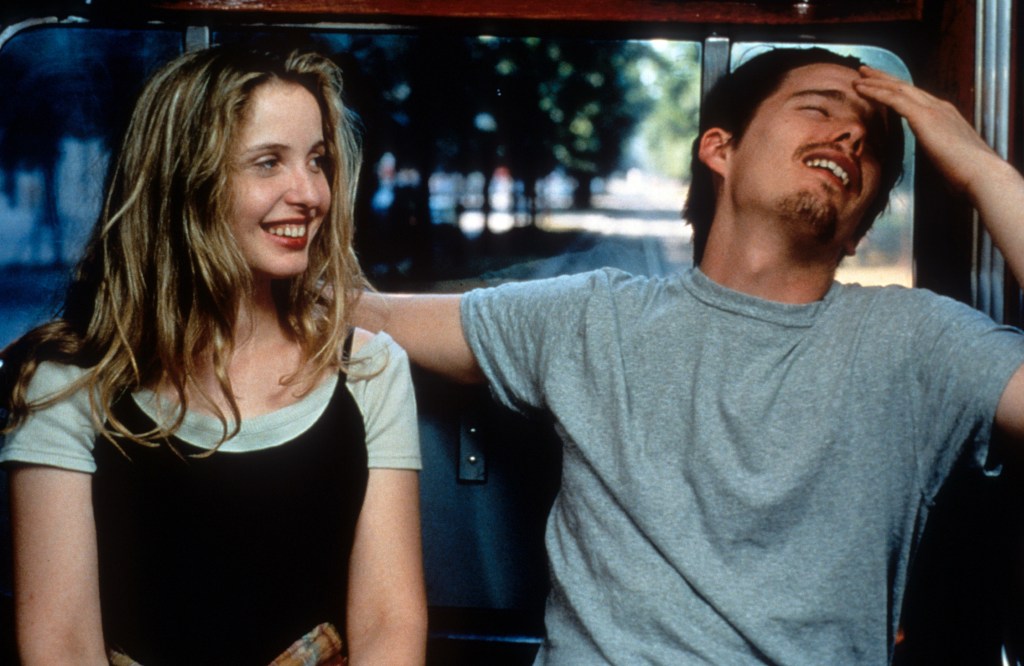
The movie stars Ethan Hawke and Julie Delpy – the film is simple but endearing.
Julie Delpy and Ethan Hawke enjoying each others company in a scene from the film ‘Before Sunrise’, 1995. (Photo by Castle Rock Entertainment/Getty Images)
Two strangers meet on a Eurail train, strike a conversation, and end up disembarking in Vienna and spending a night together.
Through their free-flowing conversation, roaming the streets of Vienna, they develop an attachment to each other, but instead of acting on it, they decide to meet six months later at the same spot where they parted ways.
They only know each other’s first names, nothing more, and agree on having no correspondence in the following six months.
I must have seen the movie ten times. But it never grows old.
Like any other well-meaning fan, I thought their idea of no communication was stupid; I wanted them to make that meeting happen while secretly hoping for a happily ever after. So why the rant?
I recently read short stories by O.Henry and came across one called After Twenty Years. Yes, you guessed it right!
It’s on the same theme, about two friends deciding on a rendezvous two decades later.
Jimmy and Bob, two very close friends, were kids when they parted ways, agreeing on a pact to see each other at the restaurant they were together at last.
Billy has become a very successful criminal, while Jimmy has taken up a job at the city department.
While Billy is waiting for his friend at the designated meeting spot, a patrolman walks around and strikes a conversation. Billy is confident that his friend will show up.
The patrolman soon takes his leave, and soon after Jimmy shows up. It doesn’t take long for Billy to realize that the man is not Jimmy.
The guy mentions that he is a policeman sent by the patrolman, the real Jimmy Wells, to arrest him because his old friend didn’t have the heart to do so himself.
Of course, I wanted the criminal to be caught but seeing a friend betraying another was still painful. For them to keep a promise made as a child, two decades later, the friendship meant something to both of them. The criminal was entirely in the wrong here, and his friend was duty bound to have him arrested; the moment of betrayal still stings, though.
I can’t help but wonder if things would have been better if the boys had kept in touch all those years. Was there a possibility of Billy turning Jimmy into a criminal and Jimmy turning him into a police officer?
Maybe they would have drifted apart, knowing how different from each other they were, and gone down their separate paths.
That’s life as we know it. We grow (and sometimes apart).
That possibility, in my mind, still seems a little less painful.
Was Billy too careless or too gullible to think nothing would change between the friends after two decades of separation? Was he wrong to be fully convinced that the loyalties of ‘yore would still stand? Or was he a little too human? A little too eager to show his accomplishments to his friends and make him proud?
All I know is that in addition to following the
“Location. Location. Location.” mantra all those years, it wouldn’t have hurt him to try: