Author: Swati

  • Crazy Glue by Etgar Keret: Summary, Analysis and Review

    Crazy Glue by Etgar Keret: Summary, Analysis and Review

    What’s the first thing that comes to mind when you read these two words:

    Crazy glue

    I bet you can recall at least an incident or two about crazy glue – maybe you were the victim to whom the ‘crazy glue’ happened, or you were the one that gave someone their ‘crazy glue’ moment. 

    There are so many stories available on ‘crazy glue incidents’ of people’s lives – some tragic and some outright comical. I will let Google be your friend on that search.

    So why are we talking about it?

    Enter Etgar Keret and his remarkable short story Crazy Glue.

    Etgar Keret takes crazy glue beyond the physical realms into something much more. Crazy glue is a story about a couple who seem to be struggling in their marriage – nothing will stand out for you initially till our beloved ‘crazy glue’ is introduced. 

    Here’s how:

    Crazy Glue: Summary and Plot Analysis

    The wife asks the husband not to touch ‘it’ as it is super glue. The husband asks what the glue was for, to which, upon not finding a satisfactory answer, expresses his irritation – unable to understand why she is fixated on ‘buying all this crap.’ 

    The wife retorts with ‘of course!’, mentioning that she buys these things for the same reason that she married him: ‘to kill time.’

    The husband is in no mood to get into a fight, and so is the wife; the fight that never happened, ended there. 

    The husband asks if the glue is any good, and the wife shows him a picture of a guy that seems to be hanging from the ceiling with his shoes glued there. The husband mentions that to be impossible and points her to look at – what he believes are flaws in this presentation. She does not look. He then rushes off to work.

    At work, the husband calls someone named Mindy, with whom he seems to be having an affair. He mentions to her that he will not be able to make it that day as his wife might suspect something. Mindy expresses her confusion about the husband still being in a relationship with his wife when they were hardly doing anything together. 

    They were so apart that they were not even fighting anymore. The relationship was completely dead. 

    Mindy begins crying; the husband consoles her by saying that he will come the next day and lies to end that conversation early.

    The husband returns home. He calls her name but gets no answer. The odd thing he notices is that the super glue tube is completely empty, and his wife has glued the chairs and tables to the floor and has glued the fridge shut. 

    He is puzzled by his wife’s behavior. She had been reasonably sane so far. It just wasn’t like her. 

    He tried to call her to see if she was at her mother’s but was furious to see that she had glued the receiver as well.

    It is then he hears her laughing – a laugh that seemed to be coming from up above him. She was hanging upside down from the living room ceiling. It looked like she had glued her feet to the ceiling. 

    Completely flabbergasted at this point, he assures her that he will get her down safely, seeking help from outside if needed. He stacks a pile of books and climbs on top to pull her down from the ceiling, but nothing happens.

    He reassures her, to which the wife responds, amazingly calm and still laughing, “I’m not going anywhere.”

    At this point, the husband starts laughing too. She finds her very pretty, natural, and incongruous and reaches out to kiss her on the lips; they kiss passionately.

    The books slipped out from under the husband’s feet, who is now hanging by her lips. 

    Crazy Glue: Analysis and My Thoughts

    I loved how poignant the story is, and how power-packed it is with emotions. To top it all, he used so few words to convey so many messages. I am fangirling over it right now, but I will rein in my excitement and point out a few excerpts that stood out for me.

    “There’s nothing that needs gluing together,” I snapped. “I can’t understand why you buy all this crap.”

    “The same reason I married you,” she shot back, “to kill time.”

    The usual couple banter. Isn’t it? (Unless you are one of those couples that get along on everything, because in that case, R-E-S-P-E-C-T!).

    The conversation is so relatable. I have heard a variation of this dialogue by every couple I know. Keret’s understanding of the couple banter is on point. 

    I didn’t feel like getting into a fight, so I kept quiet, and so did she.

    ‘I don’t see why you stay with her,” she whispered in the end. “The two of you never do anything. You don’t even bother fighting anymore. I can’t figure out why you go on like this. I just don’t get what’s holding you together. I don’t get it,” she said again.

    Again, to its core, this is such an astute observation. Lack of communication kills a relationship, and it’s the same thing that was happening there. The couple didn’t fight. This indicates that they are not putting in efforts into their relationship, as if they are convinced that it is beyond repair.

    And then..

    She was so pretty and so incongruous, hanging upside down from the ceiling that way. With her long hair dangling downward and her breasts molded like two per­fect teardrops under her white T-shirt. So pretty. I climbed back up onto the pile of books and kissed her.

    Yes, they seemed to have fallen out of love, the husband cheating on her and wife apparently knowing this treachery, choosing not to talk as she is too indifferent to care.

    The husband engaging in an affair simply to keep out the boredom and avoid confrontation. Just like the crazy glue, they have shut each other out of their lives with a striking passive force.

    But here, he brings the silver lining: the spark is still there. It’s just that the things that brought that couple together had faded into the background. 

    But now, when they laughed together, the memories had all come rushing back and so had the passion. But does it end there?

    My fiercely romantic side would say Yes! They live happily ever after. But my pragmatic side (I do have one, and I am amazed at that myself!) does not agree. It says it is another roller coaster ride. 

    Highs and lows – guess that’s common between your friendly neighborhood stock market and and your neighbor’s (and may be your own) marriage(s).

    Kyle Smith once remarked, ‘Keret can do more with six paragraphs than most writers can with 600 pages’

    I couldn’t agree more. AND there is nothing crazy about that.

    So, what’s your crazy glue story? We would love to hear from you!

  • Charles by Shirley Jackson: Summary, Analysis and Review

    Charles by Shirley Jackson: Summary, Analysis and Review

    For those of you that loved The Lottery by Shirley Jackson, here comes another tale, less fictional and more realistic, atleast to the relatively new parents out there. It’s about Shirley Jackson’s early trysts with raising children that were, more often than not, outside her comprehension and control.

    Loosely based on events from her own life while raising children in the 1940s, this is a humorous tale about gullible parents and the problematic child. 

    Charles by Shirley Jackson: Summary and Plot Analysis

    The story revolves around a very young kid, Laurie, who has recently started Kindergarten. His mother is disheartened at the end of an era where his kid’s clothes have changed from a bib to jeans and a shirt and him enjoying the company of an older girl, not looking back to say goodbye to his mother.

    At the end of the first day, when asked what he learned that day, Laurie quickly mentions that he “didn’t learn nothing” and quickly goes on to mention that a kid called Charles was spanked by the teacher for being ‘fresh’. 

    A similar thing happens the day after, where Charles is the highlight of Laurie’s day. Charles was bad again today. He hit a teacher.

    The parents, flabbergasted, had hardly digested the news when Laurie plays a trick with his dad that ends up with him saying to his dad, ’Gee, you are dumb.’

    His parents continue questioning him about the events of the day and get to know that the reason for Charles hitting the teacher was simply an instruction to use a color of crayon that he didn’t particularly like. 

    The events that follow get considerably more interesting. Charles, the little class rebel, seems to have become a highlight in all of Laurie’s daily reports – and has become a name evoking much interest in their household. 

    Charles had all sorts of misbehavior under his belt – hitting a teacher, hitting fellow children, teaching classmates bad words, disrupting class, to name a few.

    What seems curious is that Laurie mimics that behavior at home. His mother sees this and worries that Charles is a bad influence on her sweet little son. Charles is such a name in the household that they start calling mischief as ‘pulling a Charles’.

    Laurie’s mother is looking forward to the PTA meeting, hoping to see Charles’ mother, who in her mind, would be the most haggard-looking woman at the meeting, thanks to being the mischief-maker’s mom.

    She does not see anyone who matches that description. 

    She meets the teacher and is surprised to discover that Laurie had difficulty adjusting to Kindergarten and that he has been improving now.

    She discards that input considering it nothing but Charles’s fault.

    The teacher is visibly confused hearing that name and tells her that they do not have any student named Charles, leaving it to an implicit conclusion that it was Laurie and not Charles that was causing all the trouble at school.

    Charles: Review and My Thoughts

    “Yes,” I said, laughing, “you must have your hands full in that kindergarten, with Charles.” “Charles?” she said. “We don’t have any Charles in the kindergarten.”

    These two lines from the story encapsulate the complete story in them. 

    How often do we look inward when questioned? 

    How often is it the neighbor’s kid’s fault when our kid gets into a fight? 

    And how often are other parents credulous having a kid ‘pull such a thing’ straight under their noses?

    Guess ostriches are not the only creatures that close their eyes and believe that their hunter (problem) went away.

    Its never our (our kids’) fault, Is it?

    Shirley Jackson amazes us once again with her astute observations and excellent penmanship!

  • The Love of a Good Woman by Alice Munro: Summary and Review

    The Love of a Good Woman by Alice Munro: Summary and Review

    Where would your mind take you if someone said the words ‘the love of a good woman’ to you?

    If your mind quickly takes you to classic romantic movies of yore, a wife tirelessly sacrificing her life for her husband, you are the same as the rest of us.

    What’s more is that this titular story from this short story collection by Alice Munro is going to take you and that notion of yours for a ride.

    The Love of a Good Woman: Summary and Plot Analysis

    The story is a four part plot that starts in Walley. The first part – Jutland – begins with a museum.

    A very strange exhibit is being displayed in the museum, a red box containing medical instruments which were once owned by an optometrist D.M. Willens.

    Mr. Willens tragically drowned in the Peregrine river, in what seemed like an accident. The submerged body and car were discovered by three young boys – Cece, Bud and Jimmy.

    Bud and Jimmy fail to inform their parents of their discovery, feel guilty about not doing so the first day. They try to go and meet Mrs. Willens, who seems to be completely unaware of her husband’s absence, hands the boys flowers to take home and retires back home.

    The news does finally reach the police and Mr. Willens death is now known, and three of those boys have new nickname now: Deadman.

    Part two makes an abrupt change to what seems like a completely different setting. (This reminded me of the time when I first read the Study in Scarlet by Arthur Conan Doyle and the abrupt plot change somewhere in the middle).

    We are now tracing the life of Enid, a saintly soul as her mother calls her, is a middle aged nurse. She is currently employed by the Quinns, taking care of an ailing Mrs. Quinn, who is dying of a kidney failure.

    Mr. Quinn is a farmer and an old classmate of Enid’s. They have two daughters.

    Mr Quinn is shown to be a silent man, while Mrs Quinn is a cranky woman, who constantly whines about everything including her husband’s absence, albeit a lack of it doesn’t seem to comfort her much.

    Enid, who is regarded by her mother as a saint for her selflessness, is constantly tormented by erotic dreams and is ashamed by them.

    Part three connects the earlier two parts of the story by establishing a link between Mr Willens and this family, when one fine day, Mrs Quinn starts talking to Enid about Mr Willen’s death.

    In her version of the events that led up to Mr WIllen’s death, Mr Willens, a lecherous old man, was touching her inappropriately while examining her.

    Rupert, having witnessed this, in a rage of passion, grabs Mr Willens and bangs his head on the floor till he dies.

    Suddenly realizing that Mr Willens is dead, Mrs Quinn proposes to dispose of the body in the nearby river in his car so as to make it look like an accident. She helps Mr. Quinn carry out this plan.

    In a flashback, it is also shown how Enid having once seen his father with another woman, is silenced by her mother saying that it might have been a figment of her imagination

    Fourth part of the story deals with the events that follow Mrs. Quinn’s death.

    Enid, who seems to have developed feelings for Mr Quinn, is torn between her desire for companionship and her moral obligation to do what is right, which is to expose Rupert for the crime he committed.

    There is no way for her to be sure that Mrs Quinn’s version of events was real or a figment of her imagination spouted by her disturbed mind in a diseased body. She devises a scheme to test Rupert, by asking him to row her out in the middle of the river and then letting him know what Mrs. Quinn told her.

    Rupert will then have the choice to kill her and remove all the evidence of his crime.

    The story closes with Rupert getting the oars while Enid waits for him and her fate at the riverbank. What happens next, is totally left to reader’s imagination.

    Want to read The Love of a Good Woman?

    The Love of a Good Woman is a short story which is published in a collection of short stories called The Love of a Good Woman. This collection won the Giller Prize and National Book Critics circle prize. You can use the links given below to check the price of this book:

    Check Price on Amazon US
    Check Price on Amazon India

    The Love of a Good Woman: Review and My Thoughts

    This short story collection by Munro went on to win many accolades – including the prestigious Giller Prize and National Book Critics Circle prize.

    There is a reason why this story is celebrated the way it is. Such an astute description of a world built on lies! How change of perspective completely changes the story and that perception, more often than not is usually based off only a cursory understanding of events. The deeper you go, the more you discover.

    It’s endearing to see that how remarkably real her characters are. As always she does magic with her kid characters, the way only she can. Consider for example the time that she has spent with the three kids – Cece, Bud and Jimmy.

    The way she captures their innocence and their dark worlds is haunting.

    Some endearing quotes from The Love of a Good Woman

    And yet they hardly thought of each other as friends. They would never have designated someone as a best friend or a next best friend, or joggled people around in this position as girls did.

    This brought back a flurry of childhood memories, where nothing in the world mattered more than your  friend reciprocating the esteemed honor of best friendship bestowed upon them.

    Those walking home for dinner were mostly men. The women were already there- they were there all the time. But some women of middle age worked in store or offices for the reasons that were not their fault.

    A little depiction of what the old world looked like, where women had very specific responsibilities in the family, it’s hard to believe that this was our world not very long ago. Working women a fault. Hmm.. Oh how the times have  changed and thanks for that!

    A little sibling jocularity coming from Munro is the sweetest kind. This does not fail to put a nostalgic smile to my face every time I read it.

    In a family of mostly females, a boy remarks about his sisters

    “They stationed  themselves in front of every mirror in the house with the shelf underneath always loaded with bobby pins, pennies, buttons, bits of pencils”. Ah, the young vanity!

    And then the sibling playfulness, the elder and the mighty playing with a younger one’s limited understanding of things around.

    “Look, She’s putting lumps in the mashed potatoes again. He had his brother convinced that lumps were something that you added , like raisins to a rice pudding from a supply in the cupboard”

    This is a perfect description of a mother with too many quarelling young kids to manage. This is in fact too real for me.

    “Leave that pie alone. Stop swearing. Stop tattle-telling. Grow up”

    You would feel that this can not be topped. Yet Munro seamlessly transitions from the children’s world to the adult world staying as true to the characters, as it possibly can be done. I marvelled at her deft maneuvering of both the worlds.

    “Enid thought she knew what this meant, this spite and venom, the energy saved for ranting. Mrs.Quinn was flailing about for an enemy. Sick people grew to resent well people, and sometimes that was true of husbands and wives, or even of mothers and their children.”

    By the time I was done reading the novel, I wondered and wondered, went on a lot of journeys. To the past and to the future. To memories with my siblings, to my classmates growing up, my girlfriends, my workplace, my mother, and that’s hell of an after effect of any story one could read. 

    Alice Munro is often touted as Master of Contemporary short stories. And this book is a window to the reason behind that.

  • Taming the Bicycle by Mark Twain: Summary, Analysis and Review

    Taming the Bicycle by Mark Twain: Summary, Analysis and Review

    I wonder what your first thoughts were looking at the title of the story.

    Maybe a memory from childhood or a snapshot of some TV program where the protagonist ended up in a ditch, not able to control their bicycle?

    Well, just when you thought you had seen it all and laughed all you could at your bicycle misfortunes, Mark Twain brings you some of his own with Taming the Bicycle, published as part of his collection What is Man and Other Stories.

    Taming the Bicycle: Summary and Plot Analysis

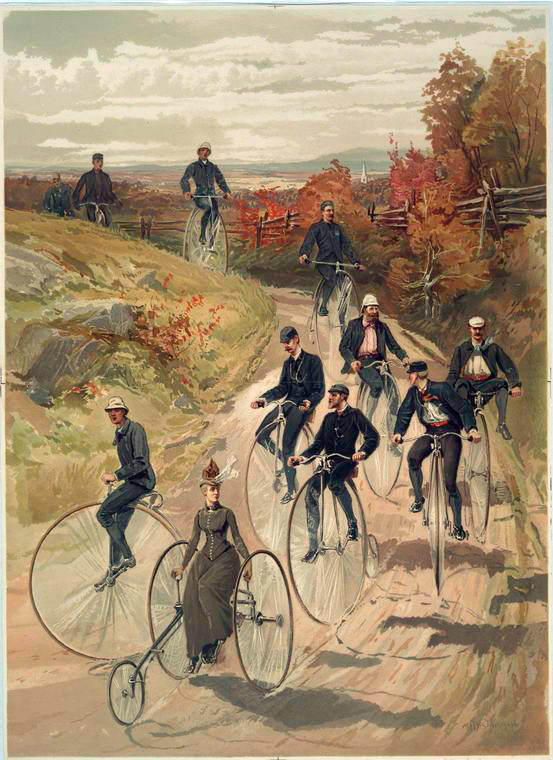
    In the early eighties, Mark Twain learned to ride one of the old high-wheel bicycles of that period, the form of bicycle that has long been antiquated. Twain’s account of his bicycle adventures are far from it though.

    So Mr Twain saw an ad for a bicycle, thought he could do it and bought one alongwith a barrel of pond’s extract ( Guess what your friendly neighborhood Ponds cream was called back then!). He also hired an instructor from the company, who was to teach him the tricks to tame the wheely monster.

    Mine was not a full-grown bicycle, but only a colt – fifty inch – and skittish, like any other colt.

    The instructor explained a few key points and demonstrated how easy it was to ride one – mentioning that the tricky part was actually to dismount.

    Twain soon realized that it was contrary to his own experience.

    Although I was wholly inexperienced, I dismounted in the best time on record. He was on that side, shoving up the machine; we all came down with a crash, he at the bottom, I next, and the machine on top.

    One crash followed after the other and regardless of how Twain, the bicycle or the instructor were positioned at the start of practice, the end result was always the same – instructor at the bottom, bicycle on top and Twain sandwiched between the two.

    One of those practice runs even landed them in a hospital. Fortunately, the injuries were minor and Twain and his bicycle lived to tell the tale.

    Twain notes: I attribute this to my prudence in always dismounting on something soft. Some recommend a feather bed, but I think an Expert is better.

    The instructor was discharged from the hospital and shortly after, the practice sessions resumed – this time with four new assistants.

    Twain continued to struggle with this new learning experiments; skills required to master this craft always seemed to be at loggerheads with his natural instincts. Seeing the error of his ways, Twain realized that he needed to do the intelligent thing – he needed to evolve.

    The intellect has to come to the front now. It has to teach the limbs to discard their old education and adopt the new.

    He ultimately draws learning from his struggles with the German languages to conquer his new enemy – the bicycle.

    But I also see, by what I have learned of bicycling, that the right and only sure way to learn German is by bicycling method. That is to say, take a grip on one villainy of it at a time, and learn it – not ease up and shirk to the next, leaving that one half learned.

    He continues to work his way around the bicycles – to master balance, art of mounting, art of steering and art of dismounting – all of which result in rather funny endings, but not without great lessons – mostly comic.

    Mark Twain notes on the art of mounting: 

    Then the mounting art is acquired and a little practice will make it simple and easy for you, though the spectators ought to keep a rod off or two to one side, along the first, if you have nothing against them.

    And then the art of dismounting:

    Try as you may, you don’t get down as you would from a horse, you get down as you would from a house afire. You make a spectacle of yourself every time.

    After eight days of daily lessons, he is pronounced fit to paddle a bicycle without outside help. He tries to refute the argument that he could have done it himself without instruction by saying that such a  move could have been risky for him considering his natural clumsiness. 

    Consider his thoughts on a self taught man, for example:

    The self taught man seldom knows anything accurately.., and besides he brags, and is the means of fooling other thoughtless people into going and doing as he himself has done. There are those that imagine that the unlucky accidents of life – life’s experiences – are in some way useful to us. I wish I could find out how. I never knew one of them to happen twice. They always change off and swap around and catch you on your inexperienced side.

    He concludes that receiving proper instruction could have more than one benefit and in case of cycling, that added benefit could be saving up on Pond’s extract.

    So the instructor, after asking a few questions about his strength and receiving unsatisfactory answers, eventually leaves him with the advice to keep practicing.

    Then he left me, and I started out alone to seek adventures. You don’t really have to seek them – that is nothing but a phrase – they come to you.

    Devoid of the encouragement from the instructor and his assistants, Twain takes a rather solo journey of  learning the bicycle. However unbeknownst to him a boy  gives him company in his adventure, though not in the form he expected. He paints a rather funny picture of this boy and the way he supported him through his practice sessions.

    He was full of interest and comment.The first time I failed and went down he said that if he was me he would dress up in pillows, that’s what he would do.The next time I went down he advised me to go and learn a tricycle first. The third time I collapsed he said he didn’t believe I could stay on a horse-car.

    Of course, Twain does not let this teasing get to him, he continues on with his practice sessions marvelling at how the bicycle has exposed unknown areas of the path he had been using for years. Little stones, cats, dogs, anything that came along his way, was bound to make him lose control and bite the dust, his falls usually resulted in injuries to him, while the bicycle stayed indestructible. 

    Dogs eventually presented a bigger challenge than the stones on the path:

    They all liked to see me practice, and they all came, for there was very little going on in our neighborhood to entertain a dog. It took time to learn to miss a dog, but I achieved even that.

    Twain leaves us with a little bicycle wisdom as well:

    Get a bicycle. You will not regret it, if you live.

    I am afraid I can say the same for this essay by Mark Twain. Grab your copy and read it now!

    Reading this essay, in addition to grinning like an idiot when not guffawing like one, I couldn’t help but think of my initial bicycle learning days when I was a kid looking like the Vitruvian man both when sitting on and falling off my bicycle, calling my mom every time I mounted or dismounted it.

    I thought my days were hard, but when I looked at this picture to see the bicycle Twain conquered, my own traumatic ‘bicyclical’ past faded away.

    Mark Twain and his bicycle are my new favorite , and there ain’t gonna be no dismounting that bookshelf soon.

    The bicycle Mark Twain was trying to tame.

    P.S. Assuming that I was able to convince you to read Taming the Bicycle by Mark Twain, and you eventually were able to find time to do so, what section did you like the most?

    Did anything from the story remind you of your own bicycle adventures?

    We would love to hear from you! 

  • The Happy Prince by Oscar Wilde: Summary, Analysis and Review

    The Happy Prince by Oscar Wilde: Summary, Analysis and Review

    The Happy Prince is a short story written by Oscar Wilde. It is the story of a compassionate statue and how it falls in love with a bird which is separated from its flock.

    Every now and then, I feel myself drawn to children’s books – mostly because I am drawn to children; things about them, things for them – they’re all so exciting. Adult novellas feel drab in comparison.

    And it was one of those days, I happened to pick up a copy of the Happy Prince and Other Tales, a short story collection by Oscar Wilde.

    The Happy Prince: Summary and Plot Analysis

    Happy Prince revolves around our Happy Prince, the only catch being that our Happy prince is a statue!

    When alive, our Happy Prince lived in a palace with all material comforts far removed from the reality of poor, suffering people that surrounded it.

    We also have a swallow (a migratory swift-flying songbird with a forked tail and long pointed wings) in the story, who has been left behind, as the rest of the flock flew away to Egypt.

    The swallow, upon finding a sweet spot in the new town on her way, settled down at the feet of the Happy Prince and is almost about to doze off when she feels rain drops over her. Curious at this occurrence, as there are no clouds in the sky, she realizes that it was tears from the Happy Prince statue.

    She learns that the Happy Prince is appalled by the poverty around him and requests the swallow to take the gems from ‘his body’ (the statue) to help those in need – the sick, the lonely, the children.

    The beautiful statue covered in gold leaf, first loses the ruby from the hilt, then the sapphire from its eyes and finally the golden leaves all over its body.

    The swallow initially insisted on leaving to join her flock but eventually decided to stay back out of compassion as the statue was blinded after losing both the sapphires that it had for its eyes.

    As her final day approached she flew over to say one final goodbye to the prince. The prince confesses her love for the swallow, they kiss and the swallow dropped dead at its feet.

    Devoid of all the adornments, the statue was not a pleasant sight anymore. The mayor of the town orders the removal of the statue to erect his own in its place.

    The metal from the statue is melted while the frozen and broken heart of the statue was thrown out in the heap of garbage along with the dead bird. Both of these are taken up to heaven by an Angel that considers them the two most precious things in the city.

    God then decrees that they live forever in His “city of gold” and garden of Paradise.

    Want to read The Happy Prince?

    The Happy Prince is a part of a short collection written by Oscar Wilde, which is available on Amazon if you want to get yourself this book. You can use the links given below to check the price of this book:

    Check Price on Amazon US
    Check Price on Amazon India

    The Happy Prince: Review, Quotes and My Thoughts

    Okay, so confessions first.

    You all know that one person in the group that cries at the drop of a hat.

    I bet you will get a flood of tears out of them when they read this – 

    It is not Egypt that I am going. I am going to the house of death. Death is the brother of sleep. Is he not? Kissed the prince on the lips and fell down dead on his feet.

    After so many selfless deeds, when the swallow saw the Prince for one last time, and the Prince unable to understand that it was her death that she was talking about – assuming she was flying away to her flock – wishes her luck, although his heart broke.

    He still did that out of love. His final confession of love for the bird was simply heartbreaking, not to say that the bird dropped dead shortly after.

    When I was alive and had a human heart. I did not know what tears were, for I lived in the palace of Sans-souci where sorrow is not allowed to enter.

    It was remarkable how compassionate the Prince was, considering the fact that he had never seen poverty or sorrow of any kind. It’s only when he becomes a metal statue does he feel all these emotions. Ironic isn’t it?

    We had a lovable inanimate object before Wall-E, my friends!

    “Bring me the two most precious things in the city” said God to one of his angels; and the angel brought him the leaden heart and the dead bird.

    “You have rightly chosen” said God, “for in my garden of Paradise, this little bird shall sing for evermore, and in my city of Gold the Happy Prince shall praise me”.

    And for this deceptively simple lesson in kindness and compassion –  is as appealing to an adult as it is to a kid.

    You don’t have to trust me on this. So many on-screen adaptations of this story worldwide – going as far back as 1936 to as recent as 2016,are a testimony to timeless beauty of this wonderful tale of love and compassion.

    What does that tell us?

    Oscar Wilde’s stories age better than whiskey.