Author: Swati

  • No Act of Kindness, No Matter How Small, is Ever Wasted: Aesop

    No Act of Kindness, No Matter How Small, is Ever Wasted: Aesop

    Growing up, Aesop’s fables were my constant companion- in and out of school. The very first illustrated copy that I owned was an abridged version for kids that contained a dozen short stories.

    The Hare and the Tortoise, Crow and the Pitcher, Bell and the cat were some of the predominant few that are probably commonly known childhood staples.

    Now these were no ordinary tales, although they would definitely seem so on the surface. Every story however small it was, would come with a moral, our teacher invariably asking after reading us a story, “So kids, what did we learn from this?”

    The Hare and the tortoise teaches us that slow and steady wins the race, Crow and the Pitcher instills a sense of entrepreneurship and Bell and the cat focuses on devising ideas that are actually actionable.

    The little kid brain of my mine would come alive with the chatter of those characters Aesop created, and as years passed by, all of these animals started becoming more and more human.

    A classmate that just played and didn’t study became the grasshopper from the “Ants and the Grasshopper”, a very intelligent but lazy friend who was never a top 5 in the class became the hare from the “The Hare and the Tortoise” and the enterprising kid from a disadvantaged family became the Crow in the “Crow and the Pitcher”.

    The lines between the stories and life became quite blurred. Needless to say his words were a huge influence on me growing up.

    One story of his, which I have realized I have grown fonder(?) of, over the years is that of the Lion and the mouse. Let me quickly recap it for here for if you have never had the chance to read it or memory betrays you at this point. So, here goes:

    There was a forest in which lived a lion and a mouse. The mouse accidentally ran over the Lion’s nose, which awoke the lion from his nap. The lion, visibly agitated, was about to kill the mouse when she begged him for mercy promising to help him in the future.

    The lion, although amused by this offer, was generous enough to let her go. Some time passed, and one day, the lion was captured by the hunters and was roaring as he was trying to let himself free of the nets. The mouse, upon hearing and recognizing Lion’s voice, comes to the rescue, nibbles on the ropes of the net and sets him free, ultimately making good on his promise.

    Every time I am done reading an Aesop fable, I still hear my Primary school teacher’s voice in my head. “So what’s the moral of story kids?”

    Pretty simple and straightforward. Isn’t it?

    No act of Kindness is ever wasted. But let me atrociously paraphrase it – BE KIND.

    Given the situation all of us find ourselves in, with a virus bringing the world to an unanticipated grinding halt, I can’t stop myself from saying that doing that is more important now than ever.

    It is so heart breaking to see stories of mass unemployment and people hardly being able to make ends meet.

    But then I also see people stepping up and helping out – sometimes by funding campaigns to save local restaurants, sometimes, tipping a restaurant 200 times their check, there is even a group of young professionals in the apartment building that I live in – which volunteers to do the grocery run to help out the elderly so they help them avoid the risk of infection.

    The full bins earmarked for food donation at the local grocery stores, make me hopeful.

    The other day when I was out for a walk, I noticed a poster stapled to one of the pillars by the road side that said “A smile doesn’t cost you anything, but can make someone’s day”. Couldn’t agree more, having been on the receiving end of such kindness on so many occasions.

    There is a colleague at the office, whom I have seen taking the kindness mantra to heart. She has a sticky note on her desktop that says:

    BE KIND

    BE KIND

    BE KIND

    BE KIND

    BE KIND

    (in bold letters, very hard to miss)

    I just couldn’t help myself and ended up asking her, why so many times? And what unkind thing do you do anyway? (She is a really pleasant woman, you would love talking to, by the way) and she tells me this.

    “When in conversations with people, I try to ‘really’ listen when they are speaking,

    I try to make eye contact and smile every now and then.

    Don’t think of me as Mother Teresa or anything, just that I hope that they extend the same courtesy to me when their turn comes”

    This may sound selfish on the surface, but that’s one selfish thing that wouldn’t harm anyone in the world. Or would it?

    Definitely not – Aesop agrees.

  • The Yellow Wallpaper by Charlotte Gilman: Summary and Review

    The Yellow Wallpaper by Charlotte Gilman: Summary and Review

    Imagine a room.

    Now imagine living there for a long time without having anything to do. For those of you who are millennials – Imagine a world without phones or any electronic devices.

    If you are one of those very social people – your knee-jerk reaction would be, “No way in hell am I going to do that!”

    But say, you have no choice and you just have to – how long before you think you are going to start imagining things?

    Enter Yellow WallPaper!

    The Yellow Wallpaper is a short story by the American writer Charlotte Gilman, first published in New England Magazine in the late 19th century.

    The story, written as a series of diary entries, captures social perceptions and attitudes toward the mental and physical health of women at that time, and is widely regarded as one of the early feminist literary works, inspiring literary heavyweights such as Sylvia Plath and Alice Walker.

    The story revolves around a woman – a young mother suffering from postpartum depression, and her relationship with her husband. Known for her recent hysterical proclivities following the birth of her son, her doctor husband believes it best for her to be removed from an active social scene in order to calm her nerves.

    The woman finds the house generally strange, but cannot help noticing the strange wallpaper in the nursery, which has been removed in places. She is disgusted by patterns that the botched wallpaper creates in the room and experiences various emotional reactions to it over the course of time.

    The second diary entry describes her feeling of failure and the threat of depression, that she felt that she could not function as well as she was expected to.

    It is soon revealed through her diary entries that it was not the first occasion that she had let the inanimate objects get better of her- as a child she had been terrified and entertained by things as plain as blank walls, door knobs and chairs.

    She was obsessed with the wallpaper – the color, the shapes, the pattern – all of that. So much so that most of her waking hours and even the hours she was half asleep, were spent thinking about it.

    Her fixation with the wallpaper introduced the much needed excitement in her life. She ate better and was quieter. Her husband even mistook it to be her recovery inspite of the wallpaper, rather than because of it.

    Now I know from the beginning that it is not your typical horror story, but the devil is in the details. The more I read it, the more spooky it got.

    Here is the seemingly normal woman who expresses her reservations about a beautiful house being offered cheaply because it is a sign of something fishy:

    I will proudly declare that there is something wrong with it. Else why would it be let so cheaply? And Why would it have stood so long untenanted?

    Here is the same woman transforming suddenly to a wife and a mother..

    John laughs at me of course, but one expects that in marriage.

    I never thought of it before, but it is lucky that John kept me here after all, I can stand it so much easier than a baby you see.

    Of course, I don’t mention it to them anymore – I am too wise – but I keep a watch of it all the same.

    Could be any random married woman you know, right?

    And..

    There is one comfort , the baby is well and happy, and does not have to occupy the nursery with a horrid wallpaper.

    Could be any doting mother that dearly loves her child?

    It would be a next door mom/wife had it ended there but No.

    The same woman also thinks to herself –

    Life is very much more exciting now than it used to be. You see I have something more to expect, to look forward to, to watch. I really do eat better, and am more quiet than I was.

    You can sense that the woman feels empty and craves any sort of drive in her life, this is when she jumps head first into her pattern hunt, finding that invigorating rather than being creeped out by it like she was before.

    Her obsession with the inanimate also accelerates her paranoia.

    He asked me all sorts of questions and pretended to be very loving and kind.

    As if I could not see through him!

    Which ultimately drives her to insanity

    I am getting angry enough to do something desperate. To jump out of the window would be an admirable exercise, but the bars are too high to try.

    You will see that clues of her illness are scattered all across the story

    I cry at nothing, I cry most of the times.

    It is great effort for me to think straight,.. nervous weakness I suppose.

    Nobody would believe what an effort it is to do what little I am able, – to dress, to entertain , to order things.

    Her husband seems to be a reasonable, loving and caring person, but she does not seem to feel heard by him and feels trapped in her life, which is why she wants the woman to flee from the wallpaper. In her mind, she is doing that imaginary creature, a service. A service noone she knows is ready to do for her. To set her free.

    Gilman’s haunting portrayal has come to life in many film adaptations, and for good reason.

    The story being as old as it is, makes me realize something: society’s attitudes to mental health issues have barely changed in the last century.

    They were taboo then.

    They are taboo now. .

    Are we really free?

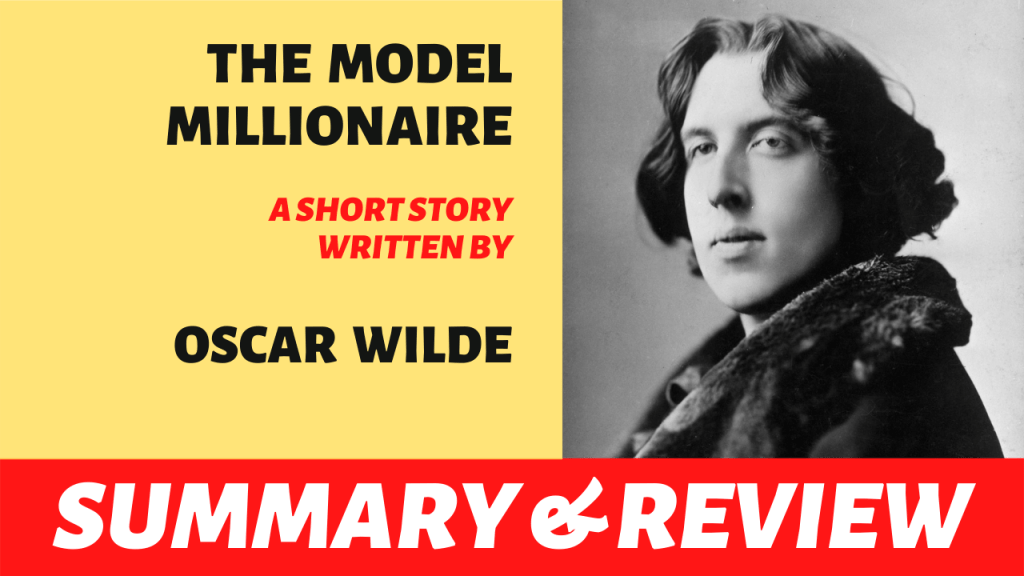
  • The Model Millionaire by Oscar Wilde: Summary and Review

    The Model Millionaire by Oscar Wilde: Summary and Review

    Has it ever happened to you that you tipped someone you shouldn’t have tipped in the first place, or that you asked a saleswoman for help who you thought was one, but was actually a shopper like you?

    Do you remember the look on their faces when you did that? It’s likely that they stared at you for a whole minute before they went their way, or were they one of those rare quiet angels who just shot you a broad smile and apologized for confusing you.

    I am sorry to I made you go down the memory lane, but I promise that you’ll soon know why.

    Without further ado Ado, Here is the model millionaire of Oscar Wilde for you.

    The Model Millionaire: Summary and Plot Analysis

    The story begins with an introduction to Hugh Erskine, affectionately known as Hughes. This guy is so charming that he could pull your socks off, but otherwise he is not very remarkable – neither intellectually nor financially.

    He lives on an annual allowance of two hundred pounds from his aunt. He was in love with a beautiful woman named Laura Merton and wanted to marry her.

    Laura’s father – a retired colonel, though he loved Hughes very much – would not hear of an engagement until he had ten thousand pounds.

    One day, on his way to the Mertons, he stopped to see his friend, a rather strange-looking fellow, but a brilliant painter. His paintings were very much in demand.

    Alan was busy painting a beggar when Hughie came into the studio.

    Hughie instantly expressed his amazement upon seeing the model but felt really sad for the beggar right after. He asked Alan if a model could make good money for a sitting, and was disappointed with Alan’s answer.

    Upon receiving a message that the framemaker had come to see Alan, he quickly excused himself asking Hughie not to go away. The beggar model took this opportunity to get himself some rest. He looked so forlorn that Hughie’s heart filled with pity.

    He searched in his pocket, found some money and thought the beggar needed it more than him, quickly went to him and put it in the beggar’s hands. He had to walk home because of this extravagance.

    Later that evening he met Alan in a club. He learned that the model had expressed great interest in learning more about Hughes and Laura.

    Overcome with pity, he asked Alan if it was okay to give the beggar his old clothes. Alan laughed out loud and told Hughes that the beggar was actually Baron Hausberg, who was one of the richest men in Europe and had to come to Alan to make his own portrait.

    Hughes was very embarrassed by the revelation and left shortly afterwards, leaving Alan in fits of laughter.

    The next day Baron Hausberg sent a messenger to Hughes. Hughes was convinced that this visit was meant for him to apologize to Baron for this terrible mistake the other day.

    Instead, the messenger brought him a sealed envelope.

    One with a check for £10,000 in it.

    On the outside was this message:

    “A wedding present to Hugh Erskine and Laura Merton, from an old beggar.”

    The Model Millionaire: Review and Quotes

    Cute little story, right?

    The story – as simple as it might seem, has one profound lesson- one that you have heard way too often:

    Do not judge a book by its cover.

    We see a pretty person and we instantly conclude them to be a certain personality (after going past the drooling-over-them stage of course). This story makes you question that.

    There are gems lying all around this beautiful story, here are a few that I particularly liked –  

    1 – Unless one is wealthy there is no use in being a charming fellow. Romance is the privilege of the rich and not the profession of the unemployed. The poor should be practical and prosaic.

    2 – It is better to have a permanent income than be fascinating

    Do you remember the book and its cover? Our films and television keep drilling this wisdom into our heads, don’t they?

    How often is the millionaire picked up by the charming boy?

    For many people, the idea of romance is the perfect holiday in an exotic place, a date in a fancy restaurant, parties in exclusive clubs and the like. Oscar Wilde was quite spot on with his observation back then.

    You can’t help but root for Hughes when he shows compassion for the beggar – admittedly he had no fortune or much intellectual capital, but his heart was in the right place.

    3 – Poor old chap, how miserable he looks ,But I suppose, to you painters, his face is his fortune?

    You artists are a heartless lot.

    Compassion and good looks – our Laura Merton hit a jackpot!

    4 – The old beggar as you call him is one of the richest men in Europe. He could buy all of London tomorrow without overdrawing his account. 

    That sudden twist when the beggar turned out to be a millionaire was an awakening jolt.

    The way his richness has been described brought back flashes of The Dark Knight, where Bruce Wayne accidentally walks upon Harvey Dent and his date at a fancy hotel. 

    A scene from The Dark Knight

    When they were married, Alan Trevor was the best man and the Baron made a speech at a Wedding Breakfast.

    Giving the beggar his souvenir prompted Hughes to go home that night, but the next mention of the beggar elicited nothing but sympathy from him. He also offered to give him his old clothes. He tried to help the old man in every way possible.

    One thing readily apparent from this is Hughie’s big heart but the other not so plainly seen is that one of the richest men in Europe did not take offence at being given alms. This is what an ideal world would look like.

    A world where the rich are not servants of their ego and the attractive people still have their hearts in the right place.

    Millionaire Models are rare enough, but, by jove, model millionaires are rarer still.

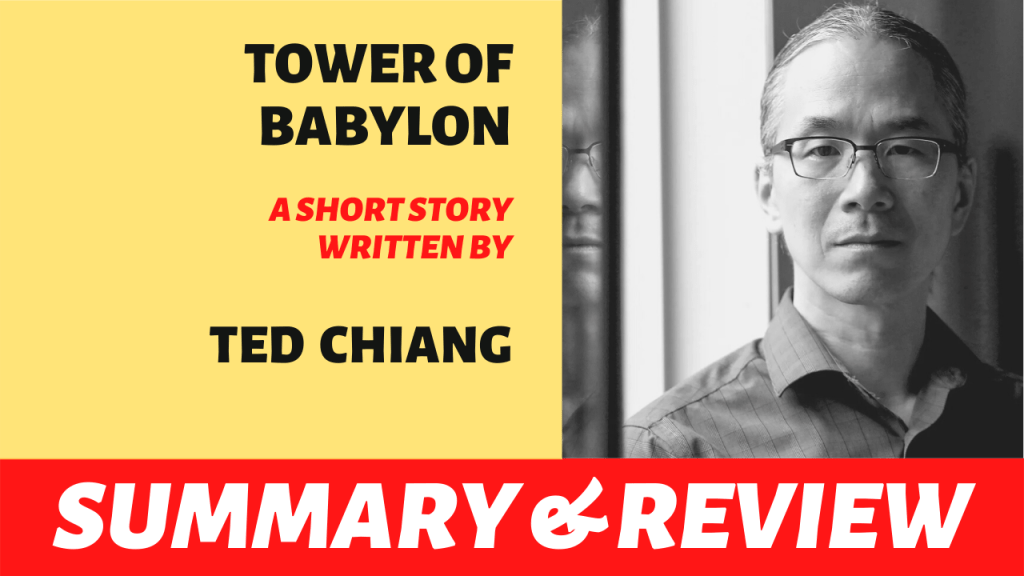
  • Tower of Babylon by Ted Chiang: Summary Explained and Review

    Tower of Babylon by Ted Chiang: Summary Explained and Review

    “It is true that we work with the purest of aims, but that doesn’t mean we have worked wisely.”

    With his award-winning short story, Tower of Babylon, Ted Chiang takes us on an exhilarating exploration of the age-old myth of the Tower of Babel.

    In this science fiction short story, Ted Chiang challenges the principles of cosmology which were widely accepted by the masses at the time, by a discovery as fantastic as the construction mega-project itself.

    This might come as a surprise to some, considering the top-notch content and the awards that it has to its name, including the 1991 Nebula award, but this is Chiang’s first published work!

    Tower of Babylon: Summary and Plot Analysis

    The story is set in Ancient Babylon, where the construction of a majestic tower has been going on in full swing for many years; the tower is almost about to touch the heavens.

    Our protagonist Hillalum is a miner that has been brought in from Elam with several others to work on digging up to Yahweh’s vaults to be able to see Yahweh and his creations.

    After a feast in the town and having absorbed all the town’s excitement for an eventual rendezvous with Yahweh’s world, Hillalum and his friend set off on their journey to climb the tower. 

    Although a little bit apprehensive about their ultimate work and scared about the heights they have been traversing, they get used to the routine and the job requirements. They pass workers coming down and dwellers as they continue to ascend.

    On their rather strange journey to the top to dig up the vaults, Hillalum and his friend see extraordinary sights – night traveling up the tower, rain drying up from one level of the tower to another, plants growing downwards and sideways for sunlight. 

    Through the miracle of astute engineering, dwellers living at unimaginable heights can also farm limited varieties of vegetables. Although he perceives their life as difficult, he can only sense an upbeat mood from fellow workers or dwellers.

    They eventually reach the vault, a featureless plain that stretched endlessly in all directions. Their ascent now became slower than before as most of the crew were disoriented with the sight of something that was so-otherworldly to them.

    They are also worried that they might hit the reservoir lying above them and this would bring a second deluge into the world. They eventually come to an agreement to exercise caution and use safe digging techniques prescribed by Egyptians. 

    After priests seek forgiveness and offer prayers – the work to dig up the vault begins. The Elamites and the Egyptians continued working on the tunnel and this went on for years until one day, the reservoir breaks.

    Hillalum and a few others get trapped, and with their descent locked out, they have no option but to count on the water current, helping them float to reach closer to the surface.

    Struggling against the water currents and unable to hold his breath any longer, Hillalum starts drowning when suddenly he felt air above the water. The sight that awaits him when he gains full consciousness blows his mind. He realized that he was now on earth again.

    Tower of Babylon: Review, Quotes & My Thoughts

    I find the story surreal on many different levels- The fantastic nature of the project, tremendous engineering, transportation, curious natural phenomena – you name it. Vivid imagery by Chiang is breathtaking. 

    Consider these for example:

    “The earth was growing a limb into the sky.”

    One cannot help but imagine what something like that would mean; thanks to Chiang and his very tangible description of the tower, imagining and appreciating the magnificence of it all becomes much easier.

    “Hillalum imagined that he stood in the black gullet of Yahweh, as the mighty one drank deep of the waters of heaven, ready to swallow the sinners.”

    The story takes place back in the era where geocentric models were the truth. Chiang creates a perfectly human description of what fears would plague people that lived in those times. 

    “Yet now that he stood at the base of the tower, his senses rebelled, insisting that nothing should stand so high.”

    This is innate human nature. Isn’t it? Working relentlessly towards a goal and upon getting very close to realizing it, finding it all futile? Curiosity and homeostasis are not friends. 

    “Yahweh had not asked men to build the tower or to pierce the vault; the decision to build it belonged to men alone, and they would die in this endeavor just as they did in any of their earthbound tasks.”

    In Psychology, there is a term called Self Serving bias that means that all good in your life is your doing and everything unwanted is specifically not that. The acceptance of the simple truth of every manifestation in your life as your own doing is crippling and empowering at the same time.

    “Centuries of their labor would not reveal to them any more of Creation than they already knew. Yet through their endeavor, men would glimpse the unimaginable artistry of Yahweh’s work, in seeing how ingeniously the world had been constructed. By this construction, Yahweh’s work was indicated, and Yahweh’s work was concealed.”

    Somewhere in the beginning of the story, a trowel is said to be much more valuable than a human life. Loss of a trowel means debt for the bricklayer for months, while loss of a man leaving his trowel behind is a mere inconvenience. Work goes on. Life goes on. Hillalum tries to understand the reason behind this incongruent behavior but is laughed at. 

    “He would die closer to heaven than any man had ever before.”

    Man and his unending quest to stand out, regardless of the kind of circumstances he finds them in. It’s embedded in human nature so profoundly that even the gravest of circumstances cannot deter him from reaching out quickly to sip from the overflowing river of ego. Even at that moment of impending death, Hillalum felt proud.

    In his story notes Ted Chiang mentioned that the story was inspired by a conversation with his friend. The world certainly needs more of such conversations.

  • Happiness by Anton Chekhov: Summary, Analysis and Review

    Happiness by Anton Chekhov: Summary, Analysis and Review

    You may not be an Eckhart Tolle fan, but you do not need to be one to see the meaning in this. 

    “Don’t seek happiness. If you seek it, you won’t find it, because seeking is the antithesis of happiness. Happiness is ever elusive, but freedom from unhappiness is attainable now, by facing what is rather than making up stories about it.”

    He is not the only person that said that either. We have our publishers churning out treatises, the so-called experts giving us a step-by-step guide on how to achieve this ‘blissful’ state.

    Some focus on continually evolving daily routines in constant pursuit of this elusive beast. And to quote from a scene from a lovely cinematic rendition of Chris Gardner’s life struggles Pursuit of Happyness, “why is happiness always a pursuit?”

    This quest for happiness isn’t a new thing either. It is centuries-old, evoking interest from philosophers and authors alike.

    Lucky for us, the beloved Russian Author Anton Chekhov was one of them as well. 

    And in putting his pen to paper, out came this gem of a short story called Happiness. It was first published way back in 1887 in Novoye Vremya. This was translated into many languages in the author’s short lifetime.

    Happiness by Anton Chekhov: Summary and Plot Analysis

    The story revolves mainly around a conversation that two shepherds are having – one, a toothless eighty-year-old man and another, a poor young man guarding a flock of sheep. 

    Both these individuals are spending the night by a broad steppe road when a rich and authoritative-looking stranger arrives on a horse to ask the shepherds a light for his pipe. 

    The old man, assuming the stranger to be rich since he didn’t know him, proceeds with a conversation around a wicked old man called Zhmenya, who fashioned a conversation with women to be more suitable than attending church or larking in the street with lads.

    He was cursed so much so that even melons whistled in his presence, and pikes laughed.

    The old shepherd proceeds to recount a myriad of mysterious circumstances brought upon by this evil man’s presence, including the one whereupon being flogged, Zhmenya brought throat illness to the whole village.

    Zhenya’s knowledge of where the treasure’s location made him invincible, which the old shepherd seemed to hate the most about him. 

    Apparently, they are all surrounded by treasure, but under a spell to not be able to see it. It was only Zhmenya that was able to see them, but like a dog in the manger, he dies without digging the treasure or confiding in anyone about the treasure’s whereabouts.

    The old man seems to be really passionate about treasures and has a bitter memory of a variety of failed attempts at locating them, including some of his own.

    Some of his disappointment is also mirrored by the stranger, who, while listening to the treasure stories, feels a bit solemn himself.

    While still distracted by the old man’s stories, he takes his leave.

    The young shepherd, still looking to hear some fresh stories from the old shepherd asks the old man for some more, when he replies in a very distracted manner that he intends to dig up the place where the treasure is supposed to be.

    When asked by the young man what he plans to do if he finds it this time, the old man is clueless.

    The young man discovers that he was not interested in the fortune itself but the fantastic fairy tale character of human happiness.

    Happiness by Chekov: Review and My thoughts

    Full disclosure: This is not my favorite work from Anton Chekhov, but it comes close. What I love about this short story is that it packs the message about in the most splendid of ways in the fewest words possible. 

    He doesn’t call happiness something it is not. He presents it the way it is in all of its majestic ambiguity. 

    I loved many things about this story.. even his portrayal of sheep; at one point, it felt to me like Chekhov had become the sheep when he was talking about them.

    Consider this for example:

    Their (Sheep’s) thoughts, tedious and oppressive, called forth by nothing but the broad steppe and the sky, the days and the nights, probably weighed upon themselves, crushing them into apathy,and standing as though they are rooted to the earth, they noticed neither the presence of a stranger nor the uneasiness of the dogs.

    When he talks about the old man- the way he thinks, and why he considers Zhemnya to be possessed by evil – looks serious but is comical if you peel off that layer of Russian Sombriety.

    I have observed that if any man of the peasant class is apt to be silent, takes up with old women’s jobs, and tries to live in solitude, there is no good in it.

    The way the old man’s passionate recounting of treasure hunt tales and his disappointment rubs off on the sophisticated stranger.

    Your elbow is near, but you can’t bite it. There is fortune, but there is not the wit to find it.

    The old man’s absolute certainty in knowing the precise location of the treasure. I must admit that this sexist remark pinched me, but then he was 80 years old from a world a century and a half ago. I will let that snide remark pass.

    I didn’t tell Panteley – God be with him- but you know that in that writing, the place was marked out so that even a woman could find it. 

    What I also found interesting was that it was the old man , tired and almost invalid, who had this inexplicable passion for looking for the treasure while the young man was wise and balanced.

    Alexandar Chekhov’s, Anton’s elder brother, said in praise of this story:

    “Well, my friend, you’ve made quite a stir with your last ‘steppe’ subbotnik. This piece is wonderful. Everybody talks about it.”

    Now, I know that there is nothing new about this knowledge – either on Happiness or Chekhov’s writing prowess. Happiness is a unicorn on the human emotional spectrum for many. And at the very minimum, for the ones that are in the constant quest for it.

    We are all a little bit like Chekhov’s old shepherd, aren’t we?