
Tag: thriller

  • Memento Mori by Jonathan Nolan: Summary, Analysis and Review

    Memento Mori by Jonathan Nolan: Summary, Analysis and Review

    Memento Mori is a short story written by Jonathan Nolan. In this short story, he takes time and its relationship with a man to a whole new level, and introduces the reader to to what he calls a ‘ten-minute man’.

    “Believing the lie that time will heal all wounds is just a nice way of saying that time deadens us.” 

    Memento Mori: Summary and Plot Analysis

    The story revolves around Earl, a patient of anteretrograde amnesia (a condition that involves short-term memory loss), having sustained injuries from a gruesome assault – one that also led to the death of his wife.

    He is shown to be stuck in time just before his wife’s murder. His life is a long array of ten-minute chunks, after every one of which he is a clean slate.

    The story opens with Earl waking up, with no memory, in what looks like a hospital room, covered in what seems to be filled with predominantly white colors. The room is rather large and he finds notes stuck everywhere from his toothpaste, his washroom or his cigarettes.

    By the time he starts making sense of the environment, his memory resets, and he finds himself going through this – sometimes even doing the same thing – over and over again.

    The story goes back and forth between two different settings.

    The first one is where Earl is confined to a mental health institution. He goes about with his day following the notes that he has left for himself.

    The second one being the one where he seems to be on the run trying to hunt down the man that killed his wife and reduced his life to that of a vegetable.

    The author delves into the deeper topic of life and its meaning, looked at from the perspective of a person whose ability to make new memories is severely impaired. This is captured through a constant dialogue that happens between him ten minutes back and him in the present.

    His past self mentions forgetting and how that is deeply embroiled in the life that he lives, every 10 minute chunk to another. His past self reminds him that his wife is dead and that he might be hurting but he will forget it in the next 10 minutes.

    His condition in addition to him not being able to remember anything, is a constant reminder of what misfortune led him to that point. 

    Memento Mori: Analysis and Review

    Locked in his hospital room, and through means of notes that he leaves for himself, he tries to devise ways to make use of his life, to get revenge, the irony being that he would never remember having sought revenge, even after he did. Turning his life into one gigantic Groundhog day replay albeit in painful 10-minute chunks. 

    Memento Mori is derived from Latin and means ‘remember to die’.

    In olden days, this was a reminder for people to be living a moral life keeping in mind the inevitable judgement day.

    There are a variety of interpretations and adaptations of this concept in other cultures.

    Earl buys himself a bell to serve as the memento for himself. This bell, on which he inscribes his date of birth and date of incident, later appears when he looks for a pen after completing his mission. He lives outside of time.

    In his conversations with his past self, there are a lot of epiphanic moments, some humor, some hopelessness which alternate in intensity, but a burning desire for revenge shines.

    Consider, for example, when the Past Earl mentions forgetfulness to him, taking a dig at his state and the society that we live in.

    Sure as hell can’t hold a job. Not too many professions out there that value forgetfulness. Prostitution, Maybe. Politics, of course.

    Another one, where he blatantly discredits his current state and tries to reinforce his purpose – revenge.

    ‘So the question is not “to be or not to be”, because you aren’t. The question is whether you want to do something about it. Whether revenge matters to you.’

    In his desperation of not being able to do anything with his limited time and a continual reset, he even goes to the extent of blaming his inaction on cowardice.

    ‘And time eventually convinces most of us that forgiveness is a virtue. Conveniently, cowardice and forgiveness look identical at a certain distance. Time steals your nerve.’ 

    And to the advantages of having a list for a person as impaired as him

    ‘It’s like a letter you write to yourself. A master plan, drafted by the guy who can see the light, made with the steps simple enough for the rest of the idiots to understand. Follow steps one through one hundred. Repeat as necessary.’

    And it might sound cliché’d but the wisdom in these words cannot be undermined.

    ‘After all, everybody else needs mirrors to remind themselves who they are . You are no different’

    Although overshadowed by its cinematic counterpart, Memento – a movie by Christopher Nolan, this short story has a lot to offer and promises to stay in your memory much longer than Earl’s.
  • Eisenheim the Illusionist: Short Story Summary, Analysis, Review

    Eisenheim the Illusionist: Short Story Summary, Analysis, Review

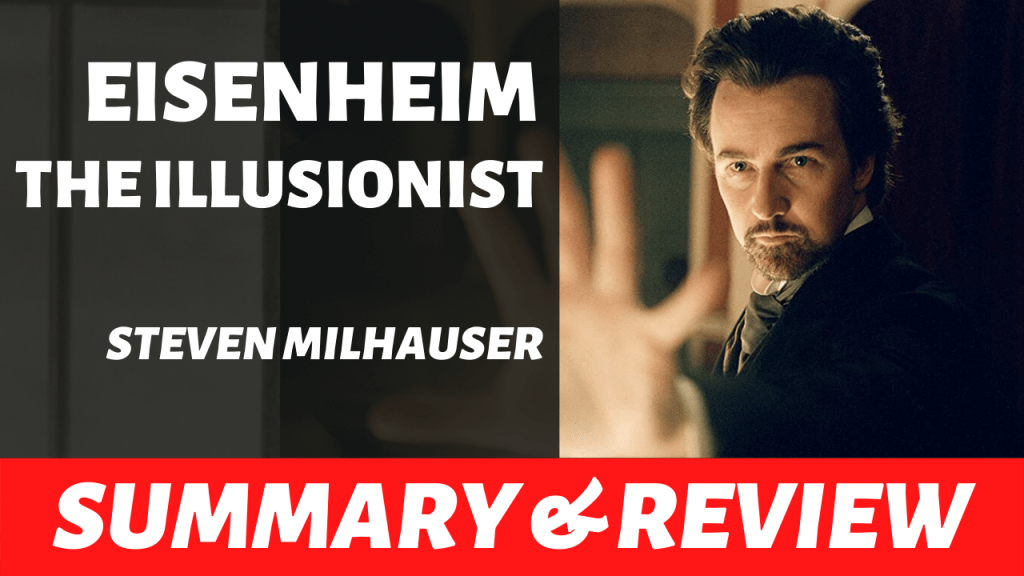
    Eisenheim The Illusionist is a short story written by Steven Milhauser. It was first published in 1989. It tells the story of a magician who becomes so good in his craft that people start believing that he has sold his soul to the devil and can therefore perform real magic.

    Eisenheim the Illusionist: Summary & Plot Analysis

    Steven Milhauser’s short story ‘Eisenheim the Illusionist’ revolves around a conjurer Eduard Abramowitz, also known as Eisenheim, who is considered the magician da supreme. The story is presented as his short biography, despite the magical occurrences in the plot, which seem other-wordly.

    Very little is known of his origins outside the realm of illusion, except for a few details like, Bratislava, where his roots were, and his father being a widely respected cabinet maker, whose creations adorned the homes of gentry there.

    The eldest of four children, he was fascinated by woodcraft and by the age of seventeen, was a pretty good cabinetmaker, a skill that came in handy for his future work as a master magician. A chance encounter with a travelling magician is what seemed to have spurred his lifelong – passion for magic.

    He accepted his new passion wholeheartedly, albeit a bit slowly, till the age of 24, when he continued to be known for his cabinet making skills much more than those involving magic, .

    However, at the age of 28, he burst into the scene with full vigor, appearing in front of a theater in Vienna.

    His initial public performances were known for their subtle mastery of the illusions of the day, popular one being the Orange Tree.

    As his career progressed, his illusions became more and more nuanced, holding the spectators in awe and aching for more.

    His illusions had now become so realistic that people started thinking of him as a wizard instead of a showman -someone who sold his soul to the devil in return for unholy powers.

    Cashing in on the popularity, Einsenheim opened his own theater, Einsenheimhaus, which saw his creations become even more original than before. His ascent to magical fame was not, however, unchallenged.

    There were two prominent magicians who presented a formidable challenge to Eisenheim – Viennese Benedetti and Bavarian Passauer. Benedetti presented imitations of original Eisenheim illusions with clever variations.

    Benedetti, as part of his magic trick, stepped into a black cabinet, never to be seen again. Thereafter, there were rumors of Eisenheim spiriting him away to hell. Such was the impact of Eisenhiem’s personality!

    The other magician that posed a much more persistent challenge was Passauer. His masterfully done illusions took Vienna by storm.

    Passaeur didn’t attack Eisenheim, and some would say, refused to even acknowledge Eisenheim’s stature as his rival.

    However, both Passauer and Eisenheim continued to out-do each other in their subsequent acts, establishing a rhythm to their rivalry.

    In his final performance, Passauer exhibited frightening brilliance in his illusions, with the act culminating in him exposing himself as Eisenheim. This received a tumultuous response from the audience.

    Following this grand performance, Eisenheim retired from magic for a good one year, perhaps to cope with the strain of a sustained deception.

    He comes back to theater, but  this time his magic is centered around materializations, simple at first but becoming increasingly complex and breathtaking over time.

    Einseheim began materializing holographic images on the stage, people began drawing parallels between the ones manifested on stage to the real world and started believing them to be ghosts instead.

    Ghosts that had an inside track into the other world. His new act brought newer audiences into his fold – psychics as well as spiritualists. People dug around but couldn’t explain this act.

    These acts from Eisenheim had a profound impact on the audience and they flocked to the theaters with anticipation.

    It was around that time that rumors started about Eisenheim’s impending arrest. Finding the policeman Herr Uhl at the theater stressed the audience.

    Police, citing disturbance to the public order as an official reason, justified Eisenheim’s arrest orders. As per police reports, there had been hundred incidents.

    Eisenheim, however, was never caught.

    He used the same mastery in illusions to escape as he used to entice the audience. A deeper analysis of Uhl’s report revealed that it was the extraordinary nature of Eisenheim’s magic – something that blurs the line between reality and illusion.

    Eisenheim the Illusionist: Review

    I couldn’t help but compare the story with its cinematic counterpart – The Illusionist, starring Edward Norton and Jessica Biel.

    If you liked the short story and haven’t seen the movie, there is a good chance that you will be pleasantly surprised with it. Its filmmakers made significant alteration in the plot to add flavor to it.

    At the risk of going completely off-theme, I will leave you with this funny quote from Terry Pratchett – the famous English humorist “Scientists have calculated that the chances of something so patently absurd actually existing are millions to one. But magicians have calculated that million-to-one chances crop up nine times out of ten.”

    If the movie or the story failed to bring a smile to your face, this definitely will.

  • A Good Man Is Hard To Find: Summary, Review, Analysis

    A Good Man Is Hard To Find: Summary, Review, Analysis

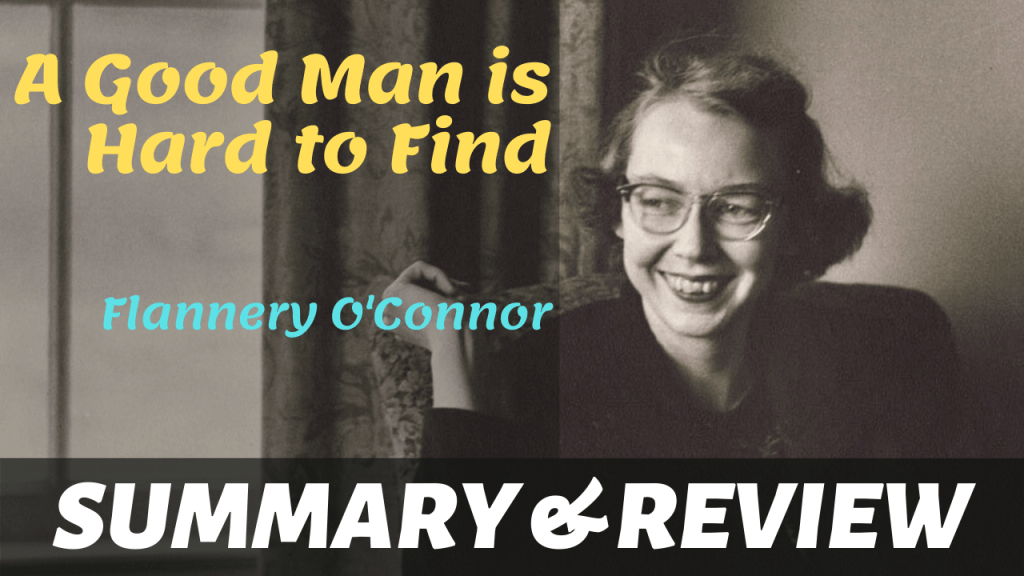
    A Good Man Is Hard to Find is a short story written by Flannery O’Connor. It was first published in 1953 in a collection of short stories titled “A Good Man Is Hard to Find.”

    You might have heard this old proverb – don’t judge a book by its cover.

    In my recent reading experience, I have found that to be equally applicable to the title of the stories which I have been reading lately.

    First The Lottery by Shirley Jackson, then Cathedral by Raymond Carver and now this.

    I read the title of this story and the first thing that popped in my head was an image of an American version of one of Jane Austen’s leading ladies and her difficult journey to a good man, but hey! What did I know?

    A Good Man Is Hard To Find: Summary and Plot Analysis

    The story opens with a grandmother trying to convince her son to take a trip to Tennessee where she wanted to meet up with some of her connections.

    Her son Bailey and his family, on the other hand, wanted to head to Florida.

    The grandmother lives with her son Bailey, her innocent `cabbage faced` daughter-in-law, her grandson John Wesley, her granddaughter June Star and a toddler.

    Despite the grandmother trying to convince Bailey to go to Tennessee, citing all sorts of reasons including the presence of an escaped convict in Florida, the family does not budge and it is confirmed as the destination.

    On the day of the trip, the grandmother hides her cat in a basket and puts her in the car. She wears a dress and a hat that says she is ‘a lady’ in case they meet with an accident.

    She sits with June and John on either side of her. The children engage in their banter and John calls Tennessee a ‘hillbilly dumping ground’ resulting in his grandmother chastising him.

    She narrates a rather funny story of her suitor named Edgar Atkins Teagarden.

    He used to bring a watermelon for her everyday, leaving it on her porch with his initials on them resulting in a black child eating it mistaking the initials E.A.T as an instruction.

    Enroute, the family stops at a restaurant called the Tower, owned by Red Sammy Butts.

    Red Sammy mentions people are becoming more and more untrustworthy these days, quoting one incident from the recent past where he let two decent looking men buy gas on credit.

    A conversation about Misfit – the escaped convict – starts somehow and the woman worries that he will rob them.

    Sammy laments that good men are hard to find these days and the world is worse off for it.

    The family gets on the road again and the grandmother takes her intermittent naps, waking up from one to realize that she had visited the plantation in the past and wanted to see it again.

    Knowing fully well that her son will not entertain the idea of stopping to look at that place, she crafts a story about the house with a plantation that has secret panels.

    This spurs the children’s imagination and they start yelling and screaming to visit it.

    Bailey, who is completely against the idea at first, finally agrees to take the family there to handle the ruckus children have created.

    The grandmother points him to a dirt road and the family drives deep into the woods, the grandmother suddenly realizes the house that she was mentioning was actually in Tennessee.

    Horrified, her feet jerked, upsetting the cat. The cat jumps on a startled Bailey’s shoulder, and he loses control of the car.

    Although the car is wrecked, the family escapes unhurt with the exception of Bailey’s wife who had a broken shoulder.

    The grandmother decides not to mention anything about her mistake to her son, who is fuming at this point.

    They wait for someone to come by to seek help. They see a car approaching from far away and grandmother waves her arms dramatically to attract their attention.

    The car stops and three armed men come out of it.

    The grandmother has a strange feeling that she recognizes one of those men. One of them asks the mother to settle her children down as they make him nervous.

    The grandmother, suddenly realising that one of the men is Misfit, screams out at the Misfit with recognition, upsetting her son, who curses violently at her.

    She starts crying and the man starts consoling her. She asks if he would shoot a lady, and the man mentions that it wouldn’t be his preference.

    The grandmother keeps telling him that he is a good man and he agrees to that, calling his mother the finest woman and his dad to have had a heart of pure gold.

    Hiram and Bobby Lee take Bailey and John into the woods.

    The conversation continues between the grandmother and Misfit. Misfit agrees that he is not a good man but not the worst either.

    He apologizes to the ladies for not wearing a shirt because they had to bury their clothes after they escaped. He mentions that they borrowed the clothes they’re wearing from some people they met on their way.

    The grandmother asks Misfit if he prays to which he says No.

    Two gunshots fill the air.

    He tells the grandmother that he was not a bad child but remembers having gone to the prison for the crime that he didn’t remember committing. He gets to know from a psychiatrist that he had killed his father. Misfit has no memory of this.

    The grandmother urges that he prays so Jesus helps him. Misfit denies doing that as he does not need any help and he is doing good by himself.

    Bobby Lee and Hiram come back from the woods, without Bailey and John and hand over a shirt to Misfit. Misfit asks the children’s mother to take the child and June Star with her and go with Bobby Lee and Hiram.

    Bobby Lee tries to hold June Star’s hand who ridicules him for looking like a pig.

    Realizing her soon-to-be fate, the grandmother starts chanting “Jesus, Jesus”.

    He thinks himself to be like Jesus except that he had not committed a crime. He calls himself Misfit because he thinks that the punishment that people get for their crimes do not fit their crimes.

    The grandmother hears gunshots again, three this time and cries out for Bailey. She implores him to not shoot a lady.

    Misfit continues her conversation about Jesus saying that Jesus confused everyone by raising from the dead. Because if he actually did that, then everyone should follow him.

    But if he didn’t actually do that then indulging in meanness in one life is a natural thing for people to do.

    The grandmother agrees with him. Misfit wishes he was there to see Jesus raising the dead, he would have known for sure then.

    Seeing Misfit’s voice breaking and face contorted as he was going to cry, in her moment of clarity, the grandmother calls the Misfit “one of my own babies,” and touches him on the shoulder.

    As if bitten by a snake, Misfit springs on his feet and shoots her in the chest three times.

    Bobby Lee and Hiram return, remarking on the grandmother being a talker.

    The misfit observes that the grandmother could have been a good woman “if someone was there to shoot her every moment of her life.”

    The Misfit says life has no true pleasure.

    Want to buy A Good Man Is Hard to Find?

    A Good Man Is Hard to Find is a short story which is published in a novel alongwith other short stories written by Flannery O’Connor. You can use the links given below to buy this short story collection on Amazon:

    Check Price on Amazon US
    Check Price on Amazon Canada
    Check Price on Amazon India

    A Good Man Is Hard To Find: Analysis and Review

    There is a quality to this story that’s haunting to the core. The author paints a picture of a regular family taking a trip to Tennessee, talking about things that any regular family talks about, including the news of a cruel murderer who’s on the run from the law.

    No one in the family, in fact, not even the reader of the story expects the murderers to actually meet the family in the end and then kill them in cold blood.

    There’s a bone-chilling aspect to this story – the further you go in the story, the scarier it becomes, mostly because of the fear of “what’s going to happen next”.

    A true classic! The accolades that A Good Man is Hard to Find has received is a testimony to that. This is certainly Flannery O’Connor’s best work.

    First published in 1953, this story has inspired a lot of scholarly work and on-screen adaptations.

    The story was adapted into a film called Black Hearts Bleed Red in 1992 and a modern chamber opera in 2003.

  • The Most Dangerous Game: Short Story, Summary, Characters, Theme, Plot Analysis

    The Most Dangerous Game: Short Story, Summary, Characters, Theme, Plot Analysis

    The Most Dangerous Game is a short story written by Richard Connell. Also known as “The Hounds of Zaroff”, this story was originally published in 1924. It revolves around an American man passionate about game hunting who realizes, after a series of events, what it means to be a hunter or a huntee – and the ethicality surrounding it.

    “The world is made up of two classes – the hunters and the huntees. Luckily, you and I are hunters”

    This is a statement from Sanger Rainsford, the protagonist of Richard Connell’s remarkable short story The Most Dangerous Game. This one statement is intensely significant as it underlines the carelessness we experience as hunters; but once the tables turn, it’s a different story.

    The Most Dangerous Game: Summary and Plot Analysis

    This story derives inspiration from the big game hunting that was very popular among affluent Americans back in the 1920s.

    Rainsford, a big time game hunter from New York is travelling to Rio de Janeiro in a yacht. In a conversation with a fellow passenger Whitney, Rainsford reveals that he believes that the world is only made up of hunter and huntees and prides himself in being a hunter.

    While Whitney does show a little remorse about games they kill and wonders if the prey feels fear, Rainsford stands by his indifference to his prey and is prideful about being a hunter and not a huntee.

    Noticing the jitteriness of the crew, Whitney wants to sail past the mysterious island as soon as possible. He theorizes that sailors can sense danger and that is because evil “emanates in waves like light and sound”. While Whitney retires for the night, Rainsford stays back on the afterdeck to smoke his pipe.

    Three gunshots in the distance make him curious, and after losing balance ends up falling into water. The yacht quickly disappears into the night leaving him stranded in the middle of nowhere.

    He decides to swim in the direction where the gunshots came from and finds himself hearing an animal in agony silenced by a pistol shot. Thoroughly exhausted, he falls asleep.

    Once awake, he sets off searching for food in the jungle and chances upon a chateau (a large house). He knocks on the door and finds himself face to face with a burly guy named Ivan who is just about to show him the way when another man General Zaroff ushers him in.

    Rainsford finds Zaroff very welcoming, having been offered a room and lavish dinner. The general’s dining hall showcases mounted heads and trophies flaunting his prize from his hunting adventures all over the world.

    In the conversation that ensues, Rainsford comes to know of general’s childhood in Crimea, his game exploits all over the world and how he feels that game hunting had become progressively more boring for him over the years.

    He also goes on to point out that this monotony had recently been alleviated for him since he figured out a new kind of animal to hunt- the one he believes has courage , logic and reasoning.

    Rainsford eventually connects the dots and realizes that the general is referring to human beings and is horrified and indignant at Zaroff’s inability to see hunting humans as a murder. He politely declines General’s request to come hunting with him and goes to bed, terribly disturbed.

    He meets Zaroff at lunch again and comes to know that the sailors that he lures to the island for hunting do not present enough challenge for him to exercise his hunting skills. He is now excited by the idea of hunting a world renowned game hunter – Rainsford himself!

    Baffled and scared by General’s request, Rainsford asks to leave the island, a request that General immediately denies, instead approving his leave in return for a 3 day hunt, with Rainsford being the prey.

    On Day 1, General identifies Rainsford’s location easily but chooses not to kill him to prolong the duration of pleasure he derives from the hunt. This leaves Rainsford terribly scared with very little hope to be able to escape the island.

    On Day 2 , Rainsford puts up more of a challenge to Zaroff using the Malay mancatcher (a kind of booby trap to catch a human), doing so much as wounding Zaroff, who promises to kill him him the next day.

    What happens at the end of the story of The Most Dangerous Game?

    On Day 3 – the final day of the hunt – through a series of events, Ivan (General Zaroff’s assistant) is killed and hounds are let loose that push Rainsford to the edge of the cliff. He chooses to jump into the ocean than handle the hounds.

    Upon return to his room later that night, Zaroff finds Rainsford concealed behind the curtains. Zaroff congratulates him on winning the game, but he insists that the game is not over yet and that he intends to fight Zaroff. Zaroff accepts his challenge and declares that the loser of the fight will become food to the dogs while the winner will sleep in Zaroff’s bed.

    The story concludes with Rainsford saying that the General’s bed was more comfortable than anything that he had ever slept on (which suggests that Rainsford killed General Zaroff).

    The Most Dangerous Game Characters

    Sanger Rainsford: The protagonist. A world-renowned big game hunter from America. He’s a level-headed, intelligent and experienced man who combines his mental and physical ability to outsmart General Zaroff.

    General Zaroff: A Russian expatriate who lives in a big house on an island. He is an accompolished hunter who has lost all interest in hunting animals because it has gotten ‘boring’ over the years. Now he enjoys hunting prey that are smart and have a formidable mental abilities – humans.

    Ivan: General Zaroff’s assistant. He is mute and has a formidable physical stature. His stature is so fear-inducing that Zaroff’s captives prefer to flee and give Zaroff a chance to hunt them down than a certain, torturous death at Ivan’s hands.

    Whitney: Hunter and Rainsford’s travel companion. Feels a little remorse about killing prey and suggests that the hunted feel fear while Rainsford is completely indifferent to how the prey feels.

    The Most Dangerous Game Theme

    The main theme of The Most Dangerous Game is fear, competition and perseverance. The author has a done a remarkable job at blurring the line between the hunter and the hunted. He has shown – through the protagonist’s journey through the story – that the one thing the prey always feels, irrespective of who it is, is fear.

    In the beginning of the story, Rainsford is shown to be oblivious to the fear of the prey he hunts. In fact, he prides being such an accomplished hunter. But as the tables turn and Rainsford ends up becoming a prey himself, he realizes the nerve-wracking fear of a prey which gives him perspective and a real taste of what’s it like to be the hunted (instead of the hunter).

    The story also indulges in the idea of competition. Both General Zaroff and Rainsford are skilled hunters, which is demonstrated at regular intervals in the story. On the first day of the ‘hunting game’, the General effortlessly locates Rainsford but chooses to ‘spare’ him. The subsequent days, Rainsford fights back and ultimately trumps the General.

    Furthermore, The Most Dangerous Game is a story of perseverance and survival. The protagonist never gives up despite the challenges that he’s faced with one after the other.

    Is The Most Dangerous Game a true story?

    The Most Dangerous Game was published back in 1924, around 100 years ago. Till that point, there was no true story or reported case on which the story could have been based.

    But decades after its publication, there was a particularly notorious case in Alaska which involved multiple victims hunted by the perpetrator – Robert Hanson.

    Known in the media as the ‘Butcher Baker’, Hanson was an American serial killer who was caught and convicted in 1983. He was then sentenced to 461 years and a life sentence without the possibility of parole. He died in 2014. (Source)

    The Most Dangerous Game Movie

    8 years after the publication of the story, a movie of the same name was released in 1932. The film is based on the same premise of a big game hunter who lives on an island and hunts human prey for sport. The film stars the lead stars of King Kong – Fay Wray and Robert Armstrong, alongwith Joel McCrea and Leslie Banks.

    the poster of the movie the most dangerous game
    The poster of the movie The Most Dangerous Game

    Another movie, The Frozen Ground (2013), is loosely based on the story of The Most Dangerous Game. The film stars Nicolas Cage and John Cusack in lead roles. It tells the story of an American serial killer who abducts and kills female victims to satisfy his sadistic ‘thrill’ of hunting.

    The Most Dangerous Game Review

    This power packed story line from Richard Connell never ceases to amaze me. It will not be an overstatement for me to say that this book rekindled my faith in short stories.

    Not to forget, the ethical dilemma and the amazing quotes the book presents. If I had to pick quotes from the book that stood out the most for me, those would be.

    “The world is made up of two classes – the hunters and the huntees. Luckily, you and I are hunters”

    And Further in the same conversation…

    “Don’t talk rot, Whitney, you’re a big-game hunter, not a philosopher. Who cares how a jaguar feels?”

    Connell has so brilliantly given an altogether differing spin on the perspective that was used when this line was first said in the story.

    The journey from Rainsford being an acclaimed hunter, absolutely indifferent to his prey’s feelings, to him being the hunted – shocked and terrified – is an amazing journey to follow and learn from.

    What I really like about this message is its poignance and relevance to our everyday conversations where our own viewpoint is all that we care about.

    In my random readings, I have come across this phrase very often: “the world does not revolve around you.”

    I guess I need to pause and take notice.