Tag: suspense

  • The Lottery by Shirley Jackson: Summary, Plot Analysis and Review

    The Lottery by Shirley Jackson: Summary, Plot Analysis and Review

    The Lottery`is a short story written by Shirley Jackson who’s an American author. First published in the New Yorker in 1948, the story is about a strange game of lottery that’s practiced in a village.

    Touted as one of the most famous short stories in American literature and first published in New Yorker in 1948, this story’s journey was rocky in the beginning.

    It opened to a tremendous negative response by the audience. People felt hurt and it received a lot of hate mails. It  was even banned at some places.

    Wondering what so special about it?

    Let’s jump right in!

    The Lottery: Summary and Plot Analysis

    The story opens in a village square on a bright and beautiful summer day. The village is small with about 300 people and has the usual small place charm.

    Everyone knows everyone. Children running around, Wives catching up on the latest gossip and men surveying their children and talking about plantation and taxes before families start standing together in groups.

    The families have assembled for the annual lottery event. This event takes much longer in other towns but the small size of this town works to the villagers’ advantage. The event gets over in no more than two hours.

    Children, who have just gotten off school are running around with stones in their pockets, while some others arrange them in a pile on the ground.

    A man called Mr. Summers runs the lottery because he has a lot of time at his disposal for the village.

    He arrives in the square with the black box, followed by Mr. Graves, the postmaster. The black box is older than the oldest man in the village. Mr Warner attempts to get a new one but is thwarted in the name of tradition.

    Mr. Summers jumbles up the slips of papers in the box. Note that at this point the reader is unaware of the content in those paper slips.

    portrait of shirley jackson
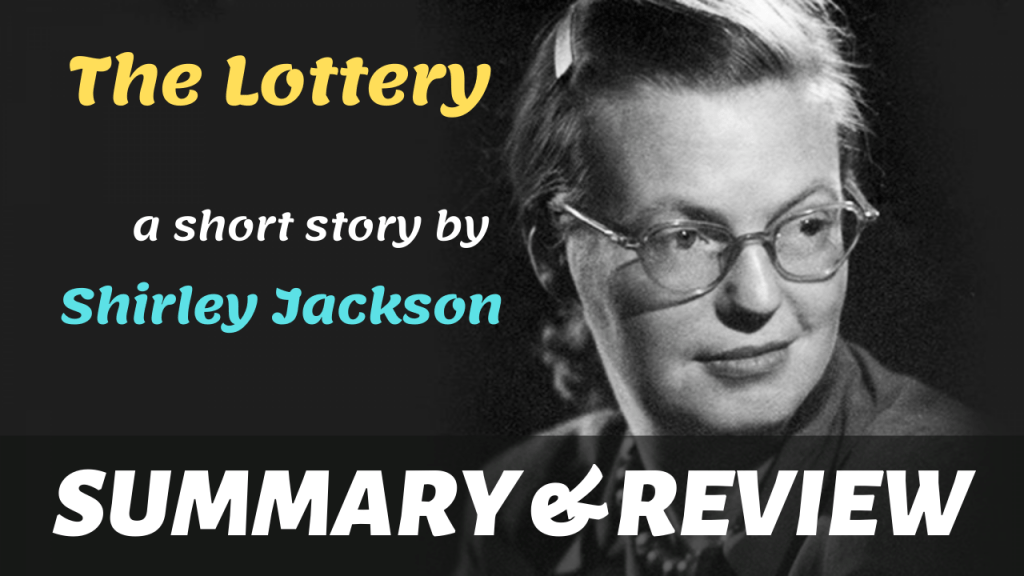
    Shirley Jackson – the author of The Lottery

    Mr Summers and the postmaster made the paper slips the night before and locked it up in his coal company. As a prerequisite to the lottery, a list of families is made and members from each household are identified to be representing the family for the event.

    Mr Summers is sworn in, albeit without the customary salute or song that’s used to characterize such events in the past.

    A village woman Tessie Hutchinson joins the crowd late, visibly flustered having forgotten the day to be the lottery day. People joke about her late arrival in a playful manner.

    Mr Summers confirms with the crowd about everyone’s presence for the event and makes sure that there is someone to draw for every family.

    He then proceeds with a reminder about the lottery rules: he will read family names and the identified family heads will come and draw a slip of paper and no one is to look at their slips until every family has drawn.

    While people continue to draw slips of paper from Mr Summers’ box, Mr Adams and old man Warner strike up a conversation about some other village taking on the lottery tradition, mentioning that some wanted to discontinue it.

    Old man Warner ridicules the idea saying that it is as bad as going back to the caves and that it’s trouble and nothing else.

    Everyone has finished drawing papers and now the family heads open the papers. Word quickly travels that Bill Hutchinson has got it.

    Tessie starts complaining about the unfairness of the draw considering that her husband got very little time to draw a paper. Mr. Summers asks Hutchinsons if there are other members in their family. He confirms.

    There are five papers now to draw from. One for each member of the Hutchinson family. Each member draws their paper, and opens their slips. Tessie receives a paper with a black dot on it. Mr Summers then instructs the villagers to hurry up.

    All villagers grab stones and run towards Tessie, who is now standing in the middle of the crowd. She continues to complain about the unfairness of the lottery until she is hit by a stone on her head, and then everyone begins throwing stones at her.

    The Lottery: Review & My Thoughts

    The first time I read the story, I was shell shocked at the ending.

    Although Jackson dropped quite a few hints about the lottery not being a traditional one that comes to mind when you see or hear this word. I was not prepared for the end.

    I thought I read it wrong; but no, I read it right. She was stoned to death by people she knew, she gossiped with. Hell! Her own family!

    The idea was very bizarre to me, and I was finding it hard to digest. It didn’t sit well with me.

    Up until the absolutely unexpected ending, there were a few references in the story that I marveled at:

    “It was clear and sunny, with fresh warmth of a full summer day”

    I know I might be over-crediting this line, but summers are rare in the place I live and what bad could ever happen on such a nice summer day!

    About how children shall always be children:

    “The children assembled first, of course. School was recently over for the summer, and the feeling of liberty sat uneasily on most of them.”

    How men taking a central role in a family is okay, but women doing the same is not.

    “Wife draws for her husband, Mr Summers said. “Don’t you have a grown boy to do it for you Janey?”

    I did see eerie signs but chose to ignore them, clues spread all throughout the story about lottery not being the traditional one: why was Tessie constantly complaining about getting the lottery? It’s lucky to win one and people want to win it, right?

    We would instinctively trace it back to the dark ages if we ever hear of an incident like this in reality.

    With all of the human rights commissions that we have now, yes, an act like this is not going to get unnoticed, and I sure would like to believe that they would play an instrumental role in curbing a horrible, inhuman practice like this.

    But does that mean that we are not slave to tradition now in these times?

    Mrs Hutchinson’s death is an extreme example of how societies can perpetrate all sorts of injustices for reasons that defy logic.

    The targeted individual could be a different race, a different sex, follower of a different religion, of a different economic class, something that he or she can not control but has to pay the price for.

    Just as villagers blindly follow tradition to stone Tessie to death, real life villains carry out atrocities without questioning the tradition or the widely held belief – however flawed it might be.

    All this is to say that the ending of the story made me think. A LOT.

    And that is the power of a great story. Publishing something like this in 1948! Shirley Jackson was undoubtedly way ahead of her times.

    It pains me to think how much flak she received for this. Bombarded with hate mail in hundreds all through the summer when it was first published.

    The story left me speechless.

    Thank you, Shirley Jackson!
  • Story of Your Life by Ted Chiang: Summary and Review

    Story of Your Life by Ted Chiang: Summary and Review

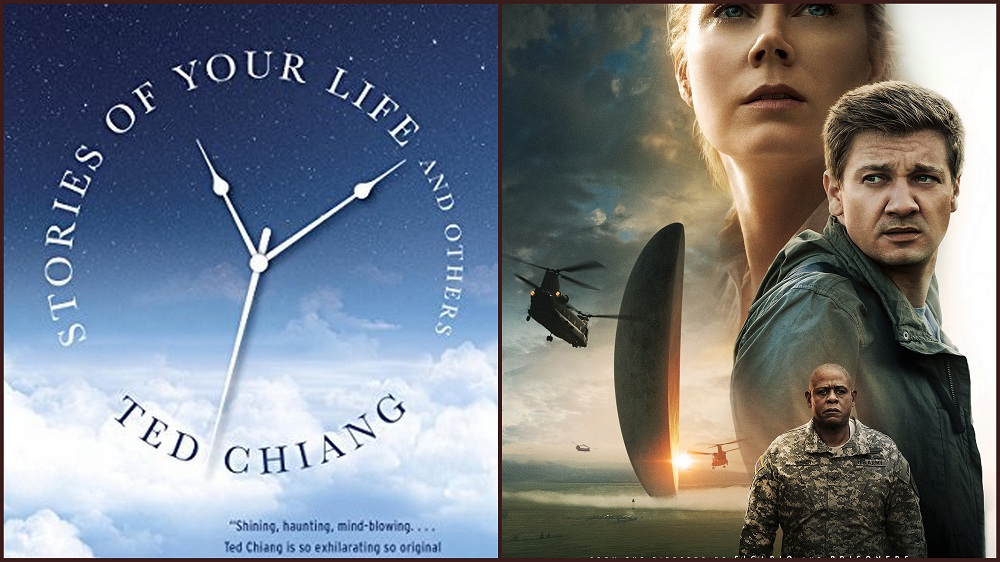
    Story of Your Life is a science fiction short story written by Ted Chiang. It was first published 1998. The story revolves around a renowned linguist and how she makes a breakthrough in communicating with the aliens that have landed all over the world in massive spaceships. This story received many accolades and shot to immense popularity following the success of a Hollywood movie ‘Arrival’, which is based on this story.

    “Despite knowing the journey and where it leads, I embrace it and welcome every moment.”

    What would you do if you somehow chance upon the ability to be able to see your future?

    Will that scare you, or will you be hopeful? Or both?

    Ted Chiang, in his short story “The Story of Your Life”, brings you some answers in a very humane sci-fi manner, traversing through the themes of language and determinism.

    First published in Starlight 2 way back in 1998, this story has received multiple accolades. Its most recent adaptation into a Hollywood movie – Arrival, starring Amy Adams and Jeremy Renner – is a testimony to its ever-growing popularity.

    Story of Your Life: Summary and Plot Analysis

    The story revolves around Louise Banks, a respected linguist, who is also the narrator of the story. Louise is recounting the events of her life to her daughter and story alternates between glimpses into her past and future.

    The story opens with a couple enjoying a romantic dance on a day which happens to be the one where their daughter was conceived.

    The pivotal point in the story is the arrival of aliens in spaceships that land in different parts of the world, including the US, Russia, China etc. And not just one or two, a total of 112 gigantic semi-circular spaceships land all over the planet.

    These ‘devices’ serve as an audio visual link to the aliens.

    semicircular alien spaceship from the movie 'arrival'
    This is the alien spaceship which land in different parts of the world. This image is a screenshot of the movie Arrival, which is based on this short story. (Photo Credit: Arrival Movie)

    Aliens initiate communication with humans and Dr. Banks and Gary Donnelly (who is a physicist) have been brought in to assist with the process.

    Aliens, whom people call ‘Heptapods’, because of their seven limbs and radially symmetrical appearance, communicate in a language that is nothing like any form of language (both written or verbal) that humans have ever known.

    Louise and Gary are assigned to 9 “looking glass” sites (that’s what humans call the sites where these spaceships have landed) and start to work with them to understand their language in order to be able to communicate with them.

    They work with two aliens, whom they nickname Flapper and Raspberry.

    Through a series of conversations with them, Louise realizes that their written and spoken words are not related to each other at all! She and her group refer to speech as “Heptapod A” and the written form of the language as “Heptapod B”.

    Through a series of experiments that Louise and her team run to understand the aliens’ language, both in linguistics and physics, they infer that the alien language has a ‘free word order’. In addition to that, their language does not seem to have any linear sequence making it even more complicated to understand.

    Not much progress is made until one day Gary explains Fermat’s ‘principle of least time’ to Louise. From this fresh understanding, it dawns upon Louise that similar to the light in Fermat principle (where light knows exactly where it will end up before it chooses its path of travel), aliens know their full sentences beforehand.

    Instead of experiencing events sequentially, they experience all of them at once, hence confirming why the Fermat principle resonated with them so much.

    Armed with this knowledge, Louise becomes proficient in Heptapod B quickly, but it also alters her understanding of reality. She observes that her train of thought is now absurdly directionless.

    She experiences complete immersion in Heptapod B and starts to think in it and perceives time the same way as Heptapods do. She now sees glimpses of a future, a daughter she does not yet have, her daughter’s death and a life she doesn’t have yet.

    One day, the aliens announce that they are leaving. They shut down the looking glasses and disappear. It is never established why they came and why they left, although there were rumors flying around that implied that they found human race to be too primitive to be of interest to them.

    This knowledge of the heptapod language changes Louise’s life. She knows the future now, but does nothing to alter it.

    She knows that she is going to end up together with a man, have a daughter and will lose her when she is still young. Despite this knowledge of her future, she goes on ahead with her life, changing nothing.

    Flash back to the present, when Gary asks her if she wants to make a baby, she says yes.

    Want to read Story of Your Life by Ted Chiang?

    Story of Your Life is a short story which is published in a collection of short stories written by Ted Chiang. You can use the links given below to buy this short story collection on Amazon:

    Check Price on Amazon US
    Check Price on Amazon Canada
    Check Price on Amazon India

    Story of Your Life: Review and Analysis

    Story of Your Life has won numerous awards for Ted Chiang, including the prestigious Hugo award. Mr.Chiang has this innate ability to convert extremely dense topics to something that you can not only comprehend, but think and marvel at the new perspectives that it brings.

    a scene from the movie 'arrival'
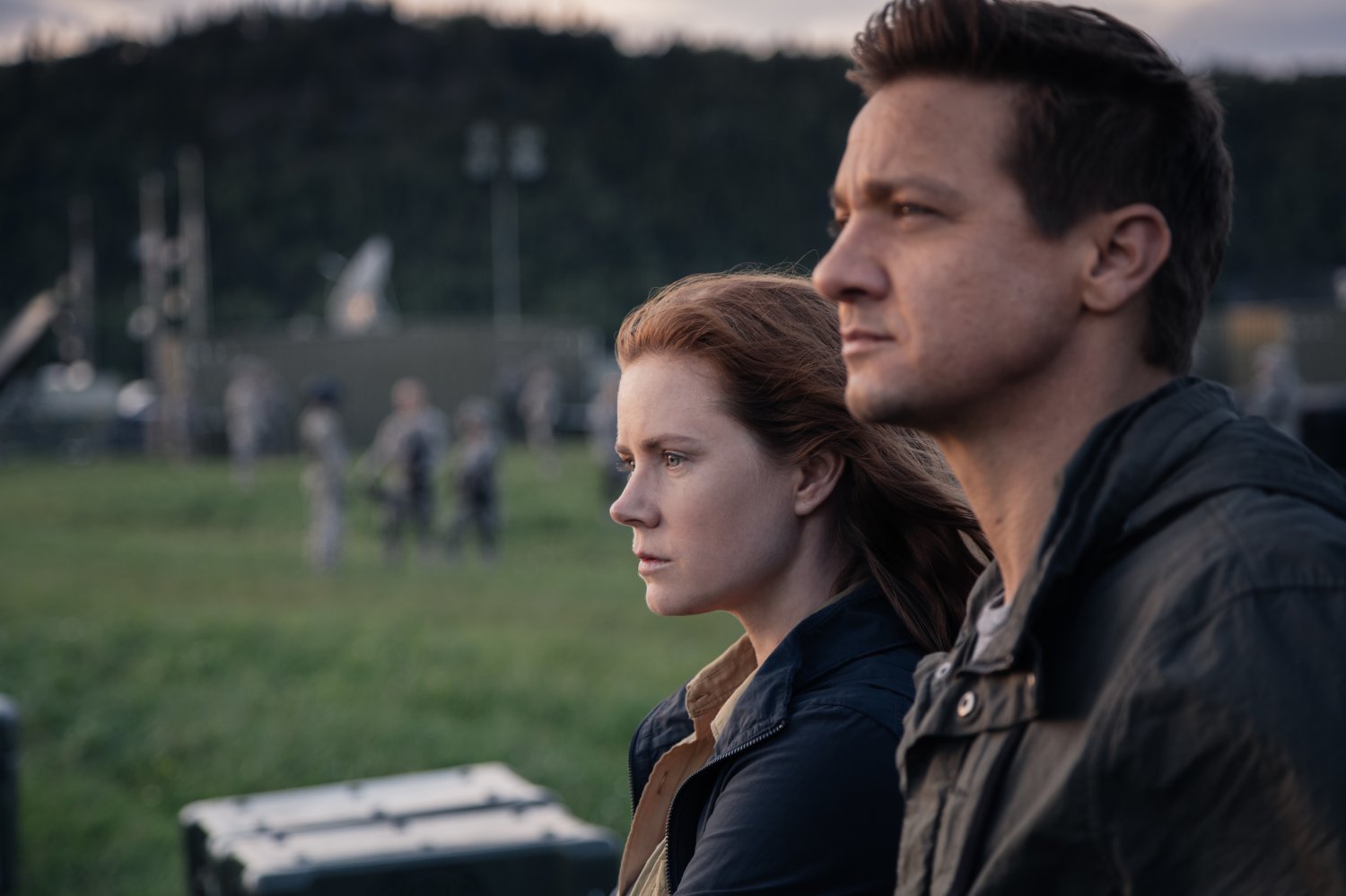
    A still from the movie ‘Arrival’ – it is based on A Story of Your Life

    This story brings the debate of free will and determinism to the fore. The portrayal could not have been any more gripping and profound than it is. The story shines in its intellect and humaneness.

    It has got rich material that will keep both the dreamer and scientist hooked.

    Consider for example, how Chiang has broken down the concept of Fermat’s principle:

    “Any hypothetical path would require more time to traverse than the one actually taken. In other words, the route that the light ray takes is always the fastest possible one.”

    The way that he has married science with philosophy in his story is remarkable. He is known to have remarked once: “Science fiction is very well-suited to asking philosophical questions; questions about the nature of reality, what it means to be human, how do we know the things that we think we know.”

    The clarity with which he has presented the linguistic challenges, realizations and the character epiphanies are spellbinding. It speaks to the amount of research that must have gone towards this immaculate description of a linguists approach towards a new language.

    And the biggest sentences had an effect similar to psychedelic posters : sometimes eye-watering, sometimes hypnotic.

    7 Quotes from Story of Your Life

    Here are some quotes from A Story of Your Life that I absolutely loved:

    1 – Whether scientists or tourists they were an awfully incurious bunch.

    (Referring to the aliens who had landed in different parts of the world but didn’t seem to do anything after they had landed)

    It might be the woman in me talking but I found the depiction of mother-daughter relationship extremely heart-warming. At those specific instances in the story I forgot that I was reading science fiction.

    Here are some quotes through which the author depicts the beautiful mother-daughter relationship:

    2 – Even if I had never laid eyes on you before, I would be able to pick you out from a sea of babies: Not that one. No, not her either. Wait, that one over there. Yes, that’s her. She is mine.

    3 – It will be like growing an errant limb, an extension of myself whose sensory nerves report pain just fine, but whose motor nerves do not convey my commands at all. It’s so unfair. I am going to give birth to an animated voodoo doll of myself. I didn’t see it in the contract when I signed up. Was this part of the deal?

    arrival movie cast amy adams jeremy renner
    A still from the movie ‘Arrival’ – it is based on A Story of Your Life

    4 – My own mother could never understand why I couldn’t just be a high school English teacher. You’ll do what makes you happy and that’s all I ask for.

    5 – Living with you will be like aiming for a moving target, you will always be further along than I expect. All those vows that I will give reasonable answers when I became a parent, that I would treat my own child as an intelligent, thinking individual,all for naught, I am going to turn into my mother.

    6 – I can fight it as much as I want, but there will be no stopping my slide down that long dreadful slope. Not to forget a little lesson in mindfulness that Ted threw in there as a bonus read-

    7 – And the lesson in mindfulness – NOW is the only moment you will perceive; you will live in the present sense. In many ways, it’s an enviable state.

    And there is always this overarching message in this book, which he very nicely intrigues us with using the Book of Ages ages and the fallacy of the argument that it exists, leaving us with this gem on his favorite topic of free will vs determinism.

    8 – From the beginning I knew my destination and I chose my route accordingly. But am I working toward an extreme of joy, or of pain. Will I achieve a minimum, or a maximum?

    James Gleick, an American author, speaking about The Story of Your Life once said, “For us ordinary mortals, the day-to-day experience of a preordained future is almost unimaginable.

    But Chiang does just that in this story, and with this brings the hope and faith that our present is all the more enriched with authors like him around.”

    Mr Gleick couldn’t have been more right.

  • The Most Dangerous Game: Short Story, Summary, Characters, Theme, Plot Analysis

    The Most Dangerous Game: Short Story, Summary, Characters, Theme, Plot Analysis

    The Most Dangerous Game is a short story written by Richard Connell. Also known as “The Hounds of Zaroff”, this story was originally published in 1924. It revolves around an American man passionate about game hunting who realizes, after a series of events, what it means to be a hunter or a huntee – and the ethicality surrounding it.

    “The world is made up of two classes – the hunters and the huntees. Luckily, you and I are hunters”

    This is a statement from Sanger Rainsford, the protagonist of Richard Connell’s remarkable short story The Most Dangerous Game. This one statement is intensely significant as it underlines the carelessness we experience as hunters; but once the tables turn, it’s a different story.

    The Most Dangerous Game: Summary and Plot Analysis

    This story derives inspiration from the big game hunting that was very popular among affluent Americans back in the 1920s.

    Rainsford, a big time game hunter from New York is travelling to Rio de Janeiro in a yacht. In a conversation with a fellow passenger Whitney, Rainsford reveals that he believes that the world is only made up of hunter and huntees and prides himself in being a hunter.

    While Whitney does show a little remorse about games they kill and wonders if the prey feels fear, Rainsford stands by his indifference to his prey and is prideful about being a hunter and not a huntee.

    Noticing the jitteriness of the crew, Whitney wants to sail past the mysterious island as soon as possible. He theorizes that sailors can sense danger and that is because evil “emanates in waves like light and sound”. While Whitney retires for the night, Rainsford stays back on the afterdeck to smoke his pipe.

    Three gunshots in the distance make him curious, and after losing balance ends up falling into water. The yacht quickly disappears into the night leaving him stranded in the middle of nowhere.

    He decides to swim in the direction where the gunshots came from and finds himself hearing an animal in agony silenced by a pistol shot. Thoroughly exhausted, he falls asleep.

    Once awake, he sets off searching for food in the jungle and chances upon a chateau (a large house). He knocks on the door and finds himself face to face with a burly guy named Ivan who is just about to show him the way when another man General Zaroff ushers him in.

    Rainsford finds Zaroff very welcoming, having been offered a room and lavish dinner. The general’s dining hall showcases mounted heads and trophies flaunting his prize from his hunting adventures all over the world.

    In the conversation that ensues, Rainsford comes to know of general’s childhood in Crimea, his game exploits all over the world and how he feels that game hunting had become progressively more boring for him over the years.

    He also goes on to point out that this monotony had recently been alleviated for him since he figured out a new kind of animal to hunt- the one he believes has courage , logic and reasoning.

    Rainsford eventually connects the dots and realizes that the general is referring to human beings and is horrified and indignant at Zaroff’s inability to see hunting humans as a murder. He politely declines General’s request to come hunting with him and goes to bed, terribly disturbed.

    He meets Zaroff at lunch again and comes to know that the sailors that he lures to the island for hunting do not present enough challenge for him to exercise his hunting skills. He is now excited by the idea of hunting a world renowned game hunter – Rainsford himself!

    Baffled and scared by General’s request, Rainsford asks to leave the island, a request that General immediately denies, instead approving his leave in return for a 3 day hunt, with Rainsford being the prey.

    On Day 1, General identifies Rainsford’s location easily but chooses not to kill him to prolong the duration of pleasure he derives from the hunt. This leaves Rainsford terribly scared with very little hope to be able to escape the island.

    On Day 2 , Rainsford puts up more of a challenge to Zaroff using the Malay mancatcher (a kind of booby trap to catch a human), doing so much as wounding Zaroff, who promises to kill him him the next day.

    What happens at the end of the story of The Most Dangerous Game?

    On Day 3 – the final day of the hunt – through a series of events, Ivan (General Zaroff’s assistant) is killed and hounds are let loose that push Rainsford to the edge of the cliff. He chooses to jump into the ocean than handle the hounds.

    Upon return to his room later that night, Zaroff finds Rainsford concealed behind the curtains. Zaroff congratulates him on winning the game, but he insists that the game is not over yet and that he intends to fight Zaroff. Zaroff accepts his challenge and declares that the loser of the fight will become food to the dogs while the winner will sleep in Zaroff’s bed.

    The story concludes with Rainsford saying that the General’s bed was more comfortable than anything that he had ever slept on (which suggests that Rainsford killed General Zaroff).

    The Most Dangerous Game Characters

    Sanger Rainsford: The protagonist. A world-renowned big game hunter from America. He’s a level-headed, intelligent and experienced man who combines his mental and physical ability to outsmart General Zaroff.

    General Zaroff: A Russian expatriate who lives in a big house on an island. He is an accompolished hunter who has lost all interest in hunting animals because it has gotten ‘boring’ over the years. Now he enjoys hunting prey that are smart and have a formidable mental abilities – humans.

    Ivan: General Zaroff’s assistant. He is mute and has a formidable physical stature. His stature is so fear-inducing that Zaroff’s captives prefer to flee and give Zaroff a chance to hunt them down than a certain, torturous death at Ivan’s hands.

    Whitney: Hunter and Rainsford’s travel companion. Feels a little remorse about killing prey and suggests that the hunted feel fear while Rainsford is completely indifferent to how the prey feels.

    The Most Dangerous Game Theme

    The main theme of The Most Dangerous Game is fear, competition and perseverance. The author has a done a remarkable job at blurring the line between the hunter and the hunted. He has shown – through the protagonist’s journey through the story – that the one thing the prey always feels, irrespective of who it is, is fear.

    In the beginning of the story, Rainsford is shown to be oblivious to the fear of the prey he hunts. In fact, he prides being such an accomplished hunter. But as the tables turn and Rainsford ends up becoming a prey himself, he realizes the nerve-wracking fear of a prey which gives him perspective and a real taste of what’s it like to be the hunted (instead of the hunter).

    The story also indulges in the idea of competition. Both General Zaroff and Rainsford are skilled hunters, which is demonstrated at regular intervals in the story. On the first day of the ‘hunting game’, the General effortlessly locates Rainsford but chooses to ‘spare’ him. The subsequent days, Rainsford fights back and ultimately trumps the General.

    Furthermore, The Most Dangerous Game is a story of perseverance and survival. The protagonist never gives up despite the challenges that he’s faced with one after the other.

    Is The Most Dangerous Game a true story?

    The Most Dangerous Game was published back in 1924, around 100 years ago. Till that point, there was no true story or reported case on which the story could have been based.

    But decades after its publication, there was a particularly notorious case in Alaska which involved multiple victims hunted by the perpetrator – Robert Hanson.

    Known in the media as the ‘Butcher Baker’, Hanson was an American serial killer who was caught and convicted in 1983. He was then sentenced to 461 years and a life sentence without the possibility of parole. He died in 2014. (Source)

    The Most Dangerous Game Movie

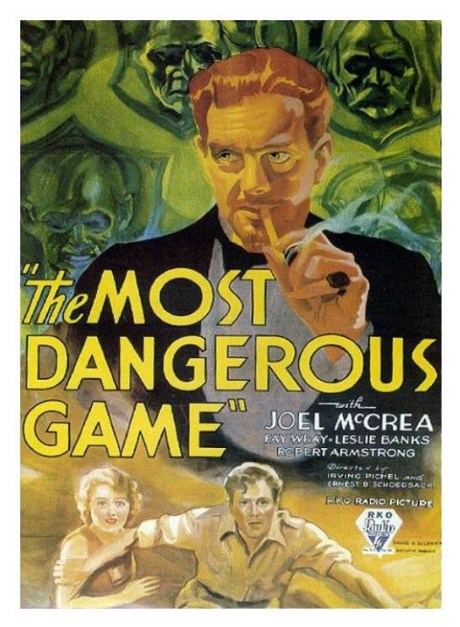
    8 years after the publication of the story, a movie of the same name was released in 1932. The film is based on the same premise of a big game hunter who lives on an island and hunts human prey for sport. The film stars the lead stars of King Kong – Fay Wray and Robert Armstrong, alongwith Joel McCrea and Leslie Banks.

    the poster of the movie the most dangerous game
    The poster of the movie The Most Dangerous Game

    Another movie, The Frozen Ground (2013), is loosely based on the story of The Most Dangerous Game. The film stars Nicolas Cage and John Cusack in lead roles. It tells the story of an American serial killer who abducts and kills female victims to satisfy his sadistic ‘thrill’ of hunting.

    The Most Dangerous Game Review

    This power packed story line from Richard Connell never ceases to amaze me. It will not be an overstatement for me to say that this book rekindled my faith in short stories.

    Not to forget, the ethical dilemma and the amazing quotes the book presents. If I had to pick quotes from the book that stood out the most for me, those would be.

    “The world is made up of two classes – the hunters and the huntees. Luckily, you and I are hunters”

    And Further in the same conversation…

    “Don’t talk rot, Whitney, you’re a big-game hunter, not a philosopher. Who cares how a jaguar feels?”

    Connell has so brilliantly given an altogether differing spin on the perspective that was used when this line was first said in the story.

    The journey from Rainsford being an acclaimed hunter, absolutely indifferent to his prey’s feelings, to him being the hunted – shocked and terrified – is an amazing journey to follow and learn from.

    What I really like about this message is its poignance and relevance to our everyday conversations where our own viewpoint is all that we care about.

    In my random readings, I have come across this phrase very often: “the world does not revolve around you.”

    I guess I need to pause and take notice.