Star Wars has slowly and steadily crept into my hard drive and minimal wardrobe. It has taken decades to be where it is in my life, but I can safely say it is here to stay.
And more than anything else, it is because of Yoda.
Yoda is the grammar-agnostic voice of wisdom, one that makes both my heart and my vocabulary feel good about themselves.
The Star Wars franchise is laden with Yoda’s wise words, and I love that his advice makes its way past time and space to us earthlings.
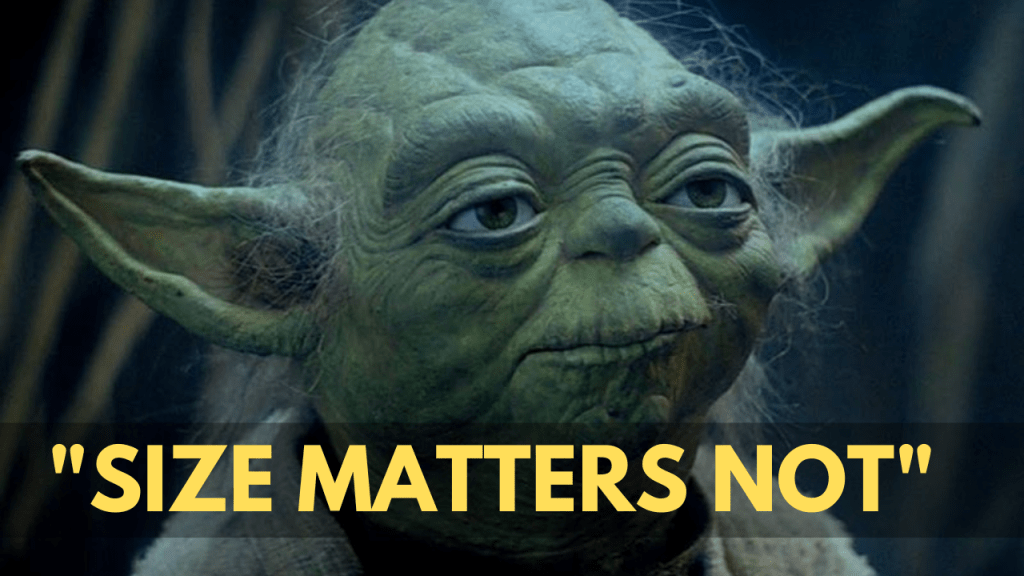
Size matters not. Look at me. Judge me by my size, do you?
Yoda says this in a conversation with Luke, who expresses dismay at his inability to lift his ship out of the swamp.
The ship’s too big.
Soon, Yoda lifts Luke’s ship out of the swamp. Yoda says it’s no different lifting a ship than lifting a rock.
Fascinating stuff, really.
Star Wars aside, I have always found telekinesis incredibly enchanting.
The first few scenes of the movie Birdman, when Riggan Thomson (played by Michael Keaton) was moving things around with his mind and levitating, got my heart racing, but not for long alas!
Just a few seconds later, they indicate it was all in his imagination.
Not that it’s a surprise; telekinesis, of course, is not real. Unless you are in the Marvel Universe or Harry Potter movies.
But the idea of having the objects come to you than you moving around to fetch them tells you loud and clear, who the boss is, no?
Moving away from daydreaming for a minute, the idea of size not mattering is not new. History is replete with figures of authority that had short stature.
I can recall my middle school history teacher regularly citing Napolean as an influential figure, despite his short stature (by the way, he wasn’t that short either).
Maybe that was my teacher’s indirect way to… empower(?) the shorter kids in the class, who the taller, burly ones may frequently bully. Or it was simply him teaching us history. Whatever it was, it had a profound impact on me.
If you removed size from the equation, the playing field was leveled, wasn’t it? In this new imaginary world of mine, the bully’s size didn’t matter, the length of your essays didn’t matter, your height didn’t matter, and your ‘assets’ didn’t matter. What an egalitarian middle school society!
I must have floated on that feeling for a solid five days until I witnessed a basketball match, by mistake, on my way to class. One of my friends, the shortest in the class, was playing basketball with some of my classmates.
It was painful for my eyes and my heart, the twenty seconds of her struggling to get to the ball. It broke my heart just a little bit.
In what now seems like ages later, I chanced upon Yoda’s timeless wisdom, and that memory from childhood came rushing back. I was more mature now.
Yoda (800 years old): Size doesn’t matter.
Me: I know, this was life-transforming advice for me; big fan, big fan!
Cathedral is a short story written by Raymond Carver. This story was included in the ‘Best American Short Stories’ (1982). It’s the story of how a man’s perspective about blind people changes dramatically when he meets an extraordinary blind man who introduces him to a new realm of experience.
“Cathedral”
What’s the first thing that comes to your mind when you read this word?
My guess is that you made a mental image of a cathedral, right?
Now here’s a question: how long do you think it’s going to take you to explain your mental image of a cathedral to me so that I see it exactly the same way you do?
5 minutes? 15 minutes? An hour?
And how satisfied are you once you’re done explaining it?
Cathedral, a short story by Raymond Carver, is an immense realization of this. to say the least.
Cathedral Short Story: Summary and Plot Analysis
The story opens with the narrator mentioning a visit from a friend of his wife, one whom he does not seem to particularly like, considering that he is blind.
This friend’s wife has recently died and after returning from one of his relatives’ place, he considers meeting the narrator’s wife, as they live close-by.
The narrator knows quite a lot about this friend – he was a reader. The narrator’s wife met and was employed by this man years ago. On the last day of her job, this blind friend had touched his wife’s face and wrote a poem about it.
Knowing all this, the narrator finds this man’s blindness ‘unsettling’, more than anything else.
The narrator also goes on to give the us (i.e. the readers) a peek into his wife’s past-marriage to a childhood sweetheart, loneliness that had led to a suicide attempt (which she survived) followed by a failed marriage.
Through all these experiences, she continued to keep in touch with her friend. Poems and tapes were the primary means of communication between them. They talked about everything and everyone, including the narrator.
The narrator and his wife have a discussion about the impending visit from her friend, wherein his wife continues urging him to be nice to her friend, while the narrator continues to bring up reservations about the guest being blind.
She tells him about that man’s wife, their married life and her struggle with a terminal disease. All this while, the narrator, seemingly immune to the grief of the blind man, continues to wonder about the unhappiness his wife would have felt thinking he could never see her.
The narrator’s wife goes to pick her friend from the train station, while the husband waits for them at home.
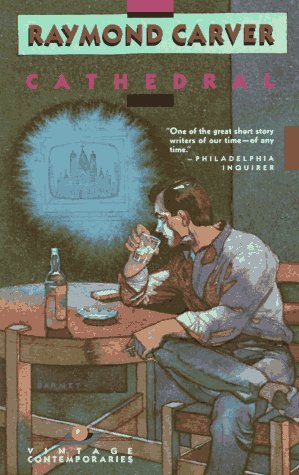
Cover of Cathedral by Raymond Carver. The links to buy this book are provided at the end of this article.
He is shocked to see that Robert (the blind man) sports a beard. This does not seem natural to the narrator. His wife introduces him to Robert and all of them engage in conversation.
The narrator inadvertently asks Robert which side of train did he sit on his way here. He quickly realizes his mistake, but seeing that Robert is unnerved by the question, he’s a bit surprised.
Three of them sit for dinner and stuff their faces. Many things about Robert continue to surprise the narrator, including, Robert not wearing dark glasses, his ability to smoke ‘normally’ and eat and drink effortlessly.
All this starts to challenge the blindness stereotype that he had held in his mind for so long.
While his wife excuses herself for a change of clothes and is gone for quite a while, both men engage in small talk and narrator switches his attention to the television which aired a program about Middle Ages, showing cathedrals from different parts of the world.
This prompts the narrator to ask Robert if he had any idea what a cathedral looked like. Robert requests the narrator to describe one to him but finds him struggling while doing so.
Robert then asks the narrator to bring a pen and paper and draw a cathedral. He puts his hand over the narrator’s hand, following the movement of the narrator’s hand. The narrator continues to draw and finds himself immersed in the experience, in a way that he had never felt before.
At one point, upon Robert’s insistence, he starts drawing with his eyes closed. When he’s done, Robert asks him to open his eyes.
The narrator chooses not to, soaking in his newfound bliss. When he’s asked how it felt, he simply responds with “it really is something”.
Cathedral: Review and My thoughts
The story seems simple, doesn’t it?
But it has a little Thich Nhat Hanh lesson (he’s a famous monk and peace activist who has published over 100 books) for us there – a lesson of mindfulness.
Not only that, it takes a jab at how easy it is for humans to fall prey to stereotypes.
The story sure is short, but has much to offer. The narrator’s reservations about blind people, his completely warped view of the world of disabled is, on some occasions, comical, while at others bordering on apathy.
Some quotes from Cathedral
One of the narrator’s blanket statements about blind people is downright comical.
“I remembered having read somewhere that the blind didn’t smoke, because, as speculation had it, they couldn’t see the smoke they exhaled.”
I couldn’t help but laugh when, on seeing his wife’s thigh exposed, the narrator rushed to cover it, only to put it back when he realized that the only other person in the room was blind.
Here, read for yourself to see if it has the same effect (holding breath in anticipation of your validatory smile):
“(While sleeping) she had turned so that her robe had slipped away from her legs, exposing a juicy thigh. I reached to draw her robe back over her, and it was then that I glanced at a blind man. What the hell! I flipped the robe open again.”
His reminiscence about his wife’s tragic past is sad, but with a slight undertone of jealousy. That man who seemed like a stone, did expose his soft side. I couldn’t help but gush a little when I read this.
“Her officer – why should he have a name? He was her childhood sweetheart, what more does he want?”
And yes, why should a spouse’s ex have a name?
Robert’s positivity and an upbeat temperament is in stark contrast with the narrator’s expectations.
Robert seems to have it all – loving and meaningful relationships, complete immersion in what he does and an undying penchant for learning.
“I am always learning something. Learning never ends. It won’t hurt me to learn something tonight. I got ears.”
Couldn’t get any more cliche than that, eh? Yet valuable just the same.
Learning. Never. Ends.
We have great people from history and the present worldwide vouching for Robert on this one, and for good reason.
It’s ironical that a seemingly indifferent narrator has a profound experience at the hands of someone that he was completely apathetic to, until they share an immersive experience.
Very cleverly, Carver exposed the error of the narrator’s way by showing him that the world he thought he was lacking was actually the one capable of making him feel fulfilled.
A world that showed him better things. A world that makes him see.
I hope I see more from this day on.
Want to read Cathedral?
Cathedral is available on Amazon if you want to get yourself a copy. You are welcome to use the links given below to order a copy:
My jaws drop like an idiot. Realizing that, I brace myself, close my mouth and smile like an idiot, my eyes shine like a maniac every ten minutes (or so my people that watch it with me tell me). This continues throughout the movie.
Thing #2
I imagine how it would feel, living a life like that – a plush life with all imaginable ‘material’ comforts. Lurking in that imaginary world somewhere is what I call a ‘No Monster’ aka who-are-you-kidding-that’s-not-your-life monster. I inevitably end up sad having recently lost imaginary wealth I acquired a couple of hours ago.
Who doesn’t want limitless wealth!
Everyone I know wouldn’t mind having that. I am sure you know other people like that. Chances are you are one of them. Or maybe, you are a lucky one who doesn’t drool over the idea of limitless wealth.
Lucky for me, having had parents and teachers who introduced me to the magical world of books, I always end up reading to comfort myself.
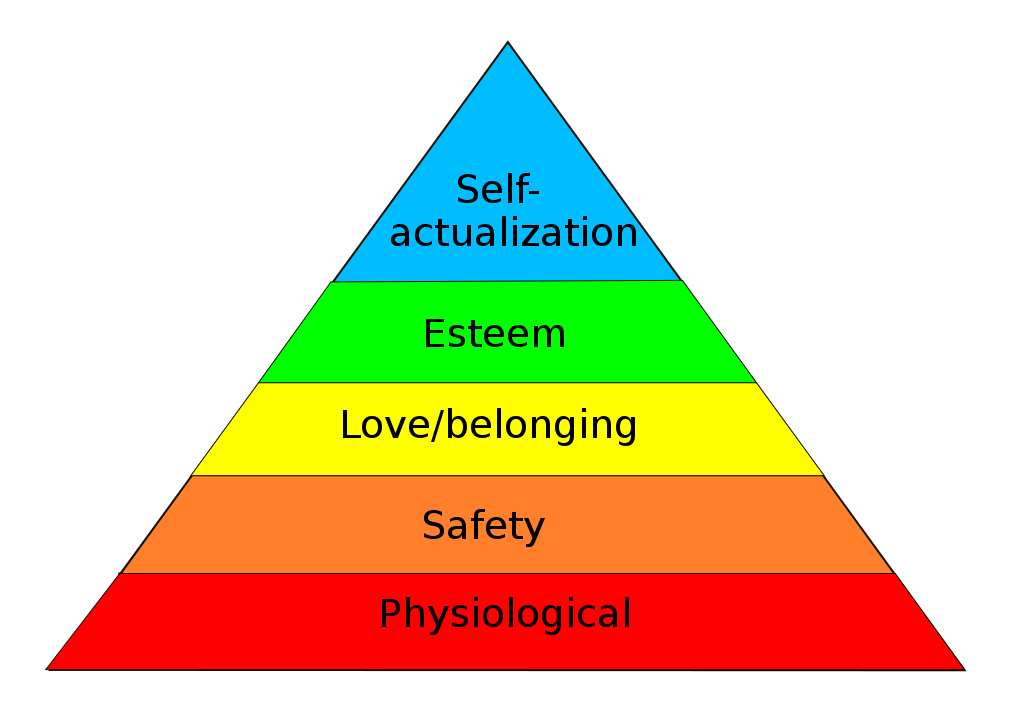
Maslow’s hierarchy of needs, represented as a pyramid. As you can notice, the more basic needs of a human being lie at the bottom. As we satisfy one level of needs, we then seek to fulfill the next level of need. This goes on till we reach the top of the pyramid.
The basic necessities are a must-have – the foundation upon which your future wealth is going to be built.
If I have what is necessary, I am already halfway there.
I know I have a roof on my head, food on the table and very fortunately, family and friends that refuse to leave my side, regardless of my excellence at annoying them.
This is where Seneca packs a power punch: ‘To have what is enough’ needs an ability to control our mind, our whims and fancies. To be able to have the discretion to tell ‘enough’ from ‘too much’.
After all, we have seen countless examples of people operating in extremes.
Working insane hours to get that bonus, stabbing people in the back to get that promotion (not literally, I hope), having cosmetic surgeries done on them so many times that they resemble a walking mannequin.
And even that doesn’t seem enough.
So, what’s your ‘enough’?
Having enough could mean having things that facilitate enjoying your life with the ones you hold close, sharing joys and sorrows with them, living a healthy life and growing old gracefully.
I realize that this doesn’t define ‘enough’ for everybody.
But that’s the thing, right? It’s you who decides what’s your ‘enough’.
Just remember this – if at the end of the day, you are not happy or at ease, you’re not doing things right.
In that case, you might want to recheck your definition of ‘enough’.
I often find solace in this lovely song from Jungle book (dedicated to all The Jungle Book fans out there!)
I am not saying that I am immune to Crazy Rich Asians now, because I am not.
But atleast now I know whose words to seek comfort in next time want and doubt grip me.
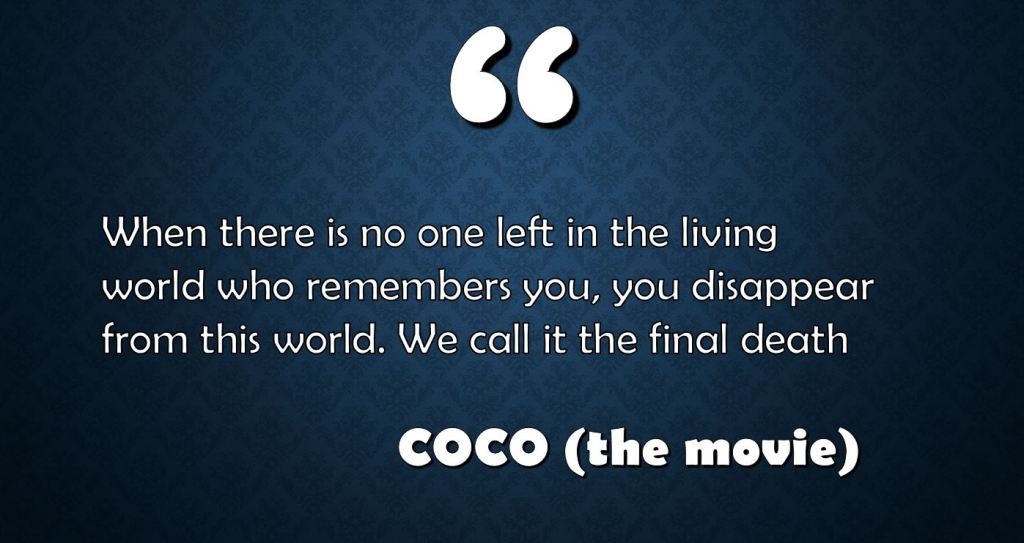
I got to hear this line recently while watching the Disney-Pixar movie Coco.
Without ruining the movie for you, this quote is basically about dead people who are alive in their afterlife conditional on people in the living world remembering them.
You and I both have seen movies emphasizing the importance of familial ties and love.
But this message from the movie does something else.
It evokes a sense of fear.
I replayed the sentence in my head over and over.
“When there is no one left in the living world who remembers you, you disappear from this world.”
Let this sink in and I promise you that it would stress you if not outright scare you.
The good news is that you are not alone in feeling that way. Human beings, in general, are obsessed with leaving a legacy behind. Something for people they left behind to remember them by.
Because people forgetting them when they are already gone would be… devastating?
Where might this sense of fear be coming from?
Could it be that we humans can’t stand the possibility that our lives mean nothing to
others around us? That we lived our lives in a way that no one is going to remember us – does this imply that we were a failure?
Could it be ego? Narcissism?
We creatively manufacture ways to convince ourselves that our actions will affect the future of the world in some remarkable way.
There is nothing wrong with wanting to have a legacy. But more often than not, the blind focus on the goal of doing something to be remembered by, takes our focus off the equally-important aspect of enjoying the journey to get there.
If we constantly are under stress working much longer than normal hours, doing things that we don’t enjoy doing and never getting time to spend with the kid that we think we are doing it all for – what do we think the kid is going to remember us for?
The journey is as important as the goal, if not more.
Enjoying the journey will always entail enjoying the present. Enjoying the present would include either or all of these things – spending time with our loved ones, doing something for the less fortunate, doing things that make us happy, enjoying what we do.
In the words of Arthur Ashe, success is a journey not a destination. The doing is often more important than the outcome.
I came across this quote during a re-read of the famous comic classic and my personal favorite Three Men in A Boat by Jerome k. Jerome.
In addition to making me smile, it took me on a trip down the memory lane. I don’t know about you but I cannot bear the thought of having to wake up when everyone around me is still asleep.
I dread my high school exam days to this date, when this was a fairly common occurrence to me.
‘Three Men in a Boat’ is my Agony Aunt – not the one that would listen to my woes
and suggest alleviation mechanisms, but the one that would make me laugh so hard that I forget about everything else.
But right after that bout would come a phase of reflection, but more on that later..
Straight back to school days, living with my siblings. I was (and will be, for the foreseeable future) a late riser.
I would sleep in until noon on weekends. I used to have just two meals – the one you have after lunch (they call it ‘brunch’, right) and dinner – this way, I would load up on all movies and TV shows I could pack in my weekend waking hours.
I was the most amiable person you could find on the planet if I could sleep a minimum of 10 hours a day.
That would, however, not be the case if my siblings slept for 10 hours and 5 minutes. No!
No one could sleep more than me. No one!
And over the years, I have realized I am as unique in having this trait as 2 billion others on the planet. There is something very disturbing about someone having more privileges – for me it was sleep back then.
I value my sleep as much as I did back then, but there are quite a few other items that have been added to the list over the last few years.
I might be happily getting by with my 1-bed apartment until someone my own age, someone I know, has recently paid off the mortgage on a 3-bed. The same apartment that was a haven for me before, suddenly, feels too cramped.
It’s not even like we are the only ones that resort to comparison; perhaps all of our parents did that too.
For instance, imagine a boy who’s jubilant that he got an A in his exams, when his parents were expecting him to get just a B+. Obviously, he ‘exceeded expectations’ of his parents.
But when he breaks the news to his parents, they hardly seem excited about it. Why?
Because their neighbor’s kid got an A+.
The scene changes from enthusiastic congratulations to his parents complaining about he ‘failed’ compared to his classmate. ‘After all’ the parents say, ‘don’t you get the same privileges as that boy who lives next door?’
The Comparison Monster can creep in all spheres of our life and wreak havoc if we are not watchful. We need to guard our happiness and sanity as fiercely as Joey from Friends guards his food.
So, how do we ensure that we are not a permanent resident of Compareville aka Miserytown?
The answer is pretty simple. Read the following quote once, twice, thrice. Hell, put it up in your living room for good measure:
“Someone else’s beauty is not the absence of your own.”