
Author: Swati

  • Who Moved My Cheese: Summary, Plot Analysis and 3 Reasons To Love It

    Who Moved My Cheese: Summary, Plot Analysis and 3 Reasons To Love It

    Who Moved My Cheese is a short story written by Spencer Johnson. It was first published in 1998. It is a motivational story about 4 characters – two of them are mice and two are humans (of very small size). It highlights the importance of anticipating change, adapting to one’s environment and not taking things for granted.

    “The quicker you let go of old cheese, the sooner you find new cheese.”

    Too simple a truth, eh? For cheese and non-cheese lovers alike ! In his world renowned book ‘Who moved my Cheese’ Dr Spencer Johnson treats us with many simple truths like these, leaving us wondering – how could a business self help book be such that it applies to all areas of our life, and doing that in a language that may seem too simple but one that is still  heavy with abundance of life-changing truths.

    Let’s jump right in.

    Who Moved My Cheese: Summary and Plot Analysis

    The story revolves around four characters- Two are mice named Sniff and Scurry and the other two are humans , about the size of mice themselves, called Hem and Haw. They live in a maze and depend on cheese for their survival.

    In their cheese hunt, they chance upon a spot with supply of cheese enough to last their lifetime, they end up spending a lot of time there.

    While the mice are agile and ready to move when the cheese disappears, the humans are stuck in their old ways, All they do is simply take the cheese for granted, sit back and brag about it.

    Eventually cheese runs out.

    book cover of who moved my cheese
    Cover of Who Moved My Cheese?

    While the mice moved on to find new cheese, Hem and Haw, too set in their old habits, are afraid of what lies out there in the maze and simply complain about them deserving more after all of their hard work.

    Too scared to set out, Hem and Haw start blaming each other for their troubles. Over a period of time, Haw gets smarter and decides to explore the maze for more cheese.

    Finding that Hem is hesitant to come along, Haw continues to explore further, leaving a trail of messages for Hem, if he ever decides to follow him.

    Eventually, he does find a ton of cheese , deep in the maze only to find Sniff and Scurry there already. Learning from his past, Haw is now a vigilant explorer, he monitors the current cheese supply to avoid the same fiasco from happening again. He decides it best for Hem to explore by himself to find his way to him.

    3 Reasons to love Who Moved My Cheese?

    1 – Where you are and where you will be is your own doing

    Times got tough for all four of them. They were all faced with the same challenge. Was the result same for all four? No!

    Why?

    Because each of them chose to respond to the situation in a different way. While Hem and Haw were busy in their blame games and petty squabbles, Sniff and Scurry were already resting with their newfound cheese chest. Haw finally did see the error of his ways and changed eventually to find himself rewarded, who’s to say what happened to our poor old Hem?

    2 – Complacency is your worst enemy

    Times do get easy and that’s when our worst enemy, complacency, strikes! We are blinded by comfort to an extent that nothing else is visible- even the dangers staring at us right in the face.

    Amy Lowell, American Poet, was right on point when she said –‘ Happiness, to some, elation; Is, to others, mere stagnation.’

    3 – Stay aware, Be Prepared

    Stay away from ‘Bury your head in the sand’ syndrome. The first step in the preparation is to acknowledge that there is a need to change.Like Sniff and Scurry, be aware that the cheese could disappear and you might need to explore and find novel ways to get to the new and better cheese.

    7 Wall Writings from Who Moved My Cheese?

    The simplicity of this book is priceless. Consider, for instance, the lessons that Haw writes on the wall for Hem.

    1 – Change Happens They Keep Moving The Cheese

    Change is everywhere- work, home, our communities, you name it . Heraclites – the Greek philosopher – wasn’t wrong when he said “nothing is permanent but change.”

    2 – Anticipate Change Get Ready For The Cheese To Move

    Regardless of us seeing change everywhere, how often are we caught by surprise? How often do we see ourselves complaining about it?

    3 – Monitor Change Smell The Cheese Often So You Know When It Is Getting Old

    Are we ever proactive enough to see what lies ahead and what the impending change might entail for us?

    4 – Adapt To Change Quickly The Quicker You Let Go Of Old Cheese, The Sooner You Can Enjoy New Cheese

    Are we ready to make a move when the change happens? Are we prepared?

    5 – Change Move With The Cheese

    Are we changing ? Are we ready to reroute our actions around what the change calls for?

    6 – Enjoy Change! Savor The Adventure And Enjoy The Taste Of New Cheese!

    It could be difficult adjusting to change, let alone enjoy it at times, But are we those
    nimble agile kind of people that can actually savour change?

    7 – Be Ready To Change Quickly And Enjoy It Again They Keep Moving The Cheese.

    Are we ready to change again and faster the next time?

    So, we have Sniff and Scurry and Hem and Haw…. which one of those are you?
  • The Seven Lady Godivas: Summary, Plot Analysis and the Reason You’ll Love It

    The Seven Lady Godivas: Summary, Plot Analysis and the Reason You’ll Love It

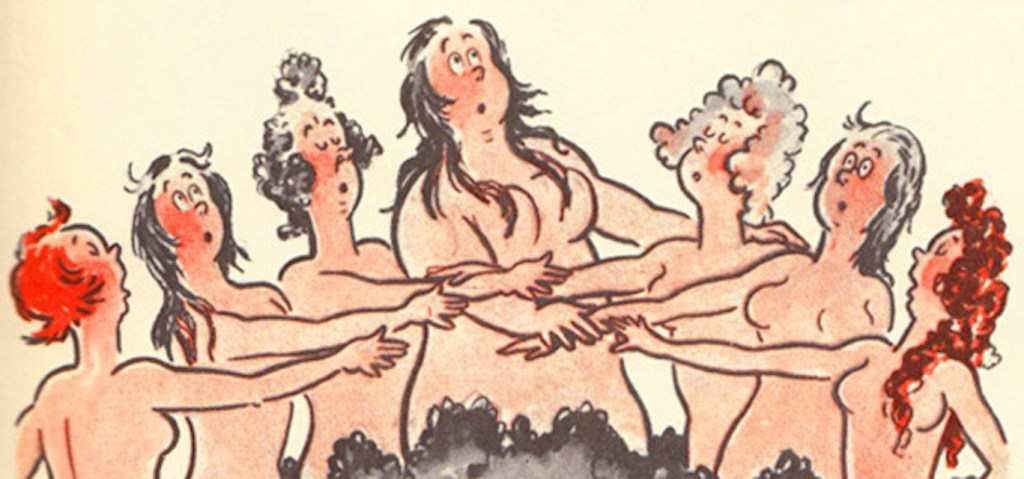
    The Seven Lady Godivas is an adult illustrated novel – written and illustrated by Dr Seuss – that was originally published in 1939 and then republished in 1987. The novel tells the story of seven Godiva sisters, none of whom ever wear clothing. Wacky, scandalous and oddly unerotic despite the sketches of the nude ladies scattered all over the book, this novel would still make you wonder if you ever actually outgrew Dr. Seuss.

    “You can take a horse to water, but you cannot make it drink”

    I am sure you have heard of this, but did you know that it is one of “horse truths”?

    Confused, eh?

    Enter Dr Seuss with his adult illustrated novel The Seven Lady Godivas: The True Facts Concerning History’s Barest Family. The novel that was first published way back in 1939, provides an account of seven lady Godivas in 11th century Coventry in attempt to explore (horseplay around) the origins of celebrated proverbs – “horse truths” in Seuss’ lingo.

    He declares very early on in the book that ‘there was not one but seven lady Godivas and their nakedness was not actually a thing of shame” referring to the English woman Lady Godiva from the early 11th century that rode naked on the streets to gain a remission on Earl’s (her husband’s) exploitative tax practices.

    Wacky, scandalous and oddly unerotic (despite the sketches of the nude ladies scattered all over the book), this novel would still make you wonder if you ever actually outgrew Dr. Seuss.

    It’s interesting to note that the novel wasn’t successful when it was first launched way back in 1939. In fact, only 2500 copies from the initial print run of 10000, were sold, leading to Seuss calling it his ‘greatest failure’.

    the book cover of the seven lady godivas novel
    The cover of “The Seven Lady Godivas”

    Sometimes the abundance of the sketches of the nude ladies does seem like a cheap titillating tactic, but believe me, this book is more than that.

    You just got to put your ‘horse sense’ to work.

    The Seven Lady Godivas: Summary and Plot Analysis

    Lord Godiva of Coventry has deep admiration for his seven daughters, who do not wear clothes because ‘they chose not to disguise what they are’. He summons them to the castle to bid them goodbye before his departure for the battle of Hastings on a horseback which leaves the sisters nervous considering that the beast hasn’t been tamed yet.

    Rightly so, they are proven right in a few moments when the horse Nathan throws him off itself – leading to the man’s instant death.

    The sisters vow to study and chart horses and refrain from marriage till each one of them have a horse truth, a truth that makes horses safe for posterity.

    This leaves the ‘Peeping’ brothers, the ones dating the seven lady godivas with nothing but a long wait ahead of them. The sisters set off for the truth one after the other and through a series of adventures and misfortunes, eventually come to an understanding about how this majestic beast operates.

    Every proverbs that you may have heard till date, including ‘don’t put a cart before a horse’, ‘never change horses in the middle of the stream’ and so on… you would be truly amazed to see how Dr. Seuss has spun up stories around the proverbs to make sense of them.

    Want to read The Seven Lady Godivas?

    The Seven Lady Godivas is available on Amazon if you want to get yourself a copy. You can use the links given below to check the price of this book:

    Check Price on Amazon US
    Check Price on Amazon Canada
    Check Price on Amazon India

    Why I Love The Seven Lady Godivas

    On the surface this book might seem like a very simple tale, maybe even a little sleazy looking at the illustrations, but beware, this is just the tip of the iceberg. Dive a little deeper and there are parallels that we can draw between the horse truths and our own, and how each of the godiva ladies and their adventures to find the horse truths, have a hidden message somewhere.

    Sometimes serious and sometimes downright funny. Consider Dorcas Godiva for example, she thinks she must research her subject extensively and approach it a scientific way to pave a straight forward but sure shot way to get to her horse truth fast.

    After trying a variety of options with the horse cart and being engaged in the “in the greatest horse-and-tree conflict that Coventry has ever known.”, she comes to realize – ‘never put a cart before a horse’.

    So many times, in our lives we are so focused on the results that we end up underplaying the importance of our means to get there, only to realize in the aftermath that our mad race screwed up our priorities somewhere along the way.

    Consider Arabella Godiva on the other hand, in her quest to uncover her horse truth, she overworks her horse so much that he ends up becoming a drunken bum. And when she stages an intervention by making him drink water from the pump, guess what?

    The horse says-“I’ll die before I touch it.” And he does.

    Does it remind you of a friend or a loved one that was completely unresponsive to your pleas to ‘do it in moderation’?

    How many times have you felt the frustration of ‘sermon’-ing when there was no
    response on the other sides.

    The characters themselves are a window to the variety of people that we meet in our daily lives and depending on our preferences, we associate with.

    Consider Lord Godiva, a liberal but an unprepared moron, Teenie Godiva, an overweight and a curious lady that took her chances even when the going was grim, Dorcas Godiva, uncertainty-averse and a meticulously prepared woman, Hedwig Godiva , an incredibly loyal , dedicated and tenacious woman that didn’t take short cuts, and wanted to do things the right away.

    They all remind us of someone… or maybe ourselves.

    We all have a little godiva in us, don’t we?

  • The Painted Veil: Summary, Review and 3 Things To Love About it

    The Painted Veil: Summary, Review and 3 Things To Love About it

    The Painted Veil is a novel written by W Somerset Maugham in 1925. The novel also inspired a 2006 drama movie of the same name (starring Edward Norton and Naomi Watts). It is a story of love, betrayal, hatred, revenge and redemption.

    “How can I be reasonable? To me our love was everything and you were my whole life. It is not very pleasant to realize that to you it was only an episode.”

    Does this quote sound familiar?

    It’s from The Painted Veil – a novel by Somerset Waugham published back in 1925.

    This amazing tale of the ultimate triumph of love will take you on a roller-coaster ride of a range of human emotions – love, betrayal, hatred, revenge and redemption – none of which is any less than the other in intensity.

    The Painted Veil: Story and Summary

    The story revolves around Kitty Garstin, an outgoing upper middle class socialite and Walter Fane, an introvert bacteriologist and physician.

    Kitty, much to the chagrin of her mother, has declined marriage proposal from quite a few prospective gentlemen.

    Her mother now considering her ‘off-market’ convinces her to accept marriage proposal from Walter Fane, to which she half-heartedly agrees to avoid being upstaged by her comparably plain sister Doris. The newly married couple leave for Hong Kong shortly after.

    Walter, a meticulous and principled man, is a devoted lover while Kitty is callous and indifferent to him.

    It is not long before she gets attracted to Charlie Townsend, a tall, urbane and charming man and begins an affair with him.

    Walter ultimately finds about Kitty’s infidelity and doesn’t confront either Charlie or Kitty, both of whom mistake it for his cowardice.

    Kitty begins to despise Walter even more, but notices that there is an ominous change in his behavior towards her.

    Walter ultimately asks Kitty to accompany him to Hong-Kong, she rejects the idea and conveys that she better be with Charles than accompany him.

    the painted veil book cover
    Cover of The Painted Veil. The novel inspired a 2006 Hollywood movie of the same name. It starred Edward Norton and Naomi Watts.

    Kitty, upon being turned away by Charlie, heartbroken and disillusioned, sets out to Hong Kong with Walter. Initially bitter with the rejection, Kitty tries to contact
    Charles to no avail.

    She increasingly finds herself in the company of Waddington, who inadvertently ends up exposing Charles’ character.

    While Walter completely dedicates his time to researching for the cure for Cholera-endemic, Kitty begins to discover his character and compassion in a whole new light, through her own observations and through the words of nuns and Mother Superior at the local church.

    As the strained relationship between the two start to show the first signs of repair, Kitty now discovers that she is pregnant but not sure about the father of the child.

    This time she is honest with Walter and lets him know.

    Through an unfortunate turn of events, Walter falls ill and eventually succumbs to Cholera, with Kitty by his side.

    While on her way back to Britain, she gets to know that her mother died. She persuades her father to allow her to accompany him to Bahamas, where she looks forward to raising her child.

    3 Reasons You Might Love The Painted Veil

    This book is an amazing read. I absolutely love it!

    Granted that this view from a hopeless romantic can be biased on a topic concerning romance, but hey! I like this book for reasons more than that.

    The book touched a lot of themes, the ones that stood out for me:

    1 –  The characters are flawed

    Kitty is the first character that comes to mind when I think of flaws, but if I scratch the surface a bit more, Walter does not lag far behind. While Kitty obviously crossed the line on occasions more than one, with infidelity and blatant disregard to Walter’s love for her, Walter upon discovering Kitty’s infidelity turns as un-Walter-esque as possible.

    2 – A mismatched couple: Marriages can be challenging!

    This one was not a surprise, considering how much I see this around me. Although it was clear from the start that Kitty had no remarkable affection for Walter. Walter on the other hand, fully aware of her shallowness, still was in love with her.

    The marriage slowly started unfolding as both of them found it difficult to give up on the addiction to their own selves, by doing which they fill their relationship with
    spite.

    Kitty, a product of elite London society finds it difficult to understand her awkward bacteriologist husband. Their background, if anything, makes it difficult for the couple to have commonalities, driving them further apart.

    3 – Forgiveness is key

    Regardless of all the possible flaws their relationship – the shallowness, the infidelity, the mismatched ideals in life, opposite backgrounds- Walter and Kitty eventually did find a way to forgive each other. Both of them had to go on a painful journey of self-discovery to come together at the end.

    Forgiveness couldn’t be stressed enough, and this does not just stand true for a romantic relationship. It’s funny how easy it is for us to hold grudges even when it means letting go of a relationship that may have meant so much to us in the past. Love comes in all shapes and sizes, forgiveness being the glue that it holds it together.

    In the words of Mark Twain

    “Forgiveness is the fragrance that the violet sheds on the heel that has crushed it”

    Want to read The Painted Veil?

    The Painted Veil is available on Amazon if you want to get yourself a copy. You are welcome to use the links given below to order a copy of the book:

    Check Price on from Amazon US
    Check Price on Amazon Canada
    Check Price on Amazon India

    Some common questions related to The Painted Veil

    What is The Painted Veil metaphor for?

    In the novel, the veil represents the set of beliefs that people live by. It’s a comforting illusion that impacts the way we see and perceive others. But when others behave in a way that is not consistent with what we perceive of them, our belief is shattered and the veil is torn apart.

    What does The Painted Veil mean?

    At a wedding, the veil is white, which represents the innocence and purity of the wearer. As the title of the novel suggests, the veil is painted, which implies that the wearer is not innocent any more. The novel takes a dig at how our society and the people that live in it are tainted.

    Is The Painted Veil a true story?

    There’s no proof that The Painted Veil  is a true story. It is a fictionalized account of a young English couple and their journey through a myriad of emotional difficulties and life’s turbulence.

    Was Somerset Maugham a spy?

    Somerset Maugham, the writer of The Painted Veil, was a member of Britain Secret Intelligence Service (SIS). He was recruited by an intelligence officer after his first novel had just been published. The officer suggested that Maugham’s knowledge of the German language and his reputation as a writer would be a perfect cover for his spying activities for the English.


  • The Old Man and The Sea: Summary, Analysis and Review

    The Old Man and The Sea: Summary, Analysis and Review

    The Old Man and the Sea is a novel written by Ernest Hemingway. It was first published in 1951. It is a story of an old fisherman named Santiago who catches an enormous marlin (a type of fish) far out in the sea only to lose it and the pain that accompanies that loss.

    “Let him think that I am more man than I am and I will be so.”

    This statement by the old man from the Old Man and the Sea sums up the essence of this tale of poignant yet uncelebrated heroism in the face of a series of misfortunes.

    old man and the sea novel cover
    The cover of The Old Man and The Sea

    This is one of the best works on Ernest Hemingway, touted as the major contributor towards him being awarded the nobel prize. He was awarded the Pulitzer Prize for Fiction for this novel.

    To think of it, isn’t it ironical that a man’s story of a soul-wrenching loss got Hemingway the noblest prize of his life time?

    The Old Man and the Sea: Summary and Plot Analysis

    The protagonist Santiago is a fisherman, who is considered the most unlucky man of the village, having gone for months without catching a fish, so much so that people do not want to be associated with him, lest his bad luck rubs off on them.

    This includes his former apprentice – a young boy called Manolin who has deserted him for a better, prosperous ship.

    He carries the albatross of misfortune around his neck.

    This apathy and distrust, however does not deter him from fishing. Rather on the contrary, he sets out to the open sea – off Florida coast – and goes farther than he usually does – in an attempt to catch fish.

    He does catch one – only to find that the fish is far too big for him to handle by himself.

    Restricted by resources and his old flailing body, but backed by years of experience fishing, Santiago decides to delay killing the fish, betting on his patience – he lets the line go slack, only to find himself being dragged out to the sea for three days.

    He eventually feels as if he has developed a sense of kinship with this creature he has set his mind to kill.

    marlin fish
    Marlin – a species of fish

    The fish eventually grows tired, which is when Santiago kills it. This magnanimous catch is still too early for the victory trumpets.

    Santiago decides to drag the fish behind the boat. This proves not only to be a failure but dangerous – in the sense that the blood of the dead fish, attracts sharks to the boat.

    Not only is there no hope to take the fish with him, which the sharks were feasting big portions of, flanking his ship from all directions , his life is also threatened.

    The sharks eventually discard the ship, but not before every piece of flesh from the giant Marlin is gone, leaving behind a skeleton of his prized catch. The shark took away the fish and last remnants of any hope that the old man felt in his heart.

    There is, however, a silver lining to this heroic yet grim tale of the old man, when looking at the big skeleton of fish on his boat, people seemed to have changed their perception of him and Manolin offers to fish with him again.

    There is light at the end of the tunnel.

    Want to read The Old Man and The Sea?

    The Old Man and the Sea is available on Amazon if you want to get yourself this book. You can use the links given below to check the price of this book:

    Check Price on Amazon US
    Check Price on Amazon Canada
    Check Price on Amazon India

    The Old Man and The Sea: Review and My Thoughts

    Old Man and the Sea is one of the most famous works by Ernest Hemingway.

    Deceptively simple on the surface, this is a testimony to the vagaries of human spirit – a tale of bravery, heroism, optimism, pessimism and an old man’s struggle against the elements and his own demons.

    This novel is an old man’s dance with success and failure taking turns, but throughout it, shines the human quality of perseverance and the man’s undying effort to fight against the elements and his own doubts.

    What is the main theme of the Old Man and the Sea?

    As Hemingway shows the old man fighting with the Mighty Merlin, holding the rope with every single morsel of strength his flailing body could muster, ignoring the cuts, the pain, the hunger and the sleep – fighting the mighty creature as if something more than his life was at stake, we are simply left to wonder how powerful a simple man can be, with the simplest of resources in the simplest of habitats.

    That you can be more than what you think you are only when you think and accept that in your heart.

    Its simple yet very profound- the realization that how the prospect of a looming death, whether of the body or the spirit – can leave a man invigorated, or rather much more powerful than before. This small novel from Hemingway is a tribute to the human spirit – with all its abilities – for its ability to feel love and jump back from loss- ever so powerful.

    That, human at one with nature, is a magnificent beast that stands tall and bows down to nothing – not its own mortality and not to the magnificent demons of his own mind. We are all heroes of our own epic struggles – which we lose or we win every single day of our lives.

    Scarred maybe, yet ever hopeful.

    And yes, the old man was right when he said “Let him think that I am more man than I am and I will be so.”

  • The Metamorphosis by Franz Kafka: Summary, Analysis and 3 Life Lessons

    The Metamorphosis by Franz Kafka: Summary, Analysis and 3 Life Lessons

    The Metamorphosis is a short story (novella) written by Franz Kafka. It was published in 1915. It was originally published in German and its title was Die Verwandlung. It is a story of a salesman named Gregor Samsa who wakes up one day to find that he has mysteriously transformed into an insect.

    Franz Kafka, in his remarkable short story ‘The Metamorphosis’, takes you for a stroll into a world that is mundane yet surreal, absurd yet intriguing, defining a writing style much known and admired as Kafka-esque.

    The Metamorphosis Summary

    The story revolves around the Samsa family with Gregor Samsa, a traveling salesman and the sole breadwinner for the family, as our protagonist.

    He wakes up late one morning dreading the repercussions of not showing up at work on time, only to discover that he has somehow changed into a monstrous vermin.

    the cover of the metamorphosis

    “I cannot make you understand. I cannot make anyone understand what is happening inside me. I cannot even explain it to myself.” Gregor thinks to himself.

    He has lost all his ability to communicate with humans, which is extremely unsettling and unreal to him. His transformation is later discovered by his family members, and eventually his manager who had come to enquire about his whereabouts earlier that day.

    The manager scared out of his wits upon seeing Gregor in his new form, immediately flees, while the family is left to grapple with the enormity of this new problem at hand.

    Having been shoved and locked into his own room, Gregor gradually progresses from a state of disbelief (thinking that a good night’s sleep is going to make it all go away), to a reluctant acceptance of his new reality.

    On the other side of the wall, the family was similarly horrified and perplexed about what the future held for them, with their son and his earnings out of the picture and what people would think, if their new misfortune came to be known to the world outside.

    Gregor and the family, after a painful yet short phase of acceptance, begin to settle into a routine over the following weeks and months.

    Gregor discovers his new form, his likes and dislikes. His newfound love for things rotten, which is confusing to his old self, but essential for his sustenance.

    Grete, his sister and the only individual he feels still understands him, assumes the role of his primary caretaker, feeding him and cleaning his room.

    In a series of events that follow, Gregor finds himself paralyzed by his father’s attack, limiting his capability to move. He slowly sees the growing family indifference towards him. He even sees her beloved sister’s changing behaviour towards him.

    This starts his gradual descent to hopelessness and he starts to lose appetite for food and life.

    A very short-lived respite for Gregor comes in the form of music when his sister plays violin for the guests/boarders. Gregor, inherently drawn to it, moves towards the living area and brings himself in full view of the boarders, the boarders now horrified, give their notice to the family to leave without payment.

    Absolutely horrified by this turn of events, Grete, now vehemently opposes the idea of Gregor continuing to live in the house.

    How does Gregor die in the Metamorphosis?

    Gregor’s despair hits rock bottom, as his sister, the one he held dearest was now against him. He resigns himself to his room, famished and hopeless, never to see light of another day.

    The family, when informed of his demise the following day, asks the guests to leave and takes a trip to the country only to find their new life purpose of finding a husband for Grete.

    Although I started off reading the story with a sense of disbelief in the initial pages, I found myself hooked as it progressed, touched to the extent that I was visibly disturbed by the end.

    Want to read The Metamorphosis?

    The Metamorphosis is available on Amazon if you want to get yourself a copy. You are welcome to use the links given below to order a copy of the book:

    Check Price on from Amazon US
    Check Price on Amazon Canada
    Check Price on Amazon India

    3 Life Lessons from The Metamorphosis

    Although this story left me in pensive mode for quite a few days after I was finished , I could not help but notice that there are so many hidden lessons to learn from.

    1 – Respect yourself

    However clichéd it might sound, but a healthy self-respect for ourselves is vital for happiness and contentment. If we let other’s perceptions of us define what we think we are, how different are we from Gregor?

    two hands holding yellow flower
    If you don’t respect yourself, others have a hard time respecting you.

    2 – Live in the present

    Considering that Kafka wrote this story close to a century ago, It is scary how relatable this is. Gregor was always worried about his future, always worried for not being able to provide for his loved ones, so much so that he didn’t get time to even engage in a decent relationship,

    Also when faced with the grim form he saw himself in, his first reaction was not something to help himself, but was to get to work as soon as he could. How many of us have seen Gregors like that around us, at workplace or otherwise?

    3 – Love unconditionally

    The first reaction that Gregor’s family has upon his transformation was isolating him to avoid him getting exposed and bringing a bad name for the family. He was shown love and consideration at very few occasions, far and sparse, if at all we could call it love,

    When faced with a fearful situation, we always look to be comforted by the ones that we hold closest. When not finding solace there, it is natural to quickly fall into the depression trap.

    So when we love unconditionally, we are not just doing a great service to the loved one but also to ourselves.